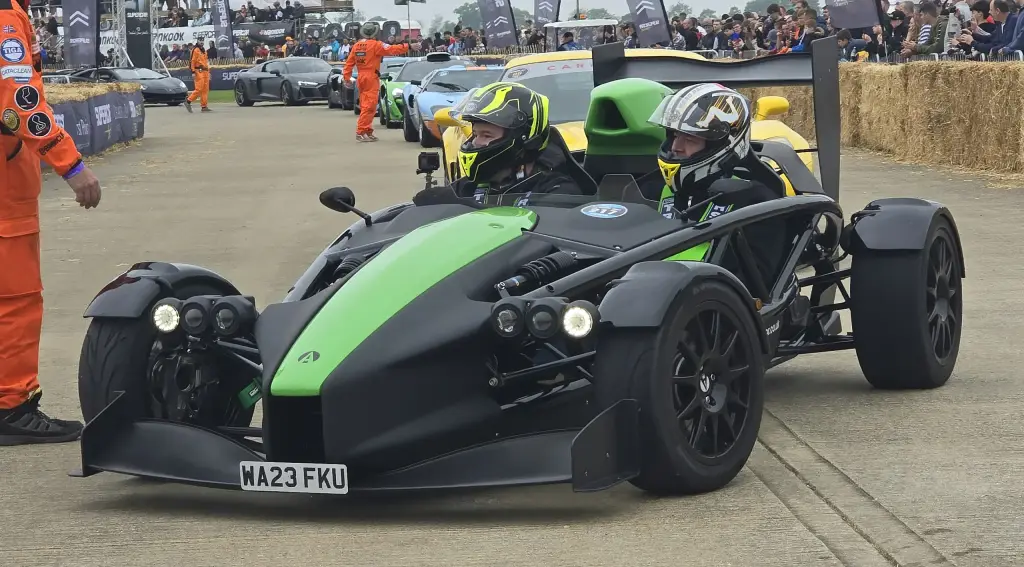
The Ariel Atom is a road-legal high-performance open-wheel car made by the Ariel Motor Company in Crewkerne, Somerset, and under licence in North America by TMI Autotech at Virginia International Raceway. Its most obvious feature is the exposed chassis: there is no roof and no windows, only a small optional windscreen, and the drag coefficient is 0.40.
Ariel Atom at a glance
| Maker | Ariel Motor Company, Crewkerne, Somerset |
|---|---|
| Class | road-legal open-wheel sports car |
| Body | exposed tubular chassis, no roof or windows |
| Drag coefficient | 0.40 |
| Suspension | double unequal-length wishbones, inboard pushrod dampers, Bilstein |
| Suspension tuning | by Lotus engineers |
| Engine, Atom 4 | turbocharged 2.0-litre, as in the Honda Civic Type R, three-stage boost |
| Engine, Atom 500 V8 | 373 kW (500 bhp; 507 PS) |
| Atom 500 V8 build | 25 cars |
| US production | Brammo from 2005, TMI AutoTech from 2008 |
| Generations | eight, from the original Atom to the Atom 4 |
Based on one source, the English Wikipedia article on the Atom.
History of the Ariel Atom
The Atom began as a student project at Coventry University. Niki Smart, a transport design student, developed the car with Simon Saunders, a senior transport design lecturer, and it was known then as the LSC, the Lightweight Sports Car. It was developed at the university in 1996 with input and funding from industry, including British Steel and TWR, and was first shown publicly at the British International Motor Show at the NEC in Birmingham in October 1996. After several sports car companies rejected the proposal, Saunders founded his own company in 1991, Solocrest Ltd., to create the Atom; in 1999 it was renamed Ariel Motor Company Ltd.
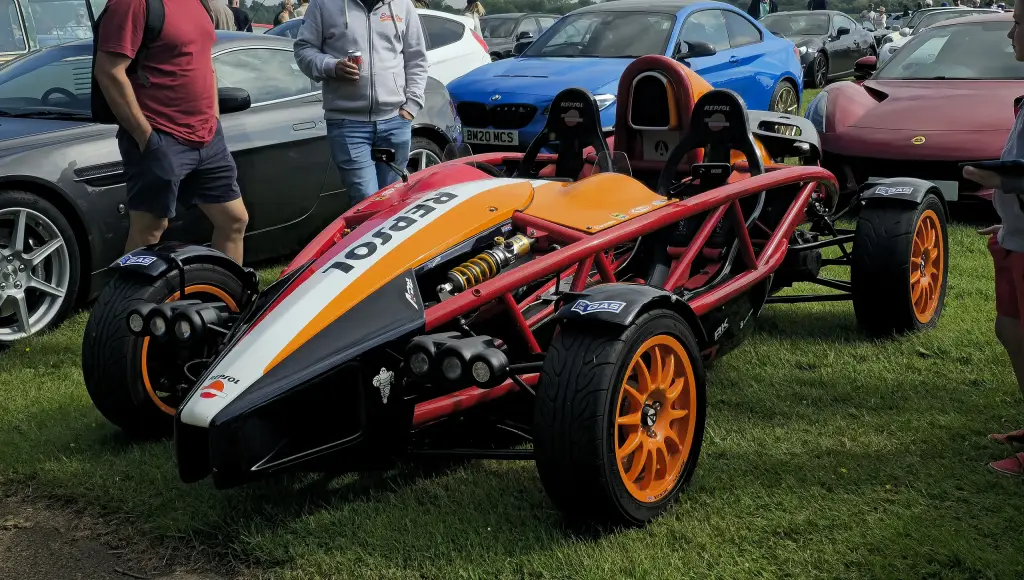
The first production Atom arrived with 190 bhp from a naturally aspirated 1.8-litre Rover K-series engine. The Atom 2 followed in 2003 with as much as 300 bhp from a supercharged 2-litre Honda engine, and the Atom 3, the Atom 3.5, the Atom 3S and the track-only Spec:RaceAtom continued the line. The Atom 500 V8 Limited Edition, of which only 25 were to be made, used a 373 kW (500 bhp; 507 PS) V8. The current Atom 4 uses a turbocharged 2.0-litre engine also found in the Honda Civic Type R, with three-stage boost.
The chassis was engineered for road and track. The suspension derives from single-seater racing practice and is fully adjustable with a spanner: double unequal-length wishbones front and rear, inboard pushrod-operated dampers and adjustable Bilstein units. The set-up was tuned by Lotus engineers, and road testers have noted the family resemblance to Lotus-tuned cars such as the Elise. The result was a car that won acceleration tests rather than top-speed contests: in 2005 a supercharged Atom 2 won a Road & Track 0–161–0 km/h test in 10.88 seconds, in 2006 an Atom 2 of 300 bhp reached 100 mph in 6.86 seconds in an Autocar challenge, and The Sunday Times measured 0–60 mph in 2.89 seconds, then the third-quickest of any production car on sale.
North American cars came through licence agreements. Brammo Motorsports of Ashland, Oregon, signed a deal with Ariel in 2005 and built the Atom 2 with a supercharged GM Ecotec engine; a limited run of ten US-built cars in 2006–2007 used imported Honda K20A engines. Brammo stopped Atom production in 2007 to concentrate on electric motorcycles. From January 2008 the Atom 3 for the US market was built by TMI AutoTech at Virginia International Raceway, using a Honda Civic Si drivetrain; TMI later moved to a larger plant in South Boston, Virginia, and traded as Ariel North America. Between 2011 and 2015 the track ran the VIR Cup for the Spec:RaceAtom.
Design and features
- Exoskeleton chassis: the frame is the body, with no roof, doors or windows and only a small optional windscreen.
- Lotus-tuned suspension: racing-derived wishbones and inboard pushrod dampers, adjustable with a spanner.
- Light weight and traction: the car won 0–100 mph and 0–161–0 km/h tests against far more powerful machinery.
- Honda engines: from the supercharged 2-litre of the Atom 2 to the Civic Type R unit of the Atom 4.
- Limited editions: the 500 V8 was capped at 25 cars, and a single Honda Racing Edition Atom 3 was built.
Ariel Atom versions
- Atom (original): 190 bhp 1.8-litre Rover K-series engine.
- Atom 2 (2003): up to 300 bhp from a supercharged 2-litre Honda engine.
- Atom 3: Honda Civic Si drivetrain, including the Mugen Limited Edition and a one-off Honda Racing Edition.
- Atom 3.5 and 3S: further developments of the third generation.
- Atom 500 V8 Limited Edition: 373 kW (500 bhp) V8, 25 cars.
- Atom 4: turbocharged 2.0-litre Honda Civic Type R engine with three-stage boost.
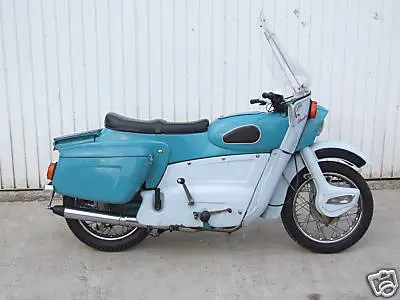
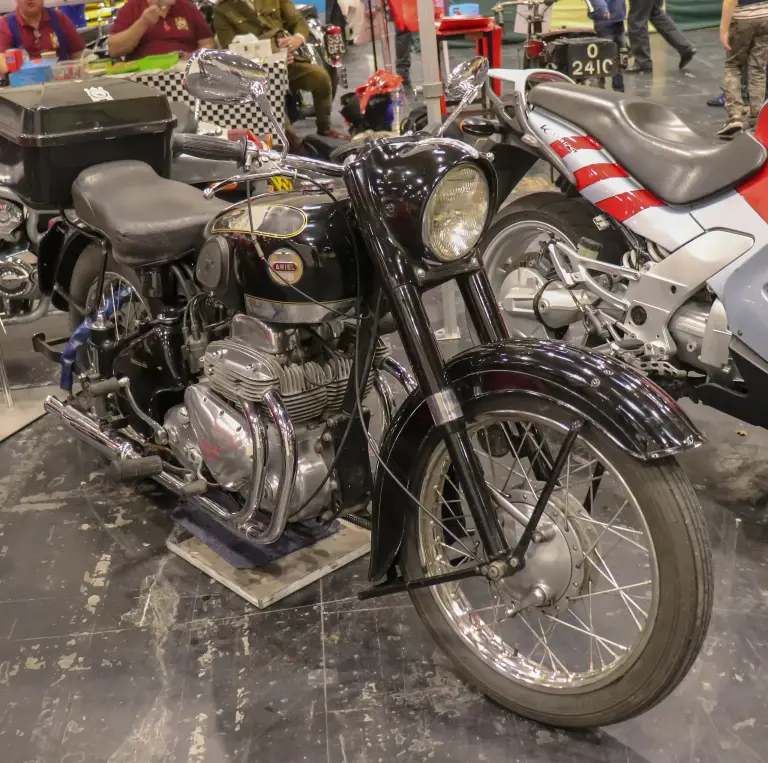
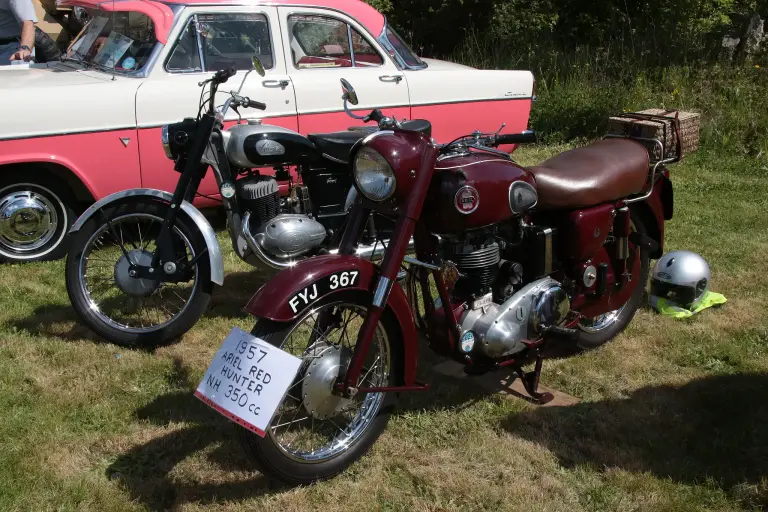
The Atom is the best-known modern product of Ariel; the same firm’s older motorcycles are covered in the articles on the Square Four and the Leader.
Sources
- Ariel Atom, English Wikipedia: design origins, suspension, acceleration, US licensing, generations