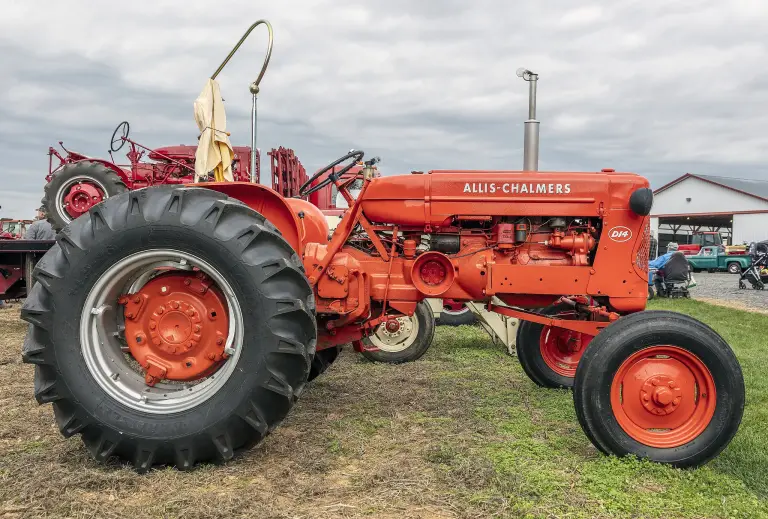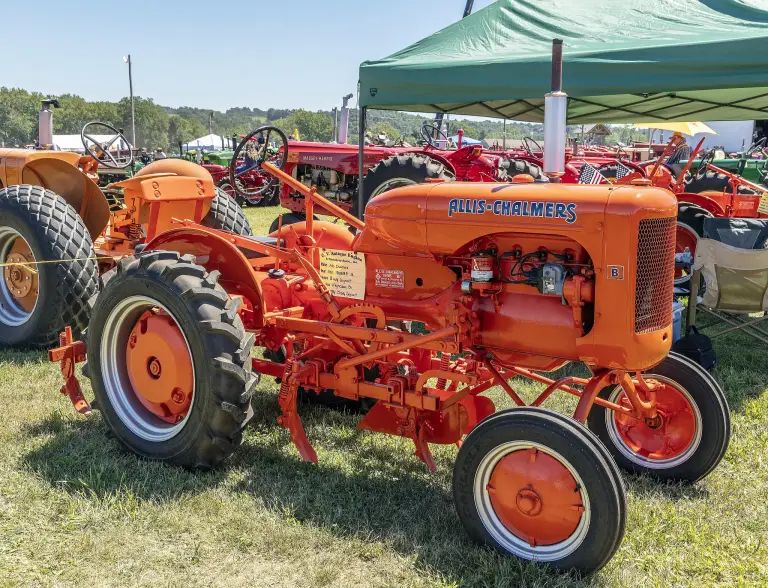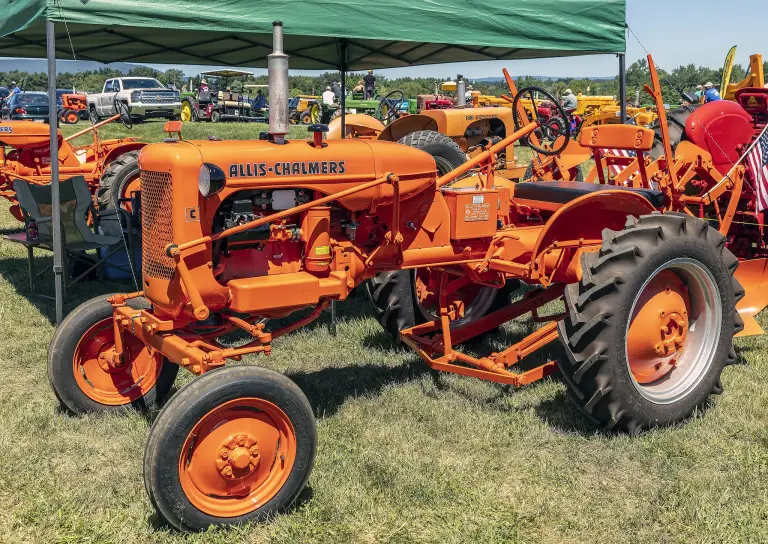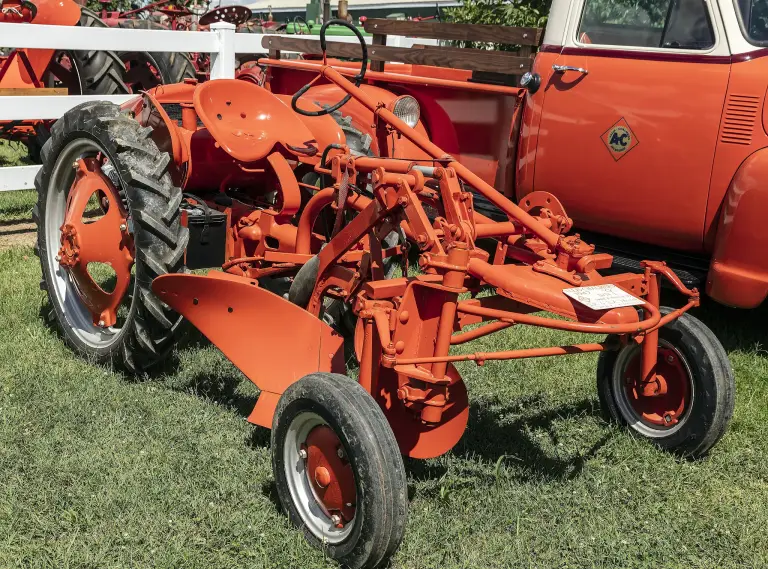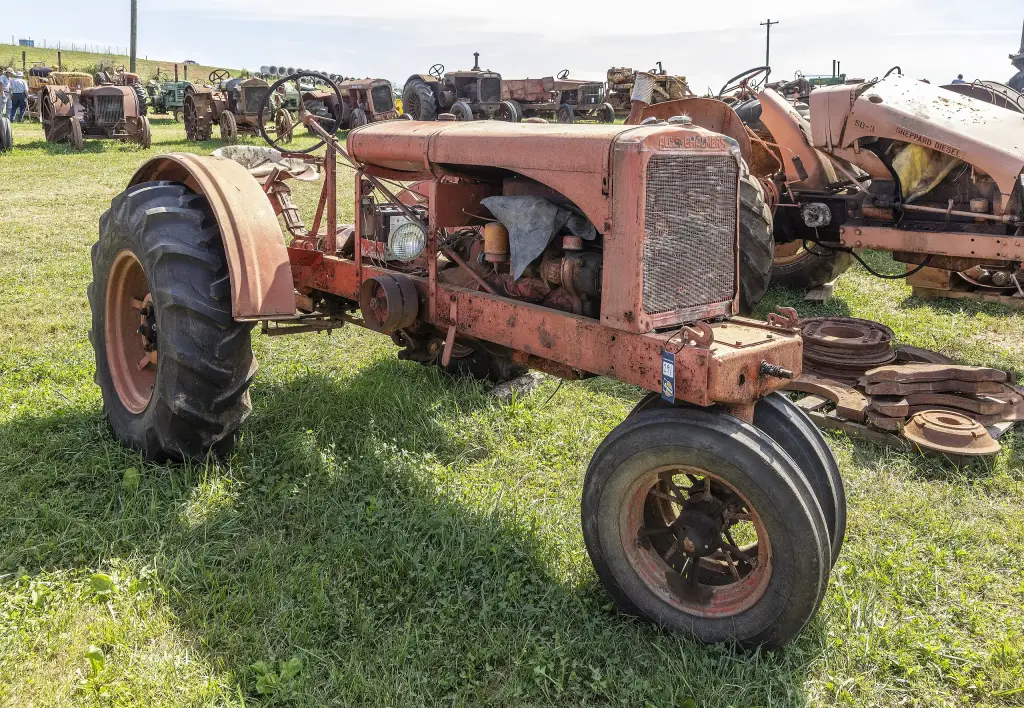
The Allis-Chalmers Model WC was a row-crop tractor made from 1933 to 1948. Designed as a nimble, low-cost but well-powered machine, it was the first farm tractor to have pneumatic rubber tyres as standard equipment and became the best-selling tractor model Allis-Chalmers ever built.
Allis-Chalmers Model WC at a glance
| Maker | Allis-Chalmers Manufacturing Company |
|---|---|
| Production | 1933–1948 |
| Built at | West Allis, Wisconsin |
| Class | row-crop tractor |
| Engine | 201 cu in (3,290 cc) inline-four |
| Bore and stroke | 4 by 4 in (100 by 100 mm) |
| Power | 22 hp at the drawbar, 30 hp at the belt |
| Fuels | petrol, kerosene or alcohol |
| Price in 1934 | $825 on rubber, $675 on steel |
| Price in 1936 | $960 on rubber, $785 on steel |
| Tyres | pneumatic rubber as standard, a first for a farm tractor |
| Built | about 178,000 |
The article is based mainly on the English Wikipedia page on the WC; the WD and WD45 are mentioned only briefly there, and the D-17 reference comes from the D series page.
History of the Allis-Chalmers Model WC
A tractor built around rubber tyres
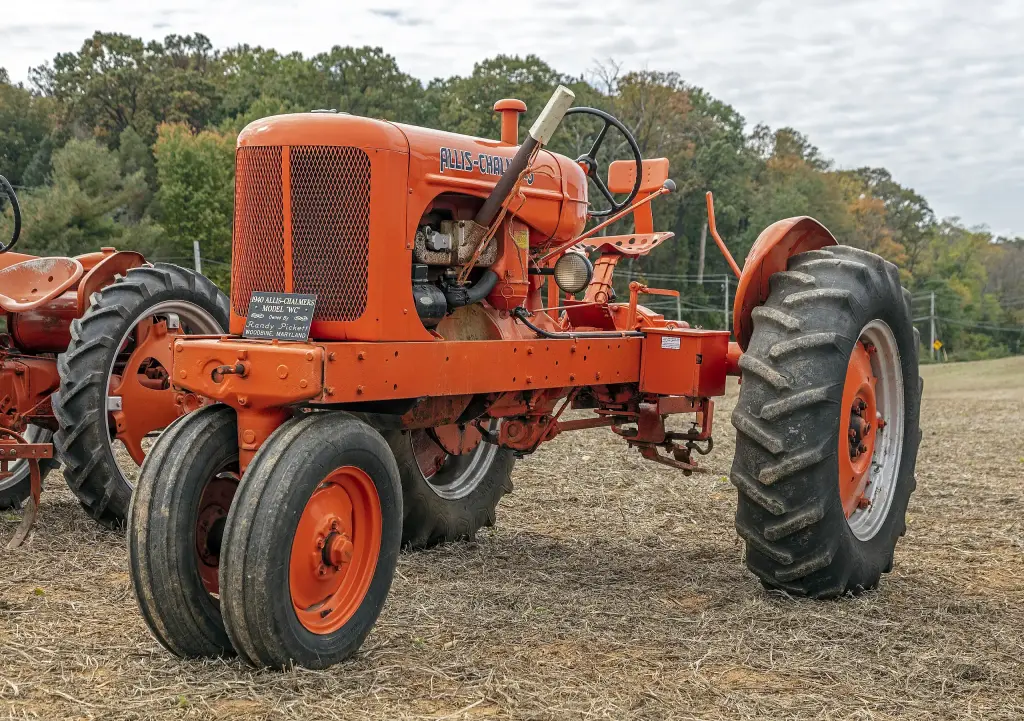
Allis-Chalmers had introduced pneumatic rubber tyres to agriculture in 1932, and the WC was designed from the start to make the best use of them. It was a nimble, low-cost but well-powered row-crop tractor, and the name came from the Model W line: the W plus C stood for “cultivating”. It was the first farm tractor to have rubber tyres as standard equipment and the first tractor tested on rubber in the Nebraska tractor tests.
To keep the price low while fitting rubber, the designers C.E. Frudden and Walter Strehlow gave the WC drop gearing at the rear, using bull-gear-with-pinion final drives. This allowed row-crop ground clearance with smaller-diameter drive wheels, and so reduced the amount of rubber needed for the tyres. The tractor was also made partly from off-the-shelf components, and its steel channel-iron frame eliminated the need for large, heavy castings for the transmission and rear end.
Engine and equipment
The WC had a 201-cubic-inch (3,290 cc) inline-four with a 4-inch bore and 4-inch stroke, one of the first tractor engines to be square. Like most tractors of the era it could run on petrol, kerosene or alcohol, and a small auxiliary tank let the driver start on petrol when cold and switch to kerosene or alcohol once warm. It tested at 22 horsepower at the drawbar and 30 at the belt, and ignition was by magneto.
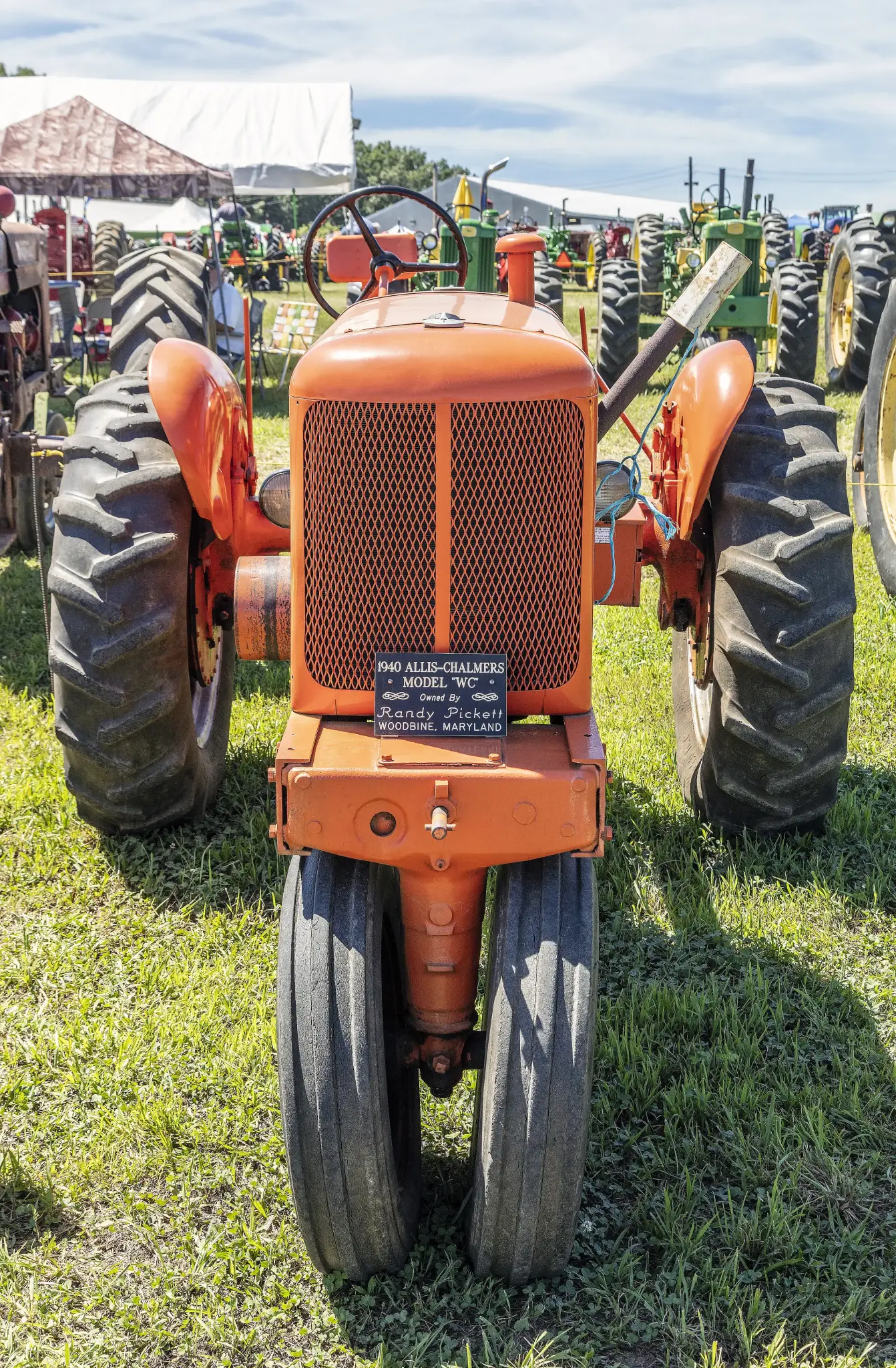
The WC could be ordered with a tricycle (narrow tread) or a wide tread front axle, the tricycle being by far the more popular; an “air front” version had rubber tyres in front and steel wheels at the back. A belt pulley was standard, while a power take-off and a mechanical power lift for the cultivator were optional: in 1936 the PTO listed at $50 and the power lift at $35. The PTO mattered for buyers who wanted to pull the Allis-Chalmers All-Crop Harvester, a pull-type combine; the combination was a commercial success from the mid-1930s to the mid-1940s.
Changes through the years
Prototypes were built with Waukesha engines, but mass production began with Allis-Chalmers’s own 4-by-4-inch design. In 1938 the WC was styled by Brooks Stevens, part of the industry-wide move from unstyled to styled tractors, and received a larger radiator and tyres. In 1939 Harry Merritt decided that, with more than 90 percent of WCs selling with the optional electric starter and lights, these features would become standard; the WC was one of the earliest farm tractors to have them as standard equipment.
The WC had its drawbacks. Its clutch was not particularly well designed, and like other tractors of the 1920s and mid-1930s it had a hand lever on each side for the brakes, so applying them took the operator’s hands away from other controls. Other W variants such as the WD and WF followed later and in lower numbers; the WD45, a four-plow tractor, remained in the range until the D-17 replaced it in 1957.
Design and features
- Rubber tyres as standard: a first for a farm tractor, made affordable by drop gearing and smaller drive wheels.
- Light, stiff frame: steel channel iron replaced heavy castings for the transmission and rear end.
- Multifuel engine: petrol, kerosene or alcohol, with an auxiliary starting tank.
- Standard starter and lights: made standard in 1939 after more than 90 percent of buyers ordered them.
- Row-crop flexibility: tricycle or wide tread front axles, and an “air front” combination.
Allis-Chalmers Model WC versions
- Model WC (1933–1948): the standard row-crop tractor on rubber or steel.
- Air front: rubber tyres in front and steel wheels at the back.
- WD and WF: later W variants, produced in lower numbers than the WC.
- WD45: the four-plow development of the line, replaced by the D-17 in 1957.
The WC was the ancestor of the D series, and it sat above the small Model B in the range. More machines are in the Allis-Chalmers collection.
Video: Allis Chalmers WC handstart
Video on YouTube.
Sources
- Allis-Chalmers Model WC, English Wikipedia: design, engine, equipment, prices, production
- Allis-Chalmers D series, English Wikipedia: WD45 and its replacement by the D-17