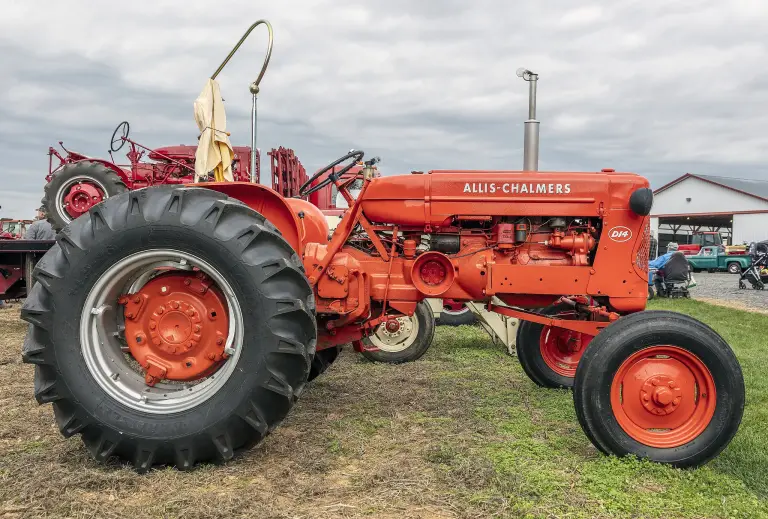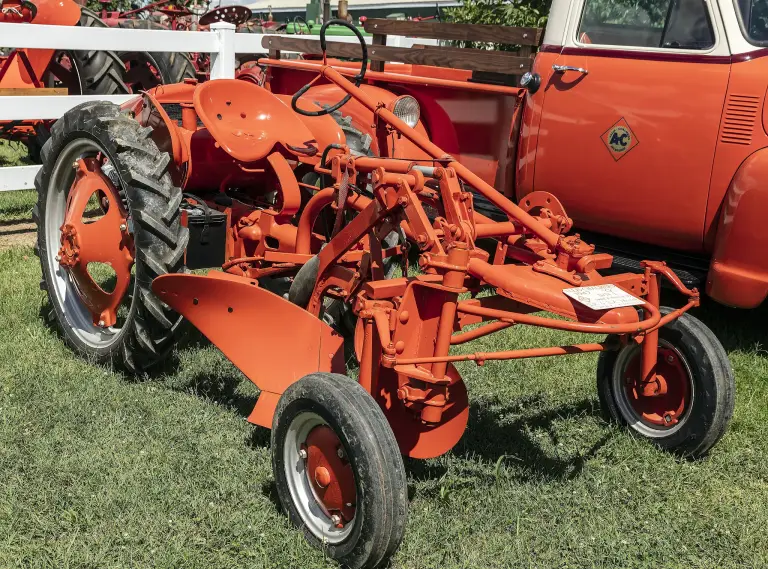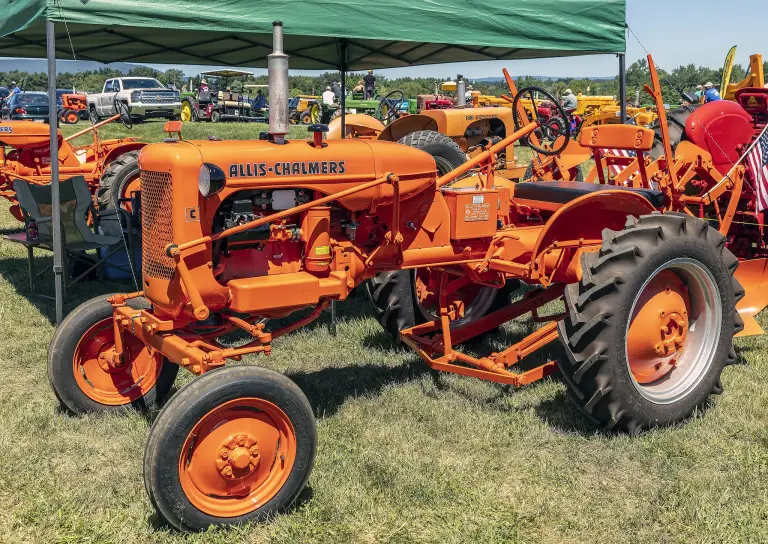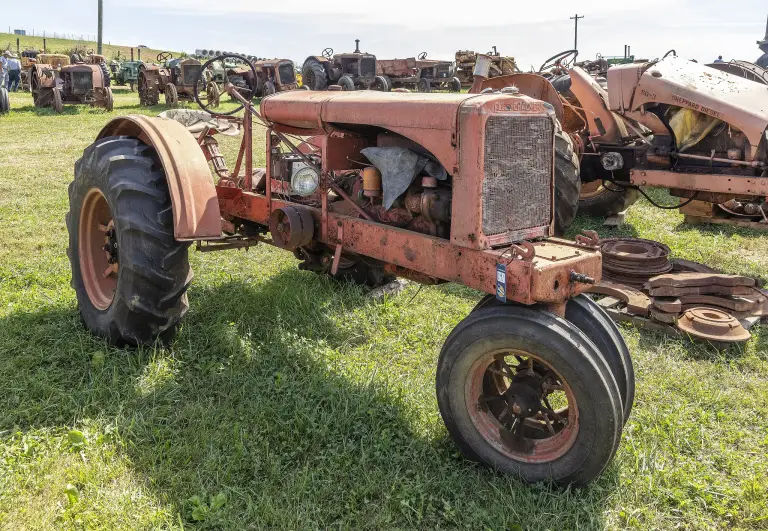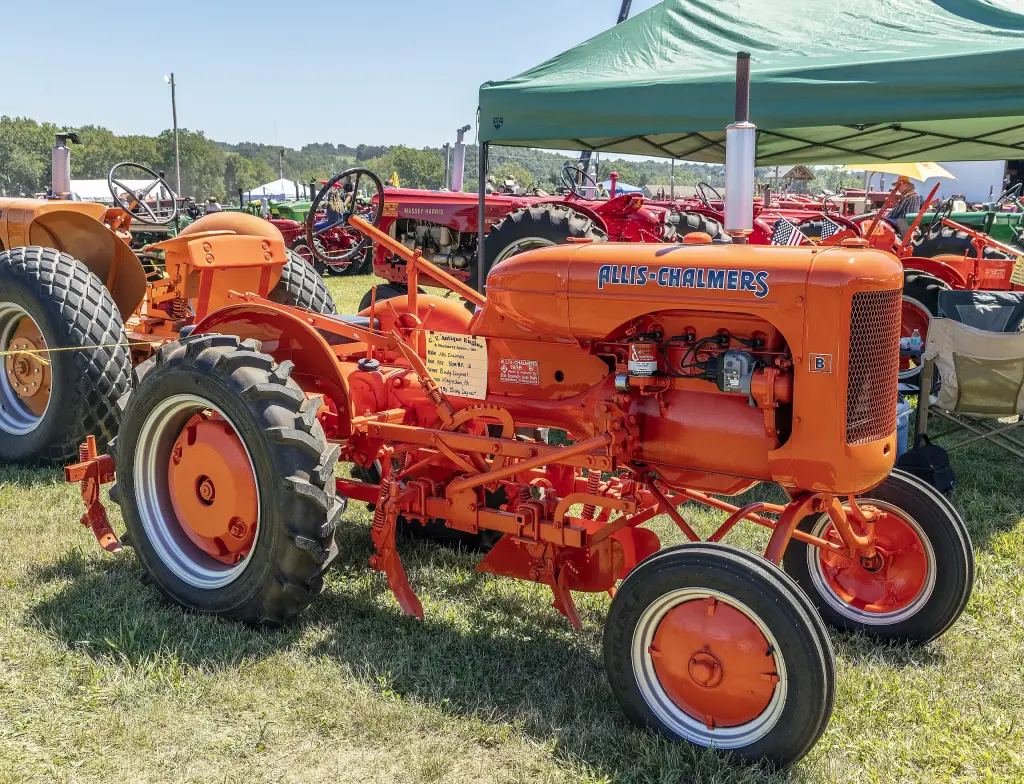
The Allis-Chalmers Model B was a small agricultural tractor produced from 1937 to 1957. With 120,783 built, it became one of the best-selling and longest-produced tractors in the company’s history, and it gave rise to the larger Model C.
Allis-Chalmers Model B at a glance
| Maker | Allis-Chalmers Manufacturing Company |
|---|---|
| Production | 1937–1957 |
| Class | small row-crop tractor |
| First engine | Waukesha 113 cu in (1,850 cc), four-cylinder |
| Engine from 1938 | Allis-Chalmers 116.1 cu in (1,903 cc) |
| Engine from 1943 | 125.2 cu in (2,052 cc) |
| Transmission | three-speed |
| Styling | Brooks Stevens |
| Built at | West Allis, Wisconsin, and Southampton, England |
| Built | 120,783 |
| Price in 1958 | about $1,500 |
This page is based on one source, English Wikipedia, so its figures could not be cross-checked.
History of the Allis-Chalmers Model B
A tractor for the small farm
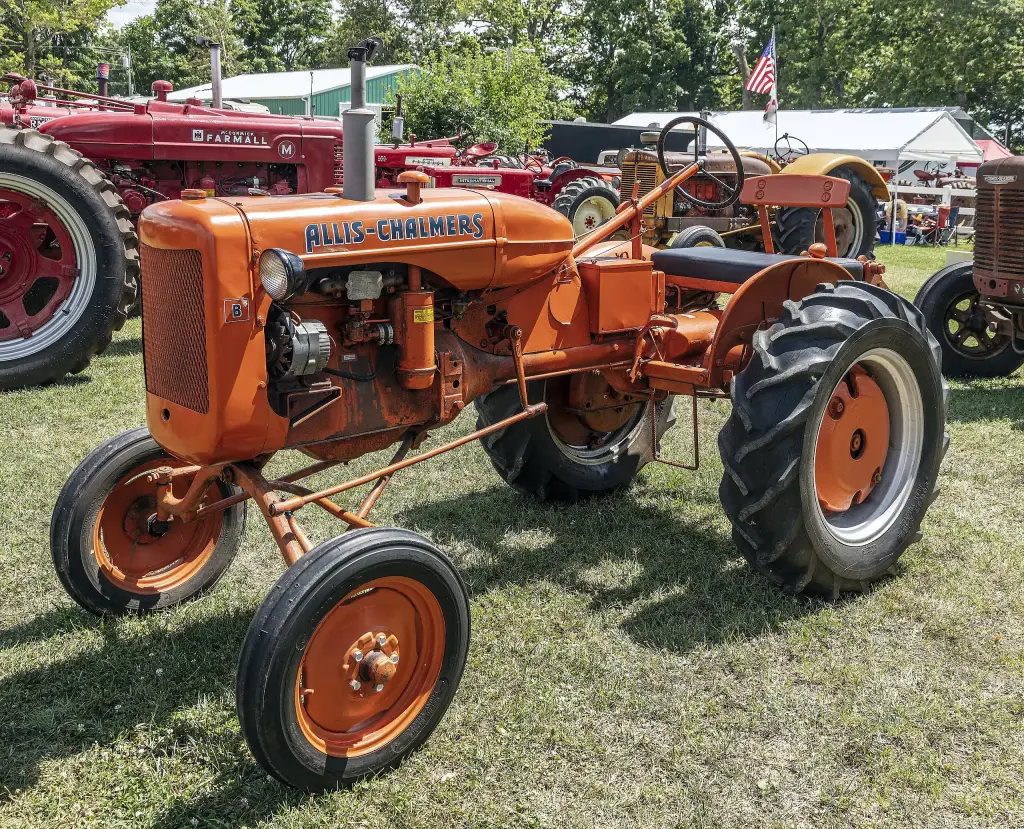
In the early 1930s the tractor division manager Harry Merritt studied farm census figures and found that of the nearly seven million farms in America, some four million were of 100 acres or less. The million or so tractors then in use were generally too large for such acreage, and many small farmers still worked with horses. Merritt concluded that there was a need for four million small, inexpensive tractors.
The Model B was the answer. It was a small agricultural tractor with a styled body by the industrial designer Brooks Stevens. Power came at first from a Waukesha 113-cubic-inch (1,850 cc) four-cylinder engine; from 1938 an Allis-Chalmers unit of 116.1 cubic inches (1,903 cc) was used, and in 1943 displacement grew to 125.2 cubic inches (2,052 cc). All versions had a three-speed transmission.
Row-crop versions and the IB
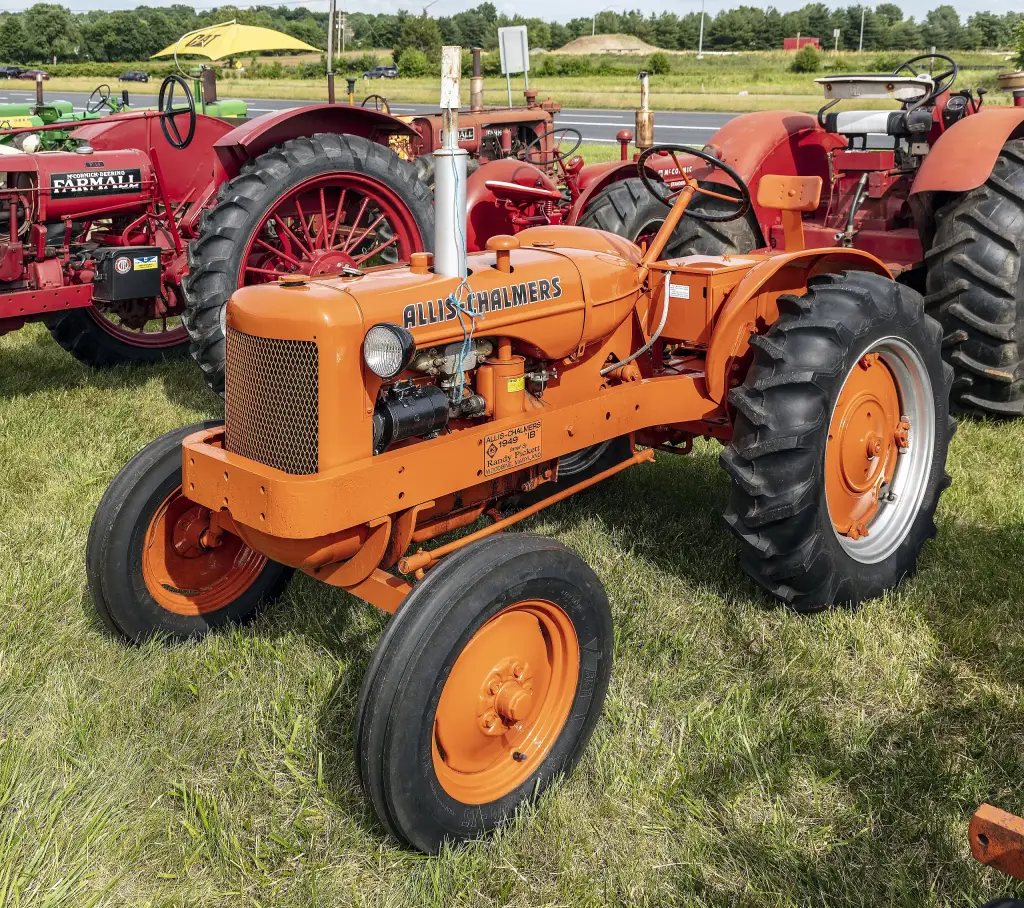
As a row-crop tractor the Model B had adjustable rear and wide front axles. It was adapted for specialty crops: a high-clearance Asparagus Special and a narrow-track Potato Special were offered. A standard version with fixed axles, the IB, was produced as an industrial tractor, often used as a mower.
The end of the line
The Model B was built at Allis-Chalmers factories in West Allis, Wisconsin and in Southampton, England. Production ended in 1957; a 1958 selling price of about $1,500 was quoted for the tractor. Before it went out of production the B had already given rise to the Model C, introduced in 1939 as a more efficient upgrade for two-row work.
Design and features
- Small and cheap: designed for farms of 100 acres or less that had previously relied on horses.
- Styled body: sheet metal by Brooks Stevens, part of the industry-wide move from unstyled to styled tractors.
- Adjustable row-crop axles: rear and wide front axles could be set for different row spacings.
- Specialty versions: high-clearance Asparagus and narrow-track Potato Specials, plus the industrial IB.
Allis-Chalmers Model B versions
- Model B (1937–1957): the standard row-crop tractor.
- Asparagus Special: a high-clearance version for tall crops.
- Potato Special: a narrow-track version for potato rows.
- IB: an industrial tractor with fixed axles, often used as a mower.
The Model B was followed by the larger Model C, and it was eventually replaced in the range by the D series. More machines are in the Allis-Chalmers collection.
Video: Tractor Tales: 1949 Allis Chalmers B
Video on YouTube.
Sources
- Allis-Chalmers Model B, English Wikipedia: development, engines, variants, production, price