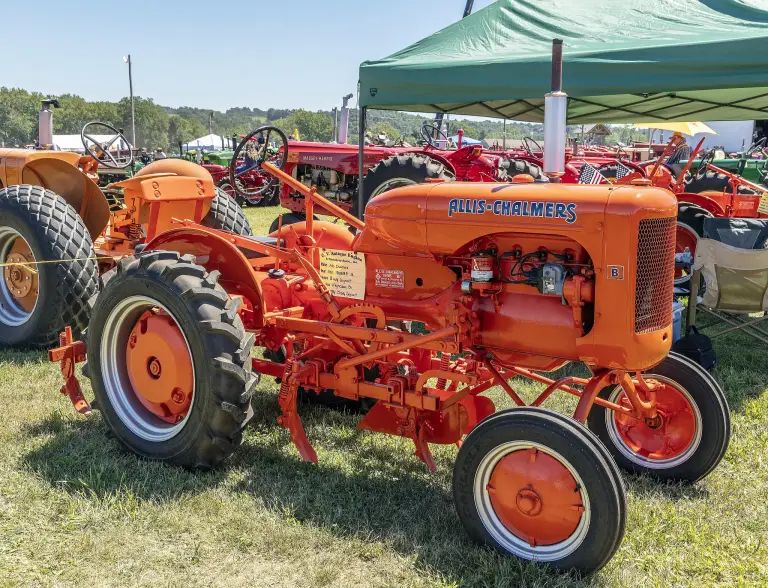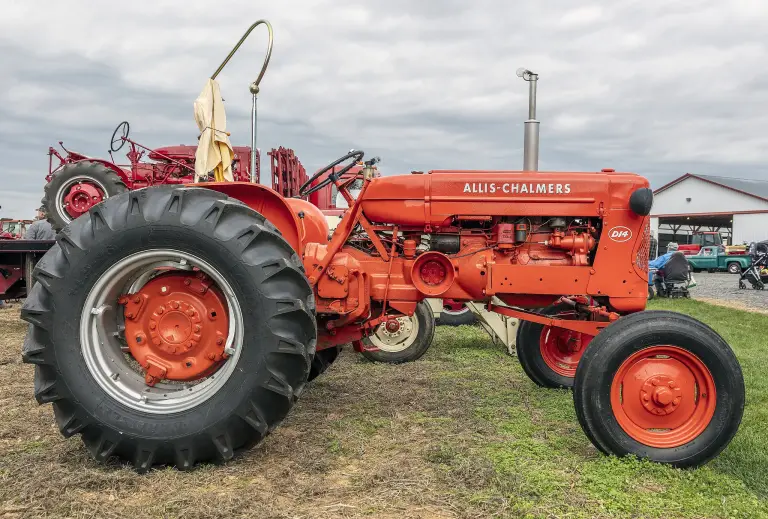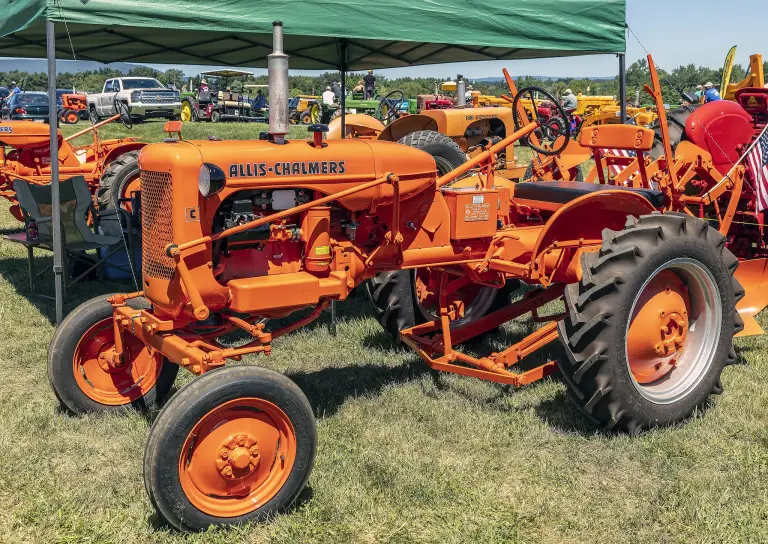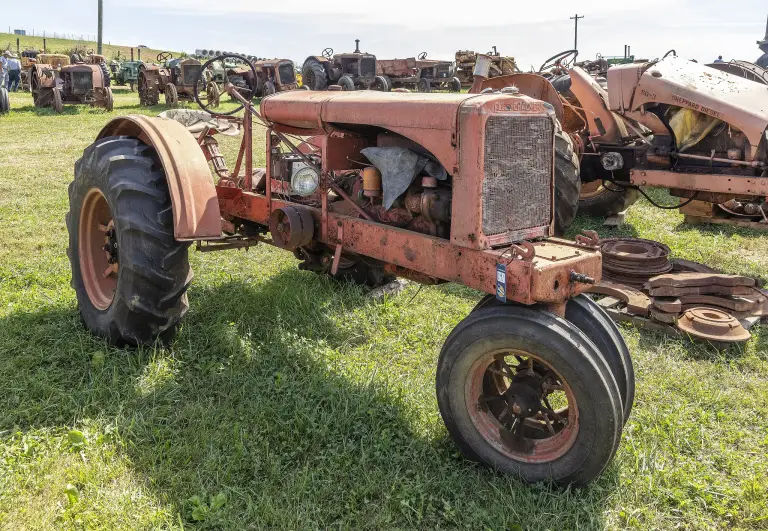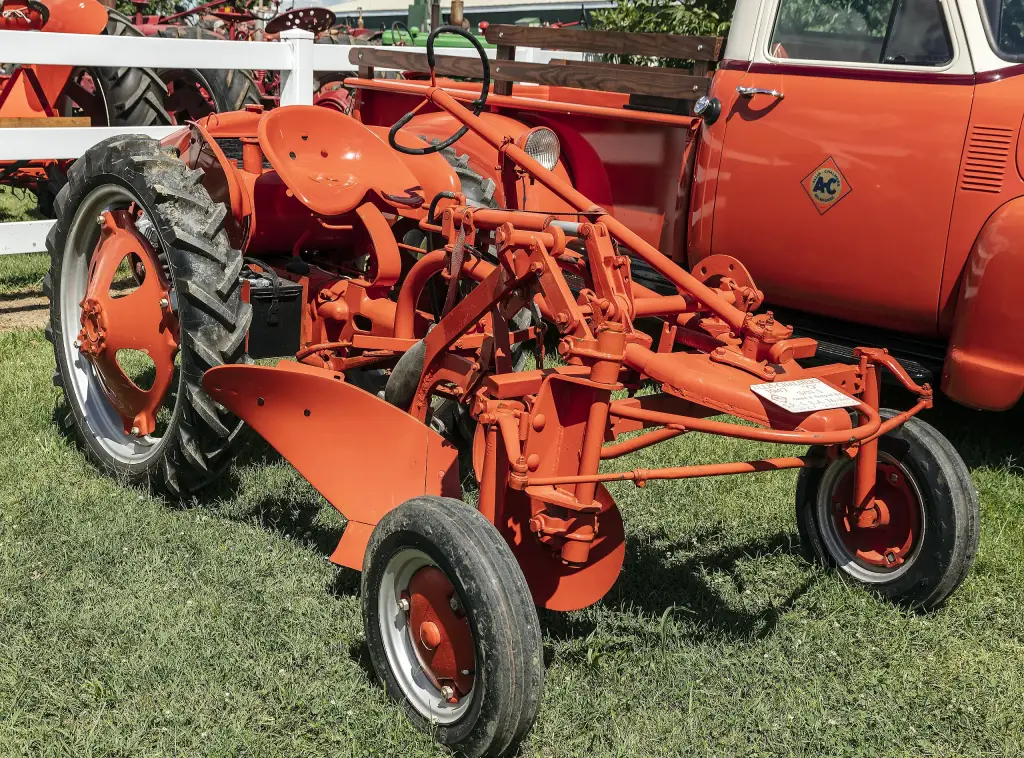
The Allis-Chalmers Model G was a small implement carrier tractor designed for small farms and vegetable growers. Its rear-mounted Continental engine and belly-mounted implements gave the driver an unusually clear view of the work, and 29,976 were built between 1948 and 1955.
Allis-Chalmers Model G at a glance
| Maker | Allis-Chalmers Manufacturing Company |
|---|---|
| Production | 1948–1955 |
| Built at | Gadsden, Alabama |
| Class | small implement carrier |
| Engine | Continental N62, four-cylinder, 62 cu in |
| Bore and stroke | 2⅜ by 3½ in (60 by 89 mm) |
| Rated speed | 1,800 rpm |
| Power | 10 drawbar hp (10.33 belt, 9.04 drawbar tested) |
| Weight | 1,285 lb |
| Fuel tank | 5 US gallons |
| Transmission | three-speed non-synchronised with reverse and a creeper gear |
| Built | 29,976 |
This page is based on one source, English Wikipedia, so its figures could not be cross-checked.
History of the Allis-Chalmers Model G
An unusual layout
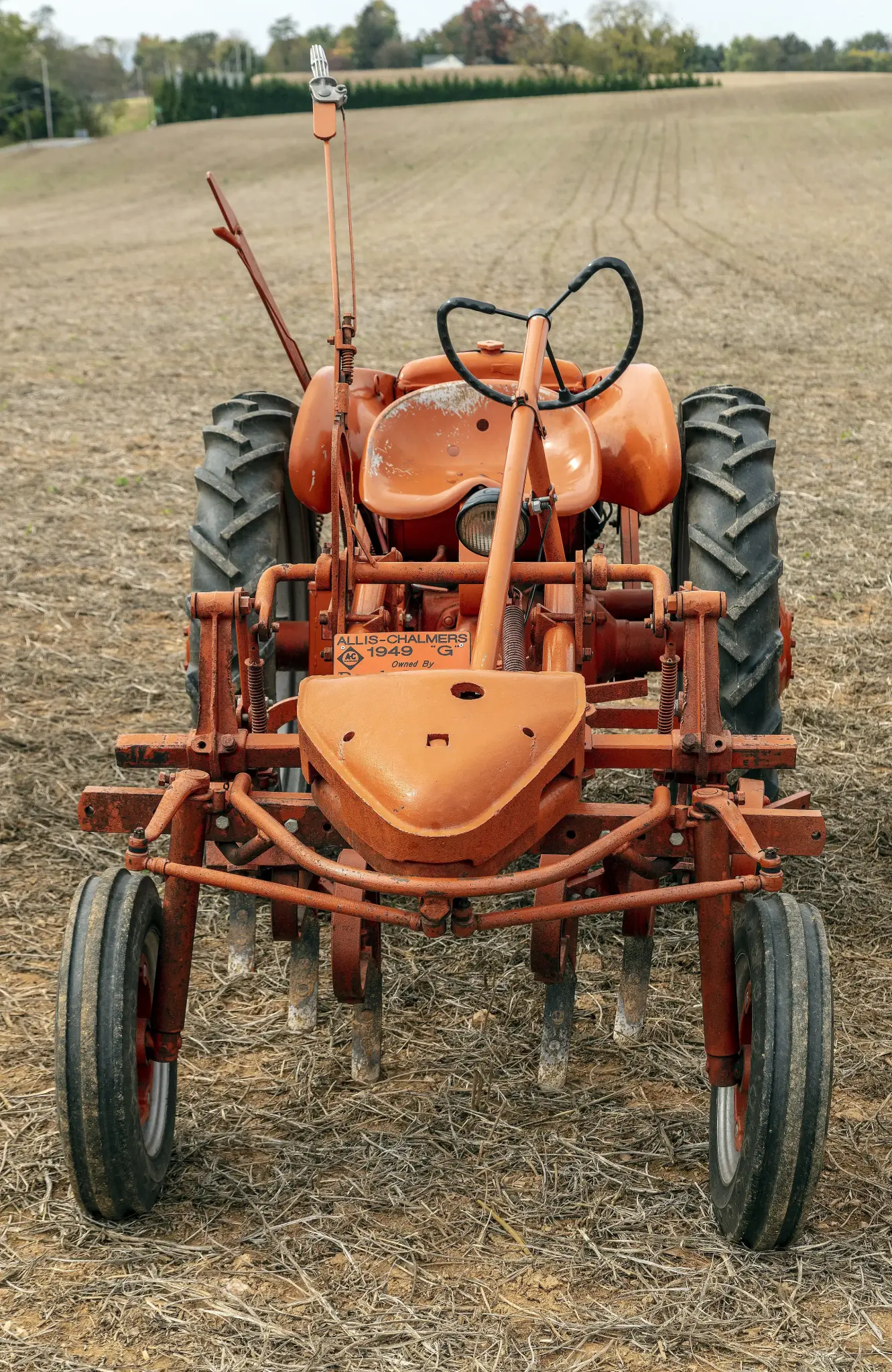
At the time of its introduction the Model G was unique for its rear-mounted, Continental N62 engine. The four-cylinder unit had a bore and stroke of 2⅜ by 3½ inches (60 by 89 mm) and a displacement of 62 cubic inches, and it was rated at 1,800 rpm. The tractor weighed 1,285 pounds and had a 5-gallon fuel tank.
The Model G was designed for small farms and vegetable gardeners, and a line of implements was made specifically for it, including ploughs, planters and cultivators. Because the implements were mounted under the belly of the tractor, the layout gave the operator a great view of them.
Built in Alabama
The Model G was manufactured solely in the Allis-Chalmers factory in Gadsden, Alabama, from 1948 to 1955. 29,976 units were built, fewer than the company had originally hoped. It was rated at 10 drawbar horsepower, tested at 10.33 horsepower at the belt and 9.04 at the drawbar. The transmission was a non-synchronised three-speed with reverse, and an additional creeper forward gear was standard equipment.
A design that outlived the tractor
The G’s layout proved well suited to electric conversion: a small DC motor replaces the engine and bolts directly to the transmission housing through a commercially available adapter plate. By 2009 more than 100 Model G tractors were known to have been converted. In 2018 students from the University of Nebraska-Lincoln worked with Tuff-bilt Tractors to build an electric prototype, while the original “flying beet” conversion, partly funded by a USDA SARE grant, remained in use at Huguenot Farms in New Paltz, New York.
The design was also copied. In the mid-1950s David Brown Ltd. of the United Kingdom introduced the VAD12/V, better known as the 2D, which used the tubular frame as an air receiver for its compressed-air implement lifting system; it never sold in large numbers. Tuff-bilt has produced a modern version of the G since 2007, Cleber, LLC of Alabama began building the Oggún in 2014, and the Ohio company Tilmor has also worked on a tractor based on the G.
Design and features
- Rear-mounted engine: the Continental N62 sat behind the driver, leaving the middle of the tractor free for implements.
- Belly-mounted tools: ploughs, planters and cultivators were carried underneath, in full view of the operator.
- Creeper gear: a very slow forward ratio was standard, alongside a three-speed gearbox.
- Light weight: 1,285 lb and 10 drawbar horsepower for work on small plots.
Allis-Chalmers Model G versions
- Model G (1948–1955): the standard implement carrier built in Gadsden.
- Electric conversions: more than 100 tractors converted by 2009, with motor, controller and batteries replacing the engine.
- Tuff-bilt: a modern version produced since 2007.
- Cleber Oggún: an Alabama-built tractor based on the G from 2014.
- David Brown 2D: a British tractor of the mid-1950s based on the same layout.
The Model G was the small specialist of the range alongside the Model B and Model C. More machines are in the Allis-Chalmers collection.
Video: Allis Chalmers G Promotional Film Circ 1948
Video on YouTube.
Sources
- Allis-Chalmers Model G, English Wikipedia: design, engine, production, conversions, copies