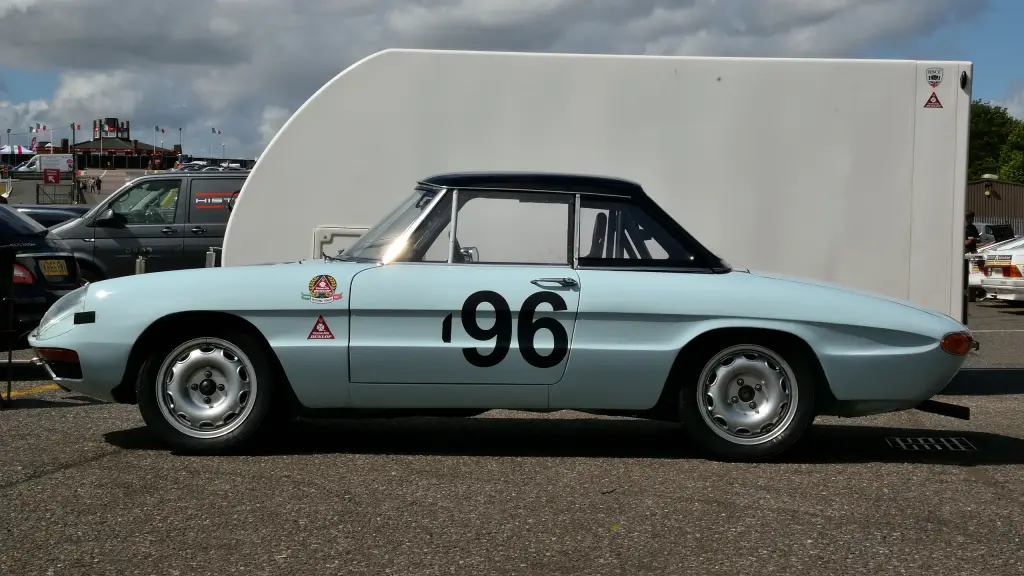
The Alfa Romeo Spider (105/115 series) is a two-seater, front-engined, rear-drive roadster made and marketed by Alfa Romeo from 1966 to 1994 in four distinct generations, or series. It succeeded the Giulia Spider and stayed in production for almost three decades; the last car of the series was built in April 1993 and was the last rear-wheel-drive Alfa Romeo until the 8C Competizione of 2007.
Alfa Romeo Spider at a glance
| Production | 1966–1994, four series (Series 1: 1966–1969) |
|---|---|
| Layout | front-engine, rear-wheel drive, two-seat roadster |
| Design and body | Pininfarina; Series 1–3 built in Grugliasco, Series 4 in San Giorgio Canavese |
| Launch | 36th Geneva Motor Show, March 1966 |
| Mechanicals | Giulia: twin-cam inline-four, independent front, solid rear axle, unibody with crumple zones |
| 1750 Spider Veloce (1968) | 1,779 cc, 118 PS DIN (132 PS SAE), top speed 190 km/h |
| 1300 Junior (June 1968) | 1,290 cc, 89 PS DIN (103 PS SAE) |
| Fuel (North America from 1969) | SPICA mechanical fuel injection |
| Successor idea | 2012 FCA–Mazda study ended in the Fiat 124 Spider instead |
This page is based on English Wikipedia only, so the figures could not be cross-checked against a second source.
History of the Alfa Romeo Spider
From the Giulia Spider to a new design
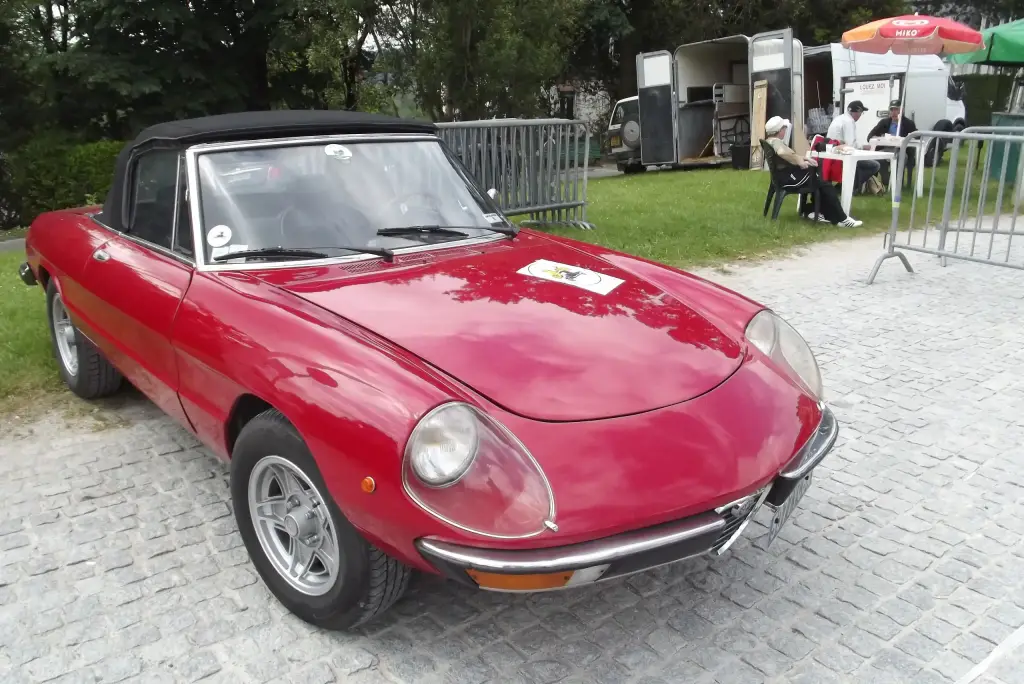
In 1962 Alfa Romeo introduced the 105-series Giulia, which first complemented and then replaced the 101-series Giulietta. The Giulietta-based Giulia Spider 1600 and Giulia Spider Veloce were built from 1962 to 1965 and from 1963 to 1965. The new Spider used Giulia mechanicals, including the twin-cam inline-four and a unibody that incorporated the then new principle of crumple zones. Pininfarina designed and built the body and did the final assembly; the 1600 Spider was the last project of the founder Battista Pininfarina, with Franco Martinengo as design director.
The 1966 shape came from several Pininfarina studies: the 1956 Superflow, designed by Aldo Brovarone on the chassis of a retired 6C 3000 CM racer, the open-top Spider Super Sport shown at the 1959 Geneva Motor Show, which first showed the rounded cuttlebone-shaped tail, and the 1961 Giulietta SS Spider Aerodinamica. Although the almost final design was ready in 1961, the first pre-launch cars only left the line at the end of 1965.
Series 1 (1966–1969) and the Duetto name
The Spider was launched at the Geneva Motor Show in March 1966. To name it, Alfa Romeo held a write-in competition with over 100,000 ballots; the winner, Guidobaldo Trionfi from Brescia, proposed “Duetto”, but the name could not be officially adopted because the confectioner Pavesi had registered it for a chocolate snack in 1965 and a Milan court gave it the exclusive rights. The car is still widely called the Duetto.
1750 and 1300 Junior
In January 1968 Alfa Romeo introduced its 1750 line, including the 1750 Spider Veloce, which replaced the original 1600 Spider with a new 1,779 cc engine. Top speed rose to 190 km/h, and the car carried only a “1750” script. From model year 1969 North American cars had SPICA mechanical fuel injection. A cheaper Spider 1300 Junior with the 1,290 cc engine followed in June 1968.
Design and features
- Design heritage: the Superflow concepts of 1956–1961 already showed the body shape and side scallops of the future Spider.
- Mechanicals: Giulia twin-cam inline-four with independent front suspension and a solid rear axle.
- Never replaced directly: in 2012 FCA and Mazda studied a new Spider on the Mazda MX-5 platform, but chose a modern interpretation of the Fiat 124 Sport Spider instead.
Alfa Romeo Spider versions
- Giulia Spider 1600 and Veloce (1962–1965): the predecessors on the Giulietta body.
- Spider 1600 “Duetto” (1966): Series 1.
- 1750 Spider Veloce (1968): 1,779 cc engine, 118 PS DIN.
- 1300 Junior (1968): the cheaper 1,290 cc Spider.
- Giulia GT Spider (1963): a Bertone prototype by Ernesto Cattoni that never went into production.
More Alfa Romeo cars of the era are in our Alfa Romeo collection, for example the Giulia 1750, the GT 1300 Junior and the Brera and Spider.
Alfa Romeo Spider questions and answers
Why is the Alfa Romeo Spider called Duetto?
A public competition chose “Duetto”, but trademark rights of a chocolate maker blocked its official use, so the name stuck only informally.
When was the 105/115 Spider built?
From 1966 to 1994 in four series; the last Series 4 car of the first run was built in April 1993.
Who designed and built it?
Pininfarina, which designed the body and assembled the cars.
What engines did it have?
Twin-cam inline-fours of 1,570 cc (1600), 1,779 cc (1750), 1,290 cc (1300 Junior) and later 2.0 litres.
What replaced it?
No direct successor: a later Fiat 124 Spider was built instead of reviving the Alfa Romeo Spider.
Sources
- Alfa Romeo Spider, English Wikipedia: history, design, Series 1, 1750 and 1300 Junior