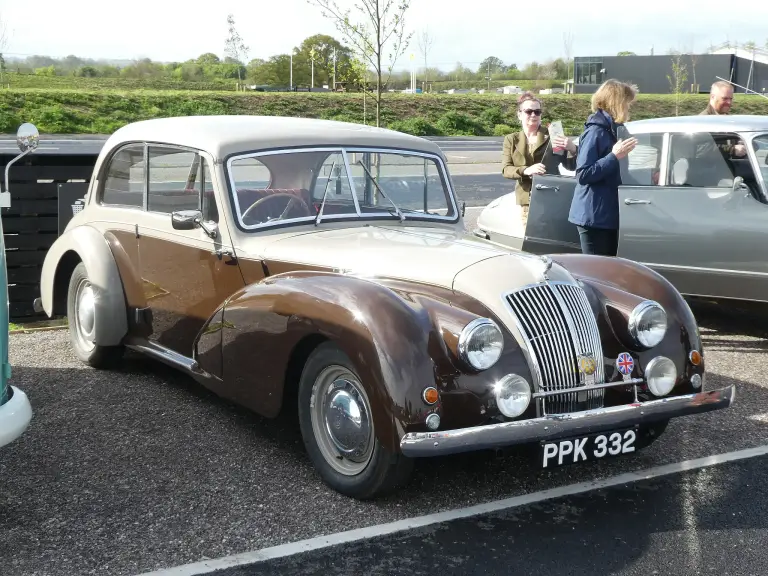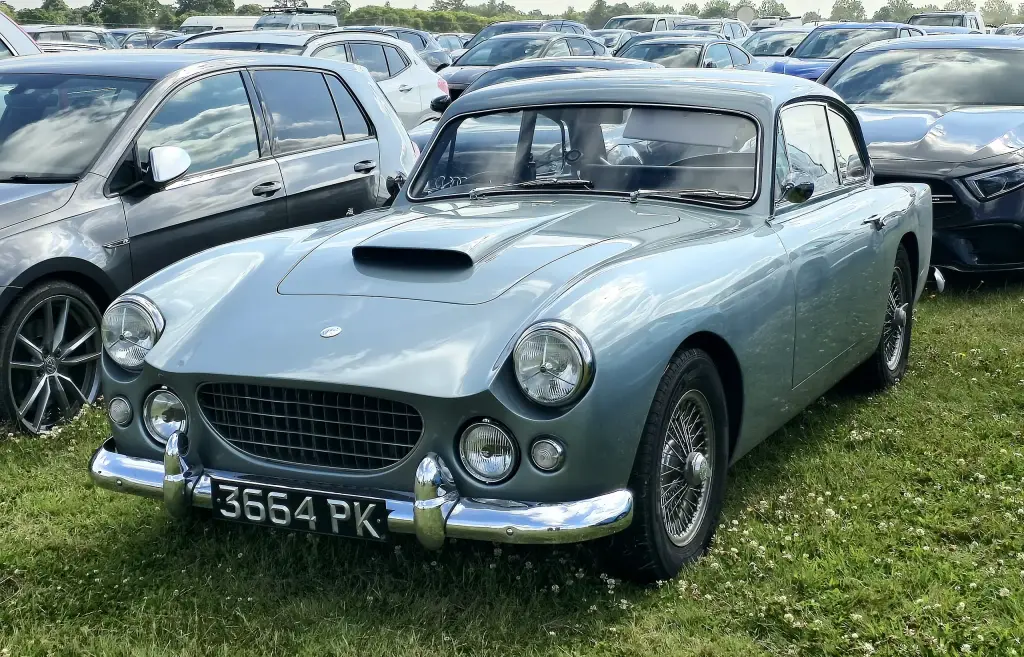
The AC Greyhound is a 2+2 grand touring car that AC Cars of Thames Ditton built from 1959 to 1963. It was announced for the opening of the Motor Show in October 1959, used a two-door four-seater aluminium body and inherited most of its technical parts from the AC Ace and Aceca, with a wheelbase 10 inches longer. A total of 83 examples were built.
AC Greyhound at a glance
| Maker | AC Cars, Thames Ditton, Surrey |
|---|---|
| Production | 1959–1963 |
| Body | two-door, four-seater aluminium body |
| Chassis | steel ladder frame |
| Wheelbase | 10 inches (254 mm) longer than the Ace and Aceca |
| Suspension | independent coil springs front and rear; semi-trailing arms at the rear |
| Steering | rack and pinion |
| Gearbox | four-speed manual, overdrive optional |
| Brakes | 11.75-inch discs front, 11-inch drums rear |
| Engines | AC, Bristol and Ford straight-sixes of 2.0 to 2.6 litres |
| Power | 75 to 170 bhp depending on engine |
| Built | 83 |
This page is based on English Wikipedia only, so its figures could not be checked against a second source.
History of the AC Greyhound
Announcement
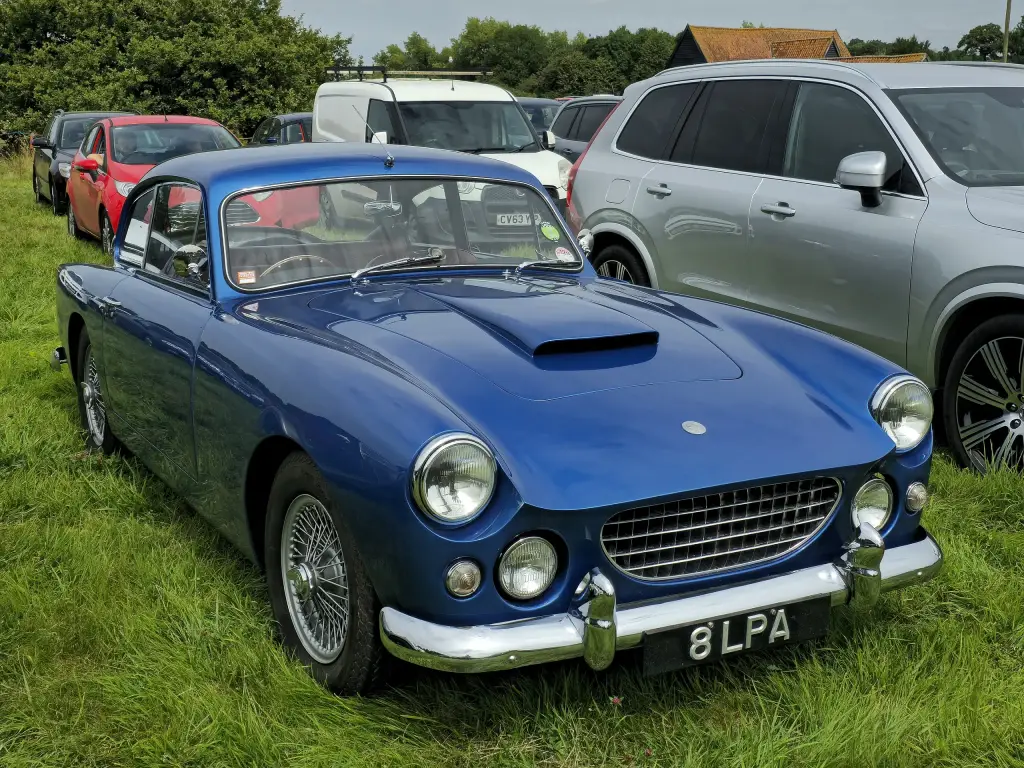
The Greyhound was announced for the opening of the Motor Show in October 1959 as AC’s four-seat grand tourer. It had a two-door, four-seater aluminium body and inherited most of its technical components from the Ace and Aceca, but with a wheelbase 10 inches longer and coil springs instead of a transverse leaf spring at the front.
Engineering
The car used a ladder-frame chassis with independent coil spring suspension front and rear; unlike the Ace and Aceca, the rear suspension used semi-trailing arms. There was rack and pinion steering, a four-speed manual gearbox with overdrive optional, and disc brakes at the front with drums at the rear. Four straight-six engines were offered: AC’s own 1,991 cc Light Six with 75 bhp, the 1,971 cc Bristol 100D2 with 125 bhp, a 2,216 cc Bristol with 105 bhp, and the 2,553 cc Ford Zephyr unit with up to 170 bhp.
Road test
A 2-litre Bristol-engined car with overdrive tested by The Motor magazine in 1961 reached a top speed of 110 mph and accelerated from 0 to 60 mph in 11.4 seconds, with fuel consumption of 21.8 miles per imperial gallon. The test car cost £3,185 including taxes.
Design and features
- Four seats: the Greyhound was the roomier grand tourer in AC’s range, with a 2+2 cabin.
- Modern suspension: independent coil springs all round, with semi-trailing arms at the rear.
- Engine choice: buyers could have an AC, Bristol or Ford six-cylinder unit.
- Light body: hand-built aluminium bodywork kept weight around one tonne.
AC Greyhound versions
- AC Light Six (2.0 L): 75 bhp, about 1,000 kg.
- Bristol 100D2 (2.0 L): 125 bhp, about 1,015 kg.
- Bristol 2.2 L: 105 bhp, about 1,093 kg.
- Ford Zephyr (2.6 L): up to 170 bhp, about 1,040 kg.
The Greyhound shared its engineering with the AC 2-Litre and was replaced in spirit by the V8 Cobra. More cars are in the AC collection.
Sources
- AC Greyhound, English Wikipedia: production, engineering, engines, road test