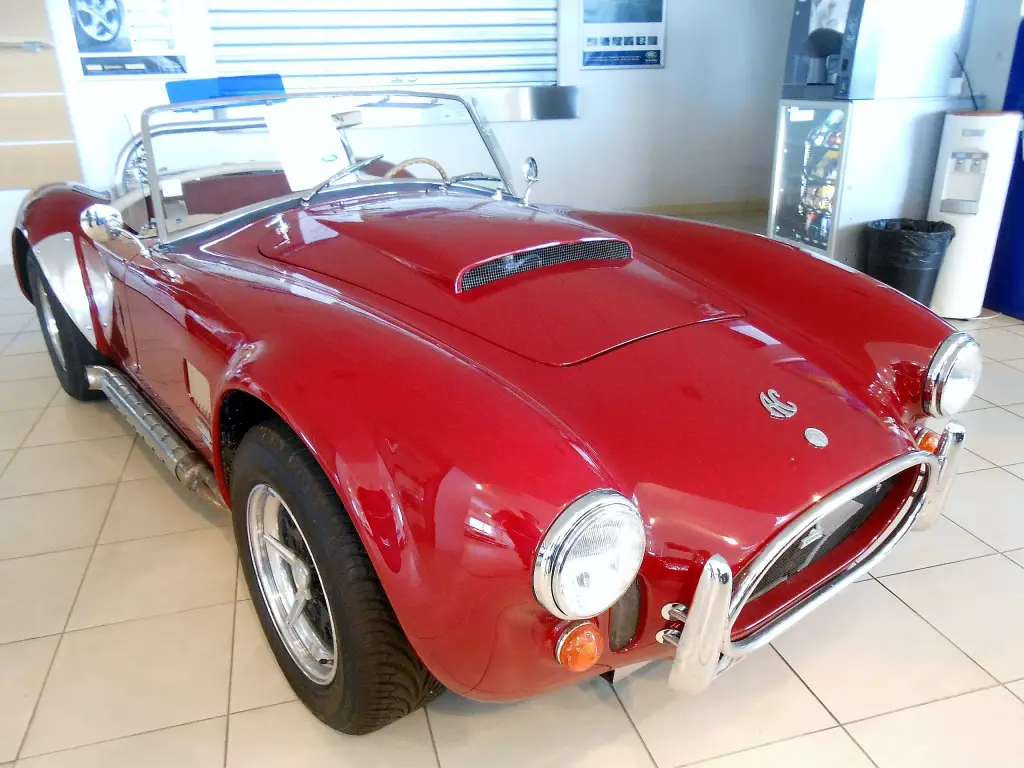
The AC Cobra is the sports car that AC Cars of Thames Ditton built around a Ford V8, sold in the United States as the Shelby Cobra. Produced from 1962 to 1967, it began as a V8-engined AC Ace and ended as the 427 Mark III, a car with a top speed of 264 km/h in standard form.
AC Cobra at a glance
| Maker | AC Cars, Thames Ditton, Surrey |
|---|---|
| Also sold as | Shelby Cobra and Shelby AC Cobra in the United States |
| Production | 1962–1967, in Britain and later the United States |
| Engine | Ford V8: 4.3 L (260), 4.7 L (289), 7.0 L (427) |
| Chassis | steel ladder frame; 4-inch main tubes on the Mark III |
| Suspension | transverse leaf spring on Mark I and II; coil springs all round on Mark III |
| Steering | recirculating ball, then rack and pinion from the Mark II |
| Mark I | 126 cars, 75 with the 260 and 51 with the 289 |
| Mark II | about 528 cars, 1963–1965 |
| 427 output | 425 hp; 485 hp in the semi-competition S/C |
| Top speed | 264 km/h (164 mph); 298 km/h (185 mph) for the S/C |
This page is based on English Wikipedia only, so its figures could not be checked against a second source.
History of the AC Cobra
From the Ace to the Cobra
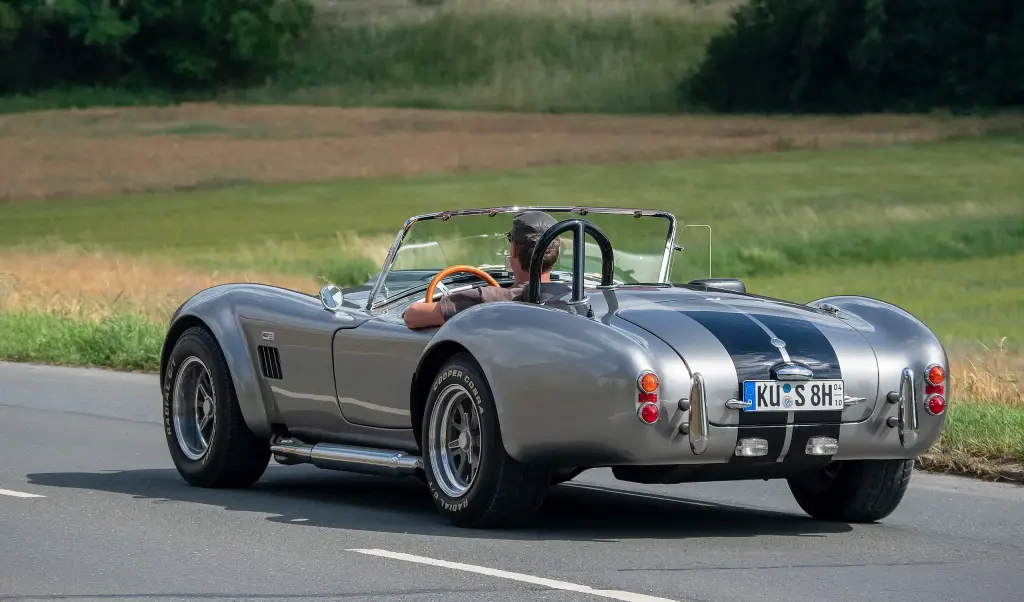
AC had built small numbers of its Ace two-seater roadster since 1953. The Ace had a steel ladder chassis with 3-inch tubular main rails and a hand-built aluminium body, and it used three different straight-six engines, ending with a 2.6-litre Ford Zephyr unit. In September 1961 Ford supplied Carroll Shelby with two of its new 221 cu in (3.6 L) small-block V8 engines, one of which was shipped to AC in England. In January 1962 the mechanics at Thames Ditton completed the “AC Ace 3.6” prototype, chassis CSX2000. AC had already reworked the front bodywork when fitting the Zephyr six, so the only further change was moving the steering box outward to clear the wider V8. A Salisbury 4HU differential with inboard disc brakes, the same unit as on the Jaguar E-Type, replaced the old E.N.V. axle. After testing, the chassis was air-freighted to Shelby in Los Angeles on 2 February 1962, and by then the engine had grown to 4.3 litres (260 cu in).
Mark I and Mark II
The first 75 Cobra Mark I cars, including the prototype, used the 260 V8; the remaining 51 Mark I cars received the larger 4.7-litre (289 cu in) engine, and Shelby offered an upgrade to owners of the earlier cars. In late 1962 AC’s chief engineer Alan Turner redesigned the front end to take rack and pinion steering while keeping the transverse leaf spring, which also served as the upper suspension link. The resulting Mark II entered production in early 1963 with a steering rack borrowed from the MGB and a column from the Volkswagen Beetle; about 528 were built up to the summer of 1965. AC also sold the Cobra in Europe under its own name, with the Ace 2.6 discontinued in 1963 to concentrate on cars for Shelby.
The 427 Mark III
A new Mark III chassis was designed with Ford in Detroit, using 4-inch main chassis tubes instead of 3-inch and coil spring suspension all round. It was powered by Ford’s 7.0-litre (427 cu in) FE “side oiler” V8 with a single four-barrel Holley carburettor, rated at 425 hp at 6000 rpm and 651 N·m at 3700 rpm, for a top speed of 264 km/h. The semi-competition S/C version was tuned to 485 hp and reached 298 km/h. Shelby also experimented with a 390 cu in engine in chassis CSX2196; Ken Miles raced it at Sebring and called it virtually undrivable.
Design and features
- Light British body, American power: AC’s aluminium roadster body was matched to a small-block Ford V8.
- Progressive chassis: the Mark II brought rack and pinion steering, the Mark III coil springs and a much stiffer frame.
- Race-bred specification: the 427 S/C combined the 7-litre engine with a top speed close to 300 km/h.
- Transatlantic production: cars were finished in England and, for the American market, completed by Shelby in California.
AC Cobra versions
- Mark I 260 (1962–1963): the original 4.3-litre car, 75 built.
- Mark I 289: the remaining 51 Mark I cars with the 4.7-litre engine.
- Mark II (1963–1965): rack and pinion steering and a revised front end; about 528 built.
- European model (COB/COX 6001–6062): cars sold by AC in Europe rather than through Shelby.
- 427 Mark III: the big-block car on the new coil-sprung chassis.
- 427 S/C: the semi-competition version with 485 hp.
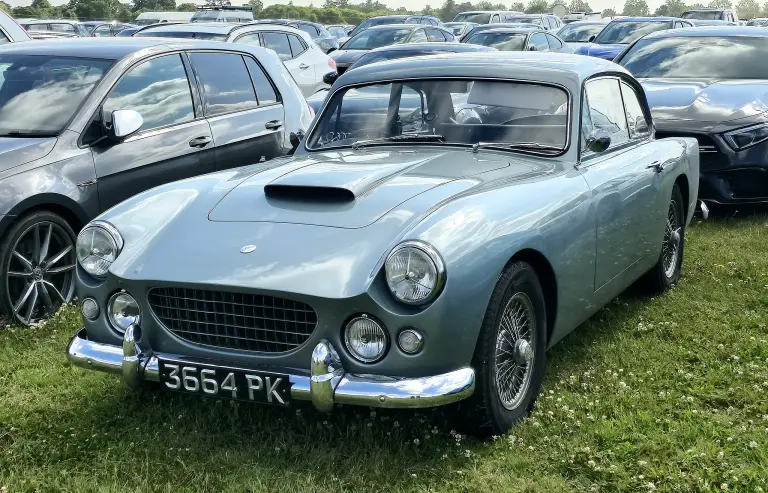
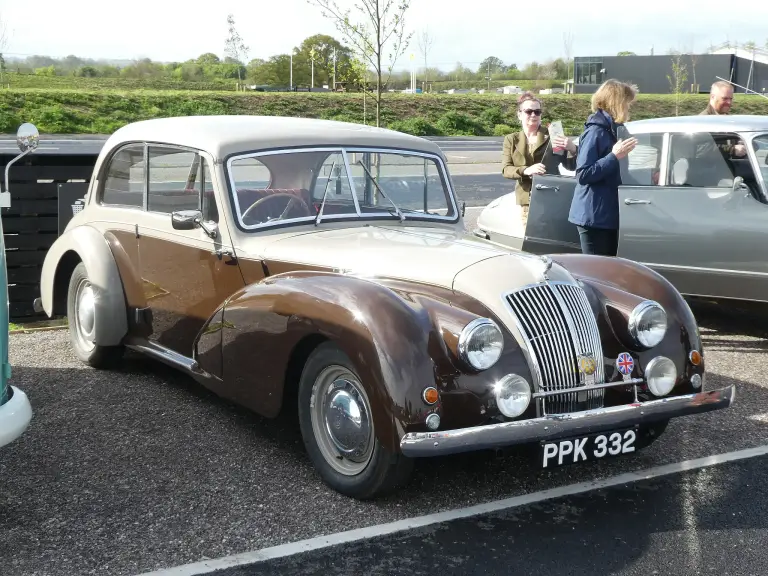
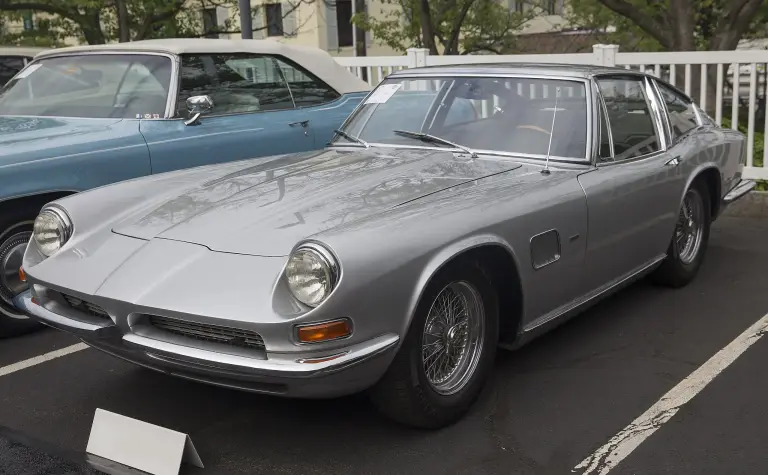
The AC 428 used an extended Cobra 427 Mark III chassis, and AC’s earlier six-cylinder cars include the Greyhound. More cars are in the AC collection.
Video: Mit Stil: AC Cobra Shelby 427er Mark VI
Video on YouTube.
Sources
- AC Cobra, English Wikipedia: development, production, Mark II and 427