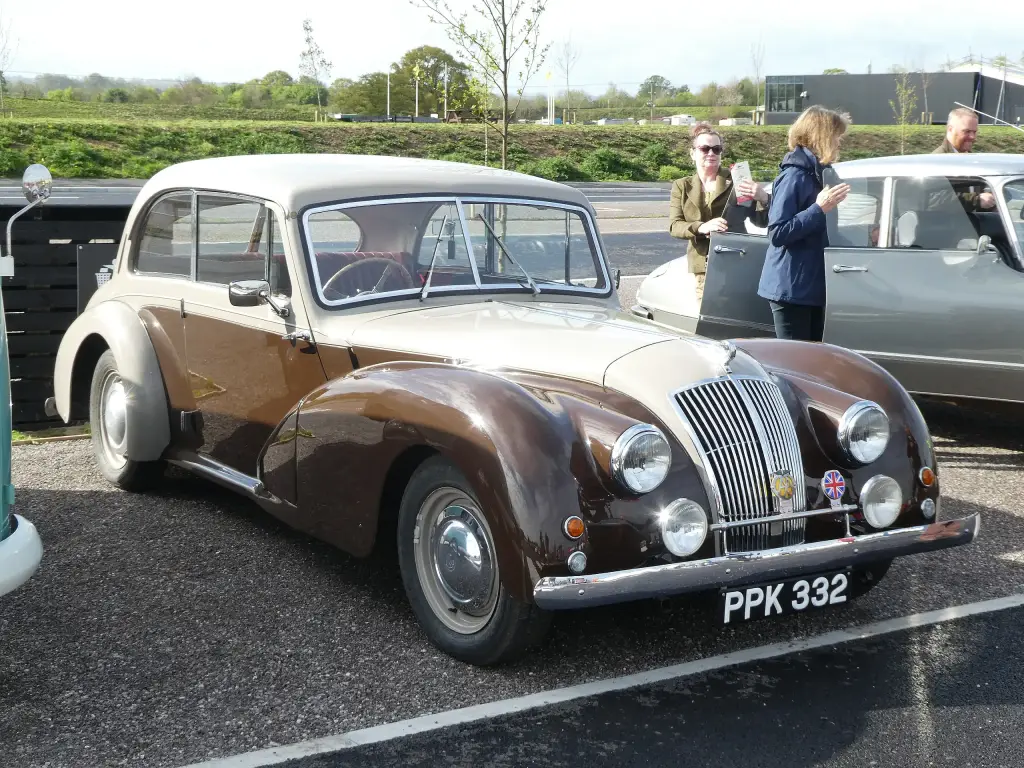
The AC 2-Litre is a saloon that AC of Thames Ditton in Surrey built between 1947 and 1956. It used a 1,991 cc six-cylinder engine that the company had first offered in 1922, and its aluminium-panelled body on a wooden frame sat on a conventional steel chassis. Two-door and, from 1952, four-door saloons were sold, along with a small number of drophead coupés and Buckland tourers.
AC 2-Litre at a glance
| Maker | AC Cars, Thames Ditton, Surrey |
|---|---|
| Production | 1947–1956 |
| Body | aluminium panels on a wood frame; steel chassis |
| Body styles | 2-door saloon; 4-door from 1952; drophead coupé and Buckland tourer from 1949 |
| Engine | 1,991 cc straight-six, aluminium block, wet liners |
| Carburettors | three SU |
| Power | 74 bhp (1947); 85 bhp from 1951 |
| Front suspension | rigid axle, semi-elliptic leaf springs |
| Rear suspension | rigid axle, semi-elliptic leaf springs |
| Brakes | hydraulic front, cable rear until 1951; 12-inch drums |
| Wheels | 16-inch from 1951 |
| Road test (The Motor, 1948) | 80 mph; 0–60 mph in 19.9 s; 23 mpg |
This page is based on English Wikipedia only, so its figures could not be checked against a second source.
History of the AC 2-Litre
An engine from 1922
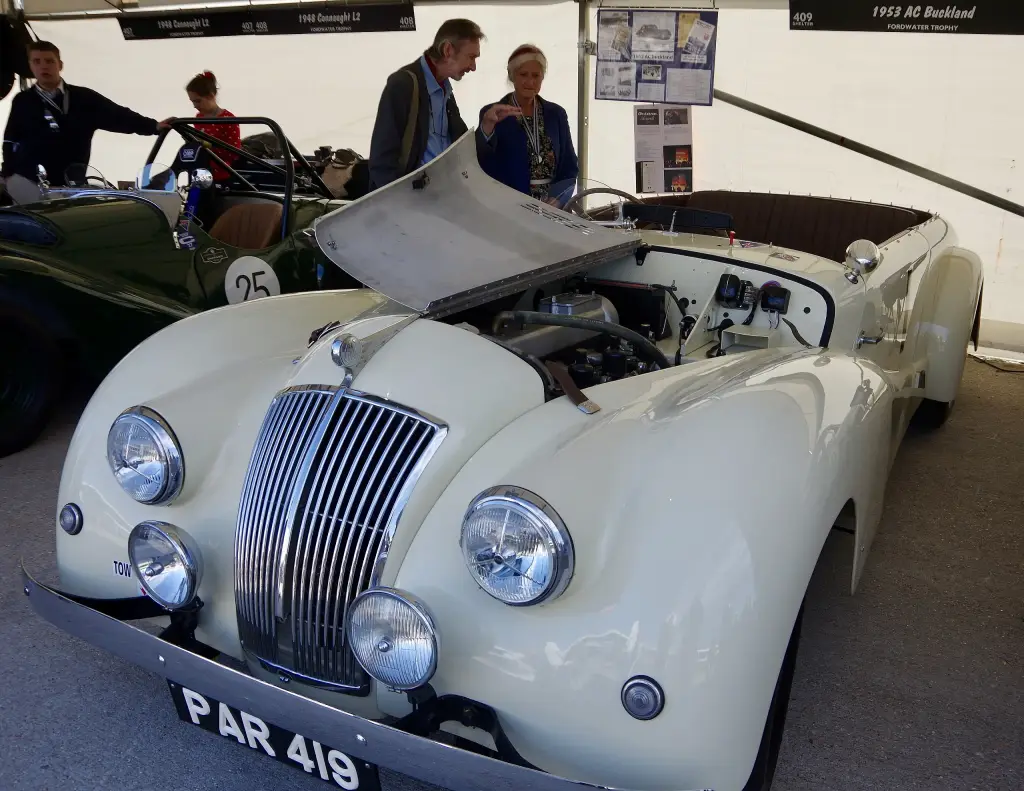
The car’s wet-liner, aluminium-block, six-cylinder engine of 1,991 cc was the unit AC had first offered in the AC 16 back in 1922. By 1947 it was fed by three SU carburettors and produced 74 bhp, more than twice the 35 bhp claimed for its original commercial application. In 1951 output rose to 85 bhp. The engine outlived the car and continued to be offered in other AC models until 1963.
Body and chassis
The aluminium-panelled body was fitted to a wooden frame and mounted on a conventional steel chassis with rigid axles front and rear and semi-elliptic leaf springs. The 2-Litre was the first AC to use hydraulic dampers. Until 1951 it had a hybrid braking system, hydraulic at the front and cable at the rear, with 12-inch drums. The car changed very little during its ten-year production run, though the wheel size grew slightly to 16 inches in 1951.
On the road
A two-door saloon tested by The Motor magazine in 1948 reached a top speed of 80 mph and accelerated from 0 to 60 mph in 19.9 seconds, with fuel consumption of 23 miles per imperial gallon. The test car cost £1,277 including taxes.
Design and features
- Long-lived six: the 1,991 cc engine was a proven AC design dating back to 1922.
- Light body: aluminium panels over a wooden frame kept weight down.
- Comfortable chassis: rigid axles and leaf springs, with hydraulic dampers for the first time on an AC.
- Gradual improvement: more power in 1951, larger wheels the same year and a four-door option from 1952.
AC 2-Litre versions
- Two-door saloon: the original body style, in production throughout.
- Four-door saloon: added in 1952.
- Drophead coupé: a small number built from 1949.
- Buckland tourer: an open tourer offered from 1949.
The 2-Litre’s six-cylinder engine also powered later AC models such as the Greyhound. The Cobra replaced AC’s six-cylinder line, and more cars are in the AC collection.
Sources
- AC 2-Litre, English Wikipedia: production, engine, chassis, road test