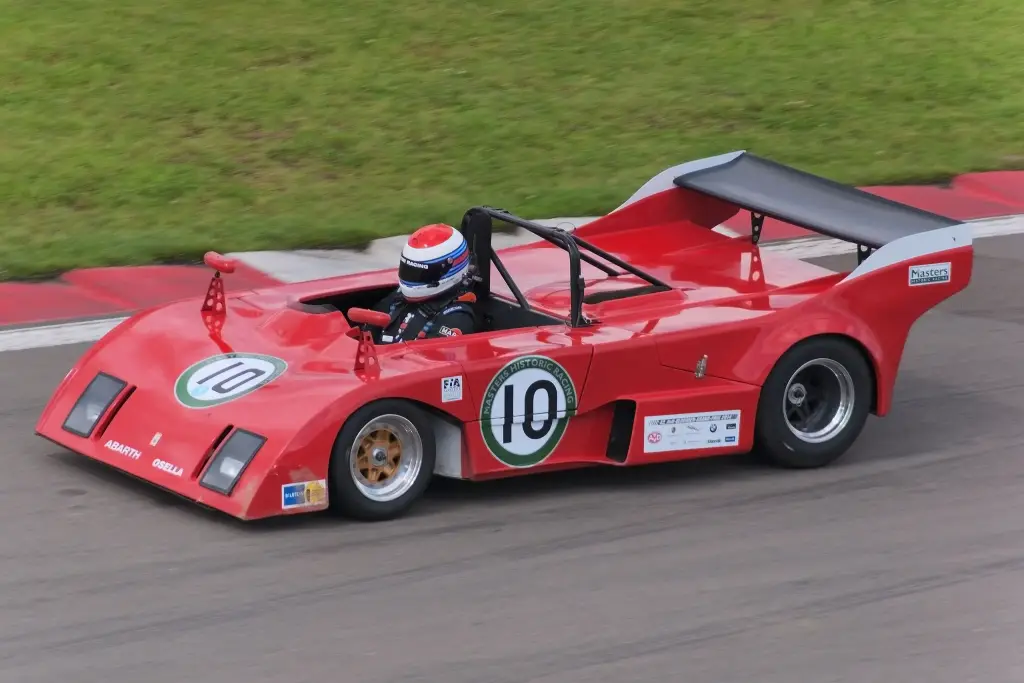
The Abarth-Osella SE-021 and PA1 were 2-litre Group 5 (Sports 2000) prototype race cars built by the Italian firm Osella with Abarth four-cylinder engines, raced in the World Sportscar Championship and the European 2-litre series from 1972. The PA1 was the 1973 development of the SE-021 and stayed in competition until 1982. This page covers the key figures, the history, the two cars and common questions.
Abarth-Osella SE-021 and PA1 at a glance
| SE-021 | PA1 | |
|---|---|---|
| Class | Group 5 (Sports 2000) prototype | Group 5 (Sports 2000) prototype |
| Built by | Osella, with an Abarth engine | Osella, in collaboration with Abarth |
| Racing seasons | 1972 and some races in 1973 | 1973, used in competition through 1982 |
| Engine | 2.0 L Abarth four-cylinder | 2.0 L Abarth type E four-cylinder, twin-shaft, four valves per cylinder, Lucas injection |
| Power | 265 hp | 270 hp at 8,700 rpm, 285 hp in the G version |
| Weight | 530 kg | not stated in our sources |
| Layout | mid-engined | square steel-tube frame with aluminium panels, rear tube frame carrying engine, gearbox and suspension |
| Units built | not stated in our sources | 10 |
| Race record | 39 races, 10 podiums, 8 wins | two wins in 1973, third place for the Abarth team in the European championship |
The figures come from English Wikipedia, which covers each car in its own short article. The SE-021 article gives only the data in the table.
History of the Abarth-Osella cars
From Abarth sports cars to Osella
Osella was founded in Volpiano in 1965 by the former rally driver Enzo Osella. The team began by racing Abarth sports cars in local and national events in Italy. In 1974 Osella took over the factory Abarth sports car programme and expanded into single-seater racing; it later competed in Formula One between 1980 and 1990.
SE-021
The 2000 Sport SE-021 was a mid-engined 2-litre prototype for the 1972 World Sportscar Championship, and it also ran in some races in 1973. The chassis was developed by Osella and the engine was an Abarth four-cylinder of 265 hp. Because the car weighed only 530 kg, English Wikipedia calls its power-to-weight ratio incredible. It was entered 39 times, with 10 podiums and 8 wins.
PA1
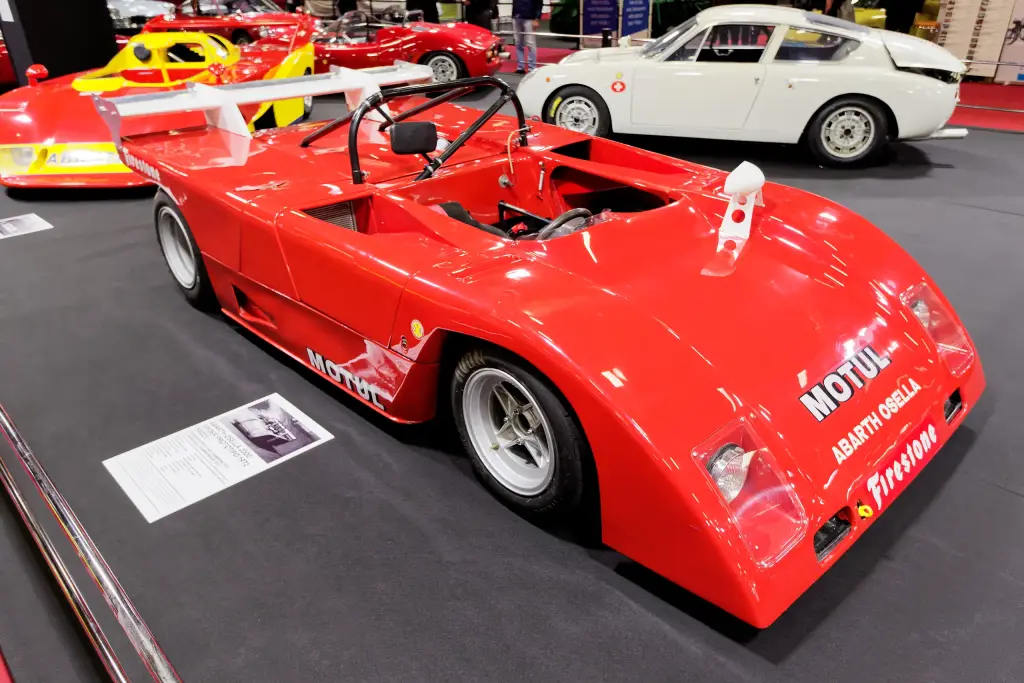
For 1973 Osella took over the Abarth material and the two-litre cars of the 1972 European sports season, evolved the car and gave it a new name: PA-1, in honour of the engineer Alberto Guerrato, who died that year. First tests took place in January 1973 at Morano Po with Enzo Osella himself, followed by tests with Arturo Merzario at Misano and Vallelunga and with Nanni Galli, who damaged the car in an accident.
The European 2-litre championship began at Paul Ricard on 8 April 1973. Drivers of the PA1 that year included Arturo Merzario, Vittorio Brambilla, Nanni Galli, Dieter Quester, Jean-Claude Andruet, Henri Pescarolo and Derek Bell. The cars won only twice: Brambilla won the Enna City Cup at Pergusa on 15 August and Merzario won the 500 km of the Nürburgring on 2 September. The Abarth team finished third behind Lola and Chevron, and the title went to the Lola T292 of Chris Craft.
Design and features
- Frame: the PA1 had a frame of square steel tubes with glued and riveted aluminium panels, and at the rear a round-tube frame that carried the engine, gearbox and suspension.
- Suspension and gearbox: torsion bars on both axles and a Hewland FG 400 gearbox beside the rear brakes.
- Engine: the 2-litre Abarth type E four-cylinder with twin camshafts, four valves per cylinder and Lucas fuel injection.
- Aerodynamics: the PA1 first had two small rear wings at the edge of the bodywork, which were quickly replaced by a single wing to give more downforce.
Variants
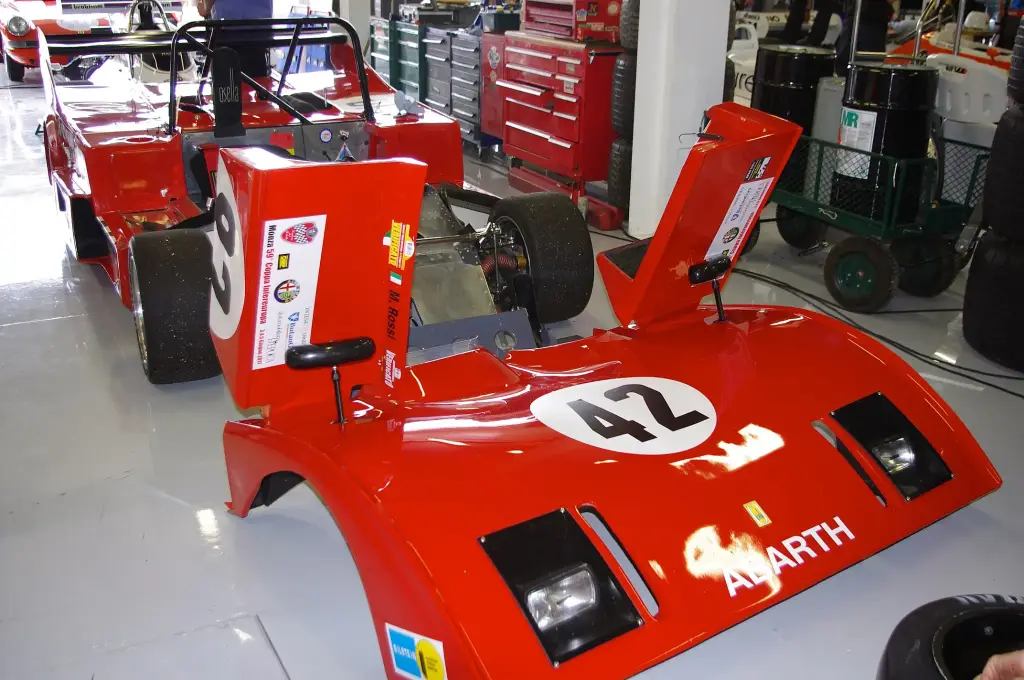
- Abarth-Osella 2000 Sport SE-021 (1972): the first car, with Osella’s own chassis and an Abarth engine.
- Abarth-Osella PA1 (1973): the evolved car, built in 10 units.
- PA1 G version: the engine was increased from 270 hp to 285 hp.
More Abarth sports and racing cars are in our Abarth collection, for example the Abarth OT series, the Abarth 1000 and the Abarth 750.
Abarth-Osella questions and answers
What is the Abarth-Osella PA1?
A 2-litre Group 5 prototype racing car built by Osella in collaboration with Abarth, raced from 1973 and used in competition through 1982.
What does PA1 mean?
The car was named PA-1 (Alberto-1 Prototype) in honour of the engineer Alberto Guerrato, who died in 1973.
What engine does it have?
The PA1 used the 2-litre Abarth type E four-cylinder with four valves per cylinder and Lucas injection, producing 270 hp (285 hp in the G version). The SE-021 had a 265 hp Abarth four-cylinder.
How many PA1 were built?
Ten.
What was the Abarth-Osella SE-021?
The 1972 predecessor: a mid-engined 2-litre prototype that weighed 530 kg. It entered 39 races and won 8.
Who founded Osella?
Enzo Osella, a former rally driver, founded the company in Volpiano in 1965.
Sources
- Abarth-Osella PA1, English Wikipedia: construction, history, results
- Abarth-Osella 2000 Sport SE-021, English Wikipedia: specifications and race record
- Osella, English Wikipedia: company history