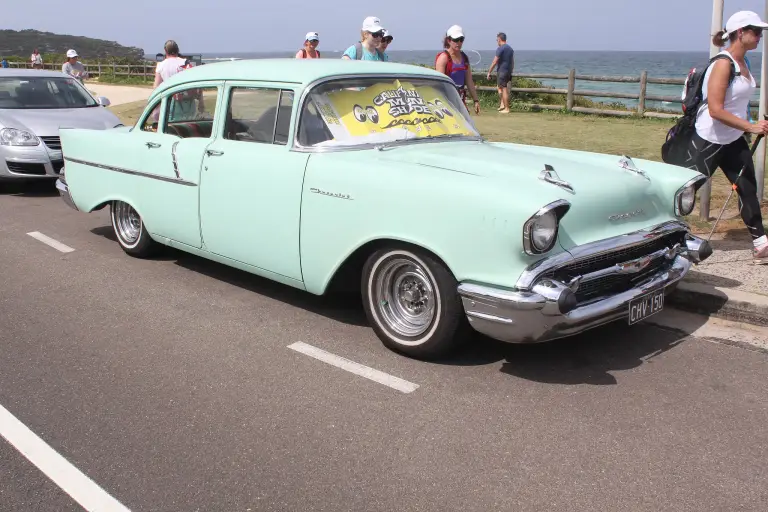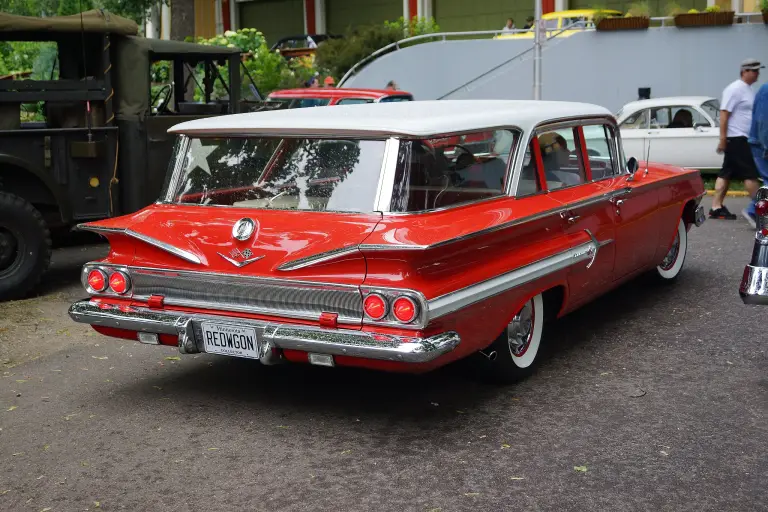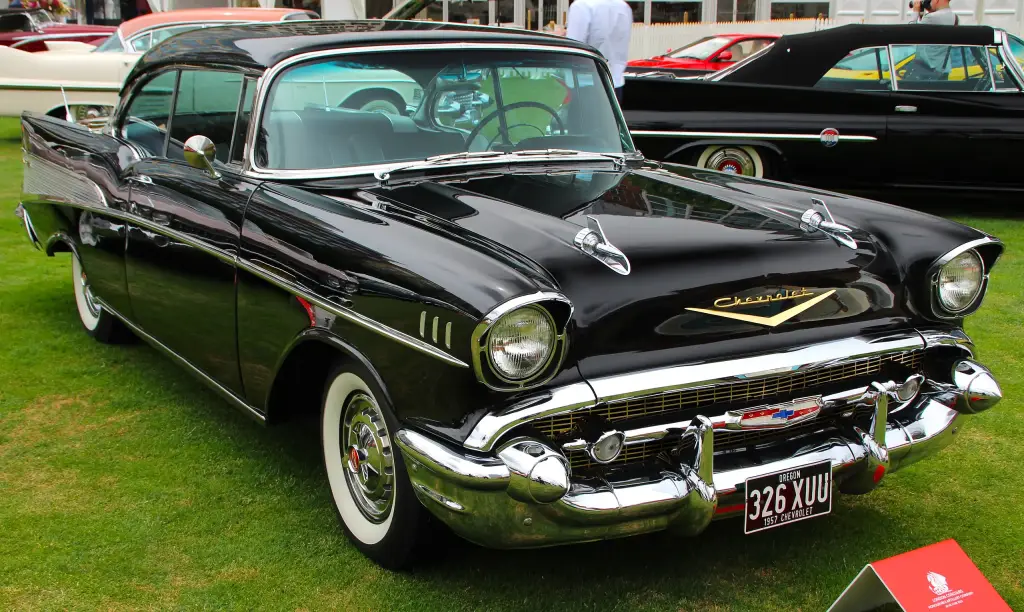
The 1957 Chevrolet Bel Air is the best-known of the “Tri-Five” Chevrolets, a car that Chevrolet built in more than 700,000 examples in a single year. It was introduced in September 1956 as the upscale series of the 1957 Chevrolet range, and it combined sharp tail fins, gold anodized trim and a new 283 cu in V8 with, for the first time at Chevrolet, fuel injection.
1957 Chevrolet Bel Air at a glance
| Introduced | September 1956, for the 1957 model year |
|---|---|
| Series | Bel Air (top), Two-Ten, One-Fifty |
| Body styles | Two- and four-door sedans, Sport Coupe, Sport Sedan, convertible, Nomad two-door wagon, Townsman four-door wagon |
| Engines | 235.5 cu in six, 140 hp; 265 cu in V8, 162 hp; 283 cu in V8, 185 or 220 hp; dual four-barrel 283, 270 hp; fuel-injected 283, 283 hp |
| Wheels | 14-inch, replacing the 15-inch wheels of earlier years |
| Production | 1,515,177 Chevrolets, of which 702,220 were Bel Airs, including 47,562 convertibles |
Specifications from English Wikipedia; production totals from the RM Sotheby’s lot description. The 283 hp fuel-injected engine cost $500; a 250 hp fuel-injected version also existed.
A new look on an old chassis
General Motors executives wanted an entirely new car for 1957, but production delays meant the 1955–56 design had to be used for one more year. Chevrolet’s chief engineer Ed Cole ordered a series of changes that increased costs: a new dashboard, a sealed cowl and the relocation of air ducts to the headlight pods, which gave the car its distinctive chrome headlamps. Fourteen-inch wheels lowered its stance, a wider grille made it look wider from the front, and the now famous tail fins were designed to duplicate the wide look at the rear.
Bel Air models kept the same chassis, powertrains and body but got upscale gold trim: a mesh grille insert, fender chevrons and the “Chevrolet” script on the hood and trunk were all in anodized gold, and the fins carried a ribbed aluminium insert exclusive to the Bel Air. Some called the car a “Baby Cadillac” because of its styling similarities to Cadillacs of the time.
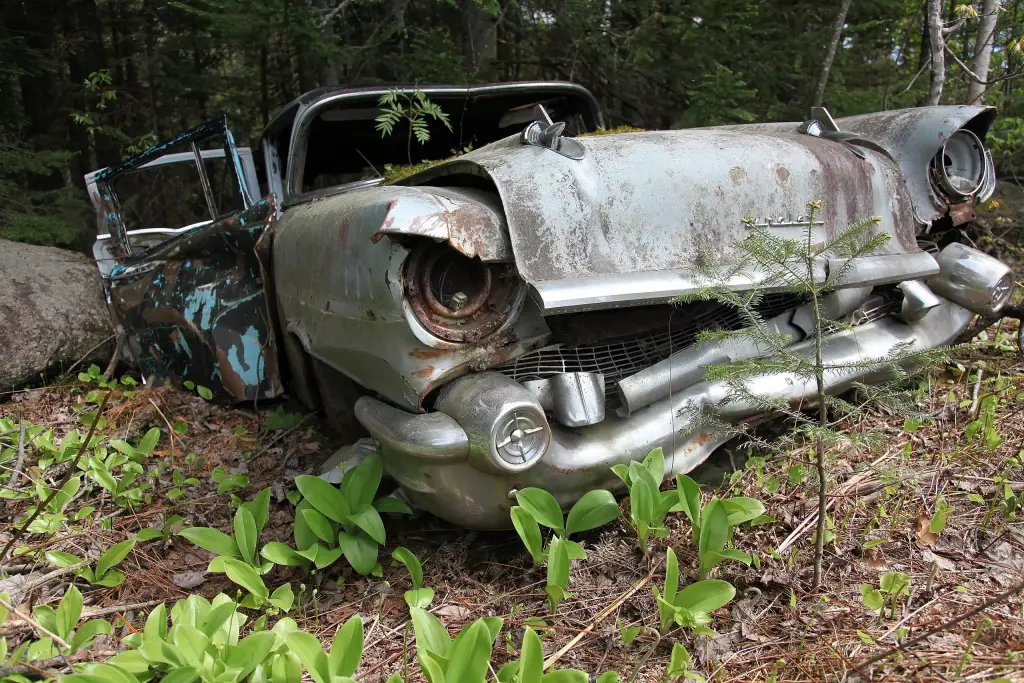
Engines and the “fuelie”
The base engine was the Blue Flame six, but most buyers took a V8. For 1957 the small-block grew to 283 cu in, offered in six variations from 185 to 283 hp, including dual four-barrel versions and the first fuel-injected one. Chevrolet called its Rochester Ramjet system the “most far-reaching engine improvement in the entire industry”, and fuel-injected cars are recognisable by a crossed-flags emblem on the front fenders.
The fuel-injected 283 was advertised at one horsepower per cubic inch, a first for a General Motors vehicle. The system was expensive and many mechanics did not have the experience to keep it running properly, which pushed most buyers back to carburettors. In NASCAR the 283 gave the ’57 a dramatic advantage over the smaller 265 V8 of 1955 and 1956, and the 55–57 Chevrolets won so many races that NASCAR held them to a cubic-inch restriction.
Body styles
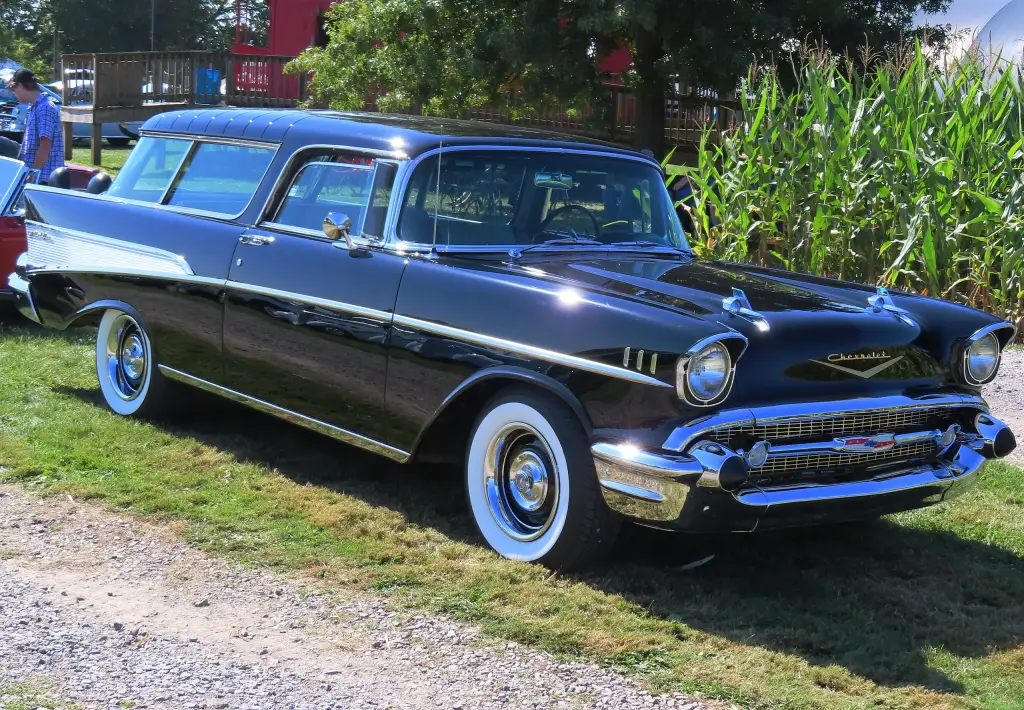
The Bel Air range was wide: pillared sedans, the pillarless Sport Coupe, a four-door Sport Sedan hardtop, a convertible, and the Nomad. The two-door Nomad wagon had its own distinctive roofline and rear deck and was the top-of-the-line Bel Air wagon. The four-door hardtop had a reinforced rear roof structure that gave it added rigidity and a distinctive silhouette.
For more Chevrolet, see our Chevrolet archive and the Classic Cars collection. Thinking of buying one? Read Buying a classic: what to check first.
1957 Bel Air questions and answers
Why is the 1957 Bel Air so famous?
Its tail fins, chrome headlamps and gold trim, combined with the new 283 V8 and fuel injection, made it an icon of the 1950s.
How many Bel Airs were built in 1957?
702,220, including 47,562 convertibles, out of 1,515,177 Chevrolets that year.
What does “Tri-Five” mean?
The 1955, 1956 and 1957 Chevrolets, which share the same basic body design.
Did the Bel Air have fuel injection?
Yes, as a high-priced option on the 283 V8, marked by crossed flags on the fenders.
Based on English Wikipedia and an RM Sotheby’s lot description. Figures for the fuel-injected engine differ between sources, so the table gives both.
Sources
- 1957 Chevrolet, English Wikipedia: history, trim, engines, body styles
- 1957 Chevrolet Bel Air Fuel-Injected, RM Sotheby’s: production figures and fuel-injection emblem