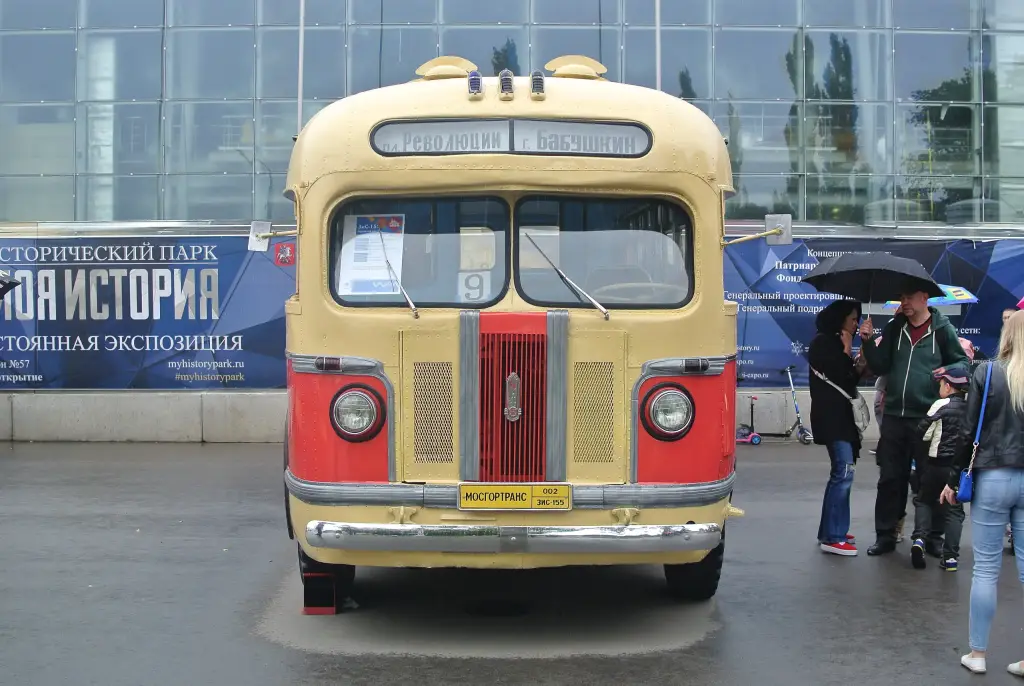
The ZIS-155 was a Soviet city bus mass-produced from 1949 to 1957 as a replacement for the ZIS-154. It was simpler to build and less capacious than its predecessor, and it became the main bus of Moscow and other large Soviet cities.
ZIS-155 at a glance
| Maker | Zavod Imeni Stalina (ZIS), Moscow |
|---|---|
| Production | 1949–1957 |
| Replaced | ZIS-154 |
| Replaced by | ZIL-158 |
| Engine | ZIS-124 six-cylinder petrol, 5,555 cc |
| Power | 95 hp (70 kW) |
| Capacity | 50 passengers, 28 seated |
| Top speed | 65 km/h |
| Length | 8,260 mm |
| Weight | 6,290 kg empty; 10,190 kg gross |
| Built | 21,741 |
English Wikipedia redirects ZIS-155 to its article on the GM ‘old-look’ bus, where the Soviet version is described; this page uses the Russian and German articles.
History of the ZIS-155
At the end of the 1940s the licence acquired from General Motors for the ZIS-154 was expiring, and the bus had proved maintenance-intensive and technically complicated in service. To overcome these problems, Moscow’s Central Auto Repair Workshop built prototypes of a new city bus on the chassis of the ZIS-150 truck. The diesel-electric drive of the ZIS-154 was abandoned in favour of an ordinary petrol engine with a manual gearbox, which greatly simplified the design; the ZIS-155 weighed almost two tonnes less than its predecessor.
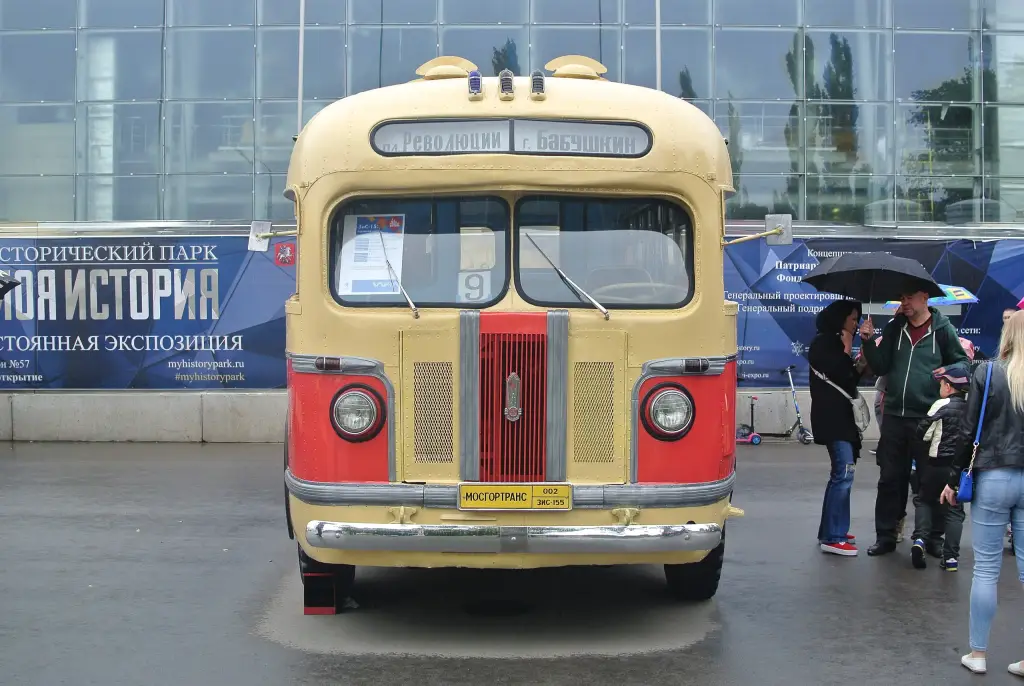
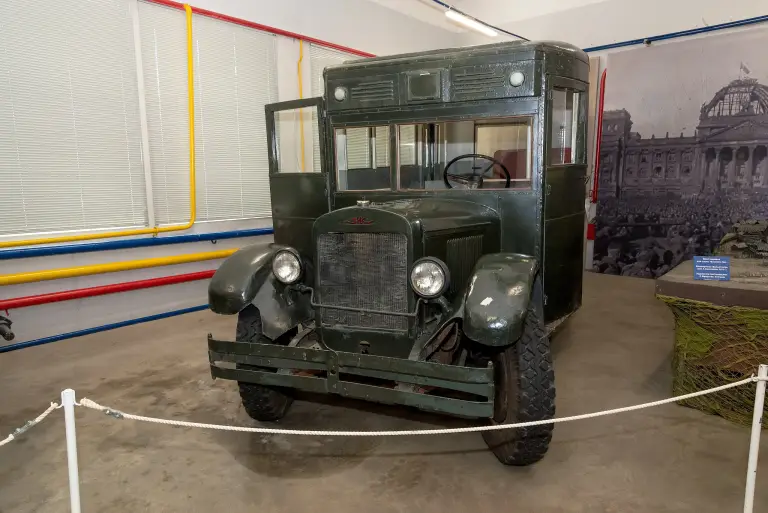
Full-scale production began at ZIS in 1949, shortly after the prototypes were presented. Many parts were taken from other vehicles, especially the ZIS-154 and the ZIS-150 truck: the brakes and engine came from the ZIS-150, while the cooling system and, in essence, the body came from the ZIS-154. The body was about 1.25 metres shorter than that of the predecessor, which made the two models easy to tell apart and earned the ZIS-155 the nickname ‘Kurze’ (the short one) from drivers.
The bus first used an alternator in the Soviet motor industry. It could carry 50 passengers, 28 of them seated, and its 95 hp ZIS-124 engine accelerated the 9.9-tonne vehicle to 65 km/h. An intercity version with 15 aircraft-type seats served the Moscow–Simferopol route, 1,399 km, which the bus covered in 38 hours with a four-hour stop in Kharkov. In Moscow, bus trains consisting of a ZIS-155 and trailers made from old written-off bodies were operated for a time, and the first Soviet mobile television stations were built on the ZIS-155 chassis. Buses of different years differed slightly; on the last ZIS-155s the body sides were updated and brought closer in design to the next model, the ZIL-158.
Service and replacement
The ZIS-155 was conceived as a transitional model, so its shortcomings – high steps above the pavement, poor interior heating, fumes in the driver’s cab, labour-intensive maintenance and frequent gear changes – were also seen as temporary. A total of 21,741 buses were built, and the type remained the main model of the bus fleets of Moscow and other large Soviet cities from the early 1950s to the mid-1960s. Of these, 1,726 buses, almost 8 per cent, worked in Moscow, where between April 1956 and October 1957 the ZIS-155 was the only bus model. One ZIS-155 remained in regular service until 1991 in the Glukhov district of Sumy region.
The ZIS-155 was exported to Poland, East Germany, China, Mongolia and Afghanistan. It was replaced in 1957 by the ZIL-158, 9.03 metres long and carrying 60 passengers, 32 of them seated. As of 2024 at least ten ZIS-155 buses survived in varying condition: four in Moscow, two in Saint Petersburg (one of them a runner), two in the Battle for Leningrad museum in Vsevolozhsk, one restored to running order in Kiev and one on a pedestal in Glukhov. Because the ZIS-155 was the main Soviet city bus of the 1950s, it appears in many Soviet films, among them Girl Without an Address (1956), Man Was Born (1956) and Son (1955).
Design and features
- Simpler than the ZIS-154: a petrol engine and manual gearbox replaced the diesel-electric drive, cutting the weight by almost two tonnes.
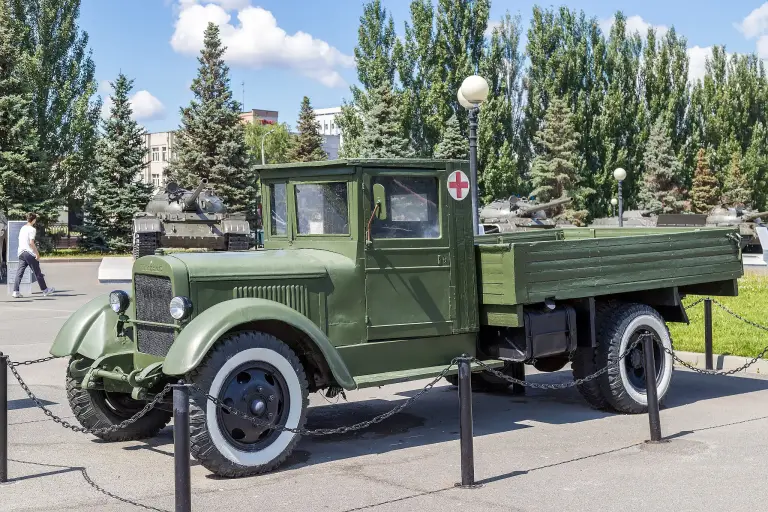
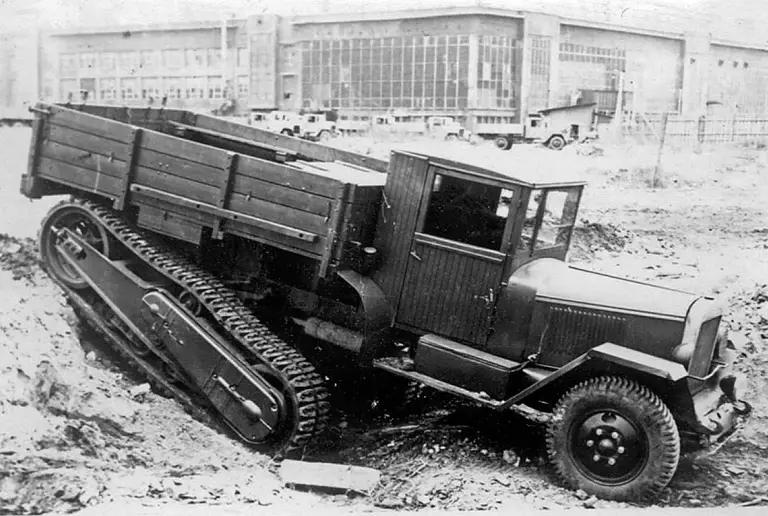
- Truck-based chassis: the bus used the chassis and engine of the ZIS-150 truck together with body elements of the ZIS-154.
- Alternator: the ZIS-155 was the first Soviet vehicle to use an alternator.
- Wide service: 21,741 buses were built, and the type was the main city bus of the USSR in the 1950s.
ZIS-155 versions
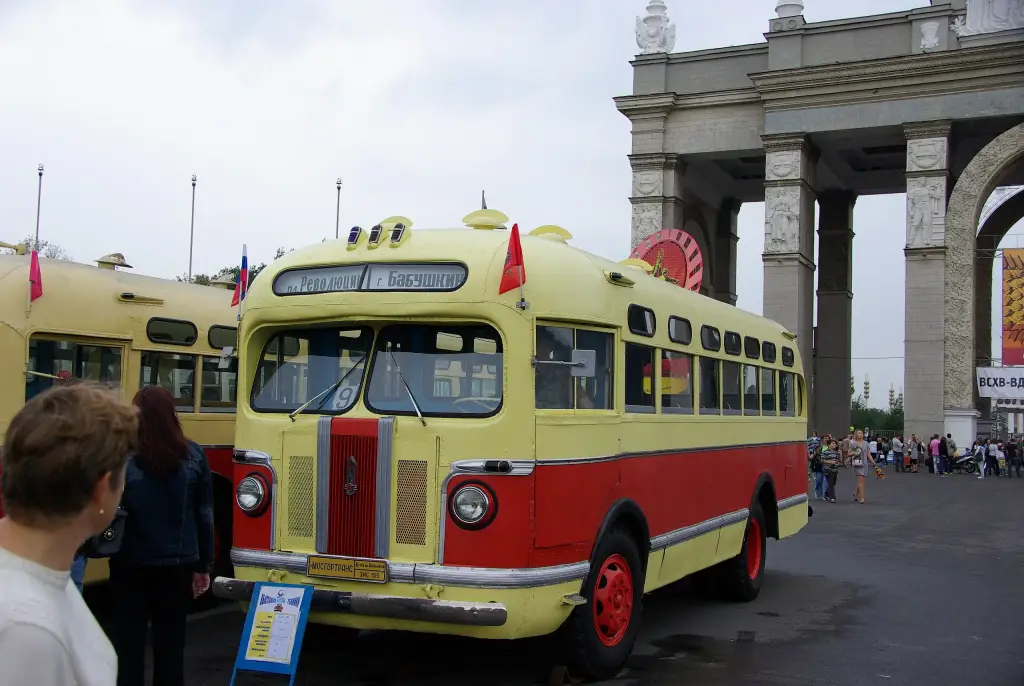
- ZIS-155 (1949–1957): the standard city bus.
- Intercity version: fitted with 15 aircraft-type seats for long-distance routes.
- ZIS-155A and ZIS-155M (from 1956): versions with minor changes, transitional to the ZIL-158.
- Mobile television stations: the first Soviet PTS vehicles were built on the ZIS-155 chassis.
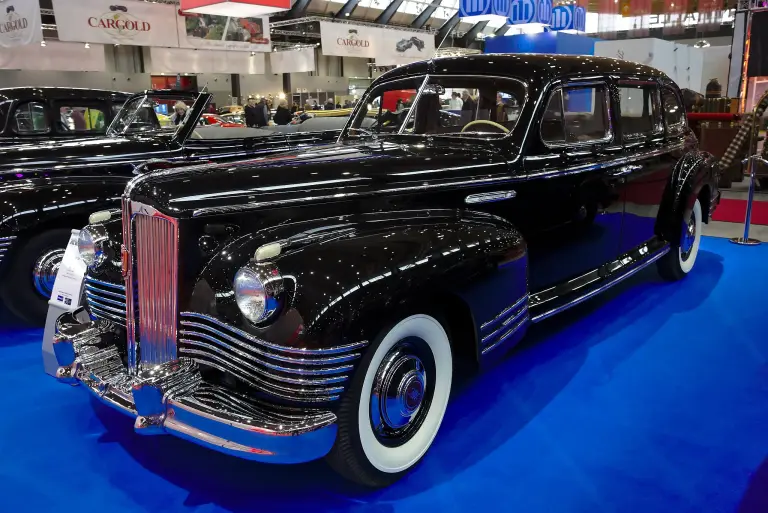
The ZIS-155 shared its engine and chassis with the ZIS-150 truck; the earlier Soviet city bus was the ZIS-16. More vehicles are in the ZIS collection.
Video: Тест-драйв ЗИС-155
Video on YouTube.
Sources
- ЗИС-155, Russian Wikipedia: production, capacity, service and survivors
- ZIS-155, German Wikipedia: development, technical data and maintenance