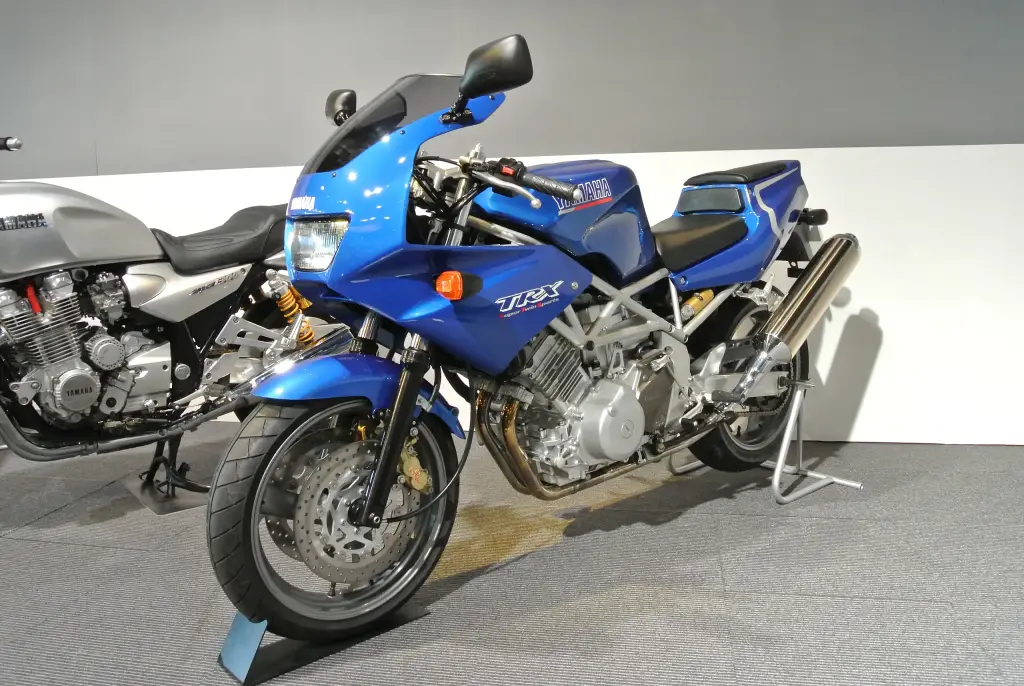
The Yamaha TRX850 is a sports motorcycle with an 849 cc ten-valve parallel-twin engine and a 270-degree crankshaft. It was first released in Japan in 1995, and a European version was sold from 1996 to 2000.
Yamaha TRX850 at a glance
| Maker | Yamaha Motor Company |
|---|---|
| Class | Sports motorcycle |
| Japan launch | 1995 |
| European sales | 1996–2000 |
| Engine | 849 cc DOHC parallel twin, ten valves |
| Valves | five per cylinder, 26 mm inlet and 28 mm exhaust |
| Crankshaft | 270 degrees from 1996 |
| Fuel system | carburettors |
| Frame | steel, styled after a Ducati trellis |
| Suspension | conventional forks, rising-rate monoshock |
| Weight distribution | engine oil tank built into the crankcase |
Based on one source (English Wikipedia).
History of the Yamaha TRX850
The TRX850 appeared in Japan in 1995 and reached Europe in 1996. It had a half fairing, clip-on handlebars and mildly rear-set footrests, conventional telescopic forks and a rising-rate monoshock at the rear. In effect it was a factory-built café racer for a solo rider, with little provision for a passenger.
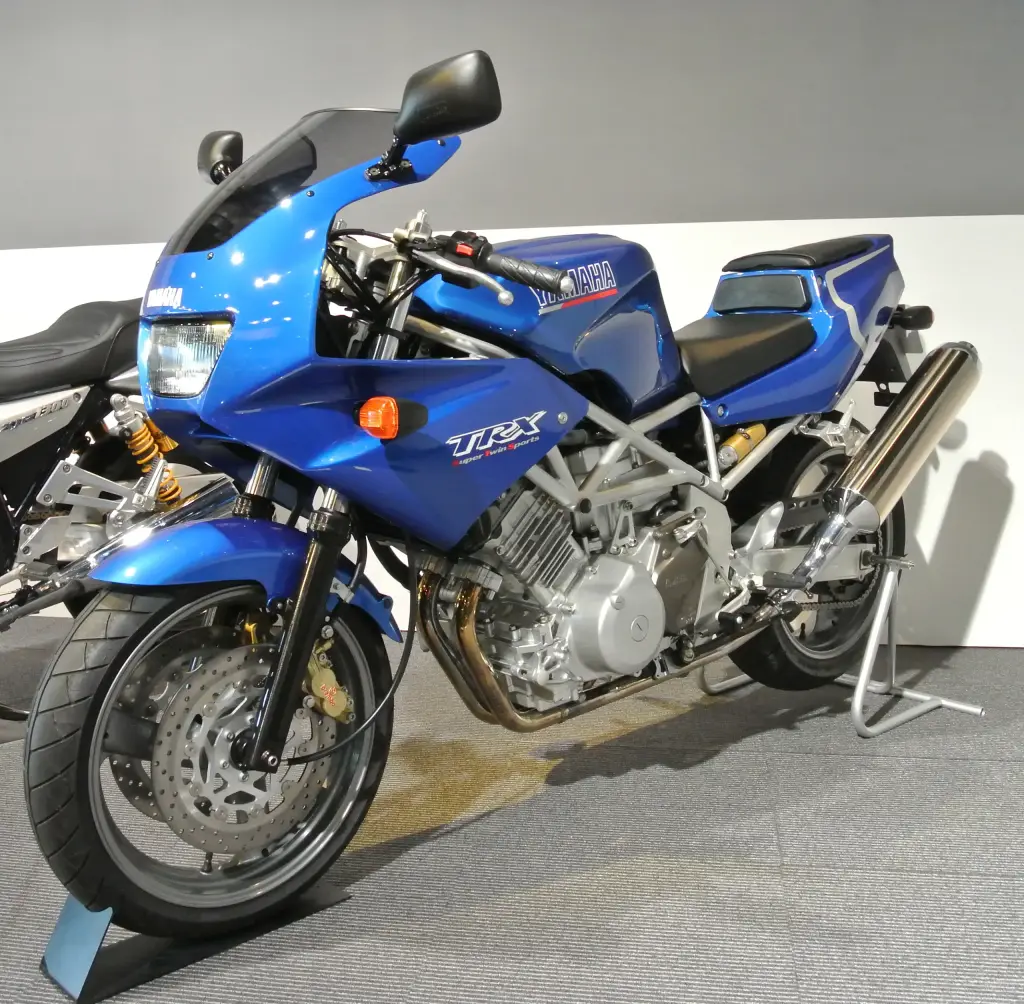
Its engine came from the Yamaha TDM850, but the TRX was lighter, lower and sportier. The five-valve cylinder heads used 26 mm inlet valves and 28 mm exhaust valves. Unusually for a dry-sump design, the oil tank was not remote but built into the engine above the gearbox, which simplified manufacture, removed external oil lines and helped the oil warm up faster. The shallow sump let the engine sit lower for a better centre of gravity. In 1996 the original 360-degree crankshaft was replaced by a 270-degree crank, after which the TRX and TDM shared the same engine and transmission, and a balance shaft smoothed the remaining vibration.
The 270-degree crankshaft was the first on a production motorcycle. It gives an ignition sequence and balance closer to a V-twin, and unlike 180- and 360-degree twins it never has both pistons stationary, so flywheel momentum stays continuous. Yamaha stopped making the TRX in 2000 with no obvious successor, while the TDM series continued until 2011. The TRX was designed to compete with the Ducati 900SS and copied its trellis-style frame, but despite being much cheaper it did not sell well. Motorcycle News called it “the best-kept secret in motorcycling” and a forgotten gem, and many owners have fitted race cans, Blue Spot front brake calipers and braided brake lines.
Design and features
- 270° crankshaft: the first production motorcycle with this layout, giving a V-twin feel.
- Integral oil tank: a dry-sump design with the tank above the gearbox.
- Café-racer layout: half fairing, clip-ons and a solo-focused riding position.
- Cult status: praised by the press but rare, and often modified by owners.
Yamaha TRX850 versions
- TRX850 (Japan, 1995): first version with a 360° crankshaft.
- TRX850 (1996–2000): 270° crankshaft shared with the TDM850 Mk II.
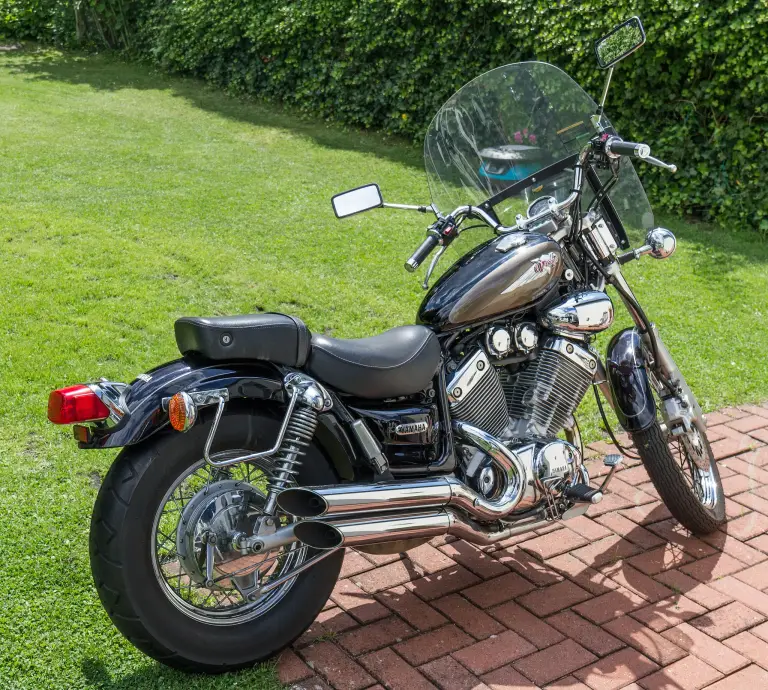
The TRX850 shares its engine with the TDM850, and it was aimed at the same market as big V-twins such as the Virago. More models are in the Yamaha collection.
Sources
- Yamaha TRX850, English Wikipedia: production, engine, chassis, 270° crank, reception, modifications