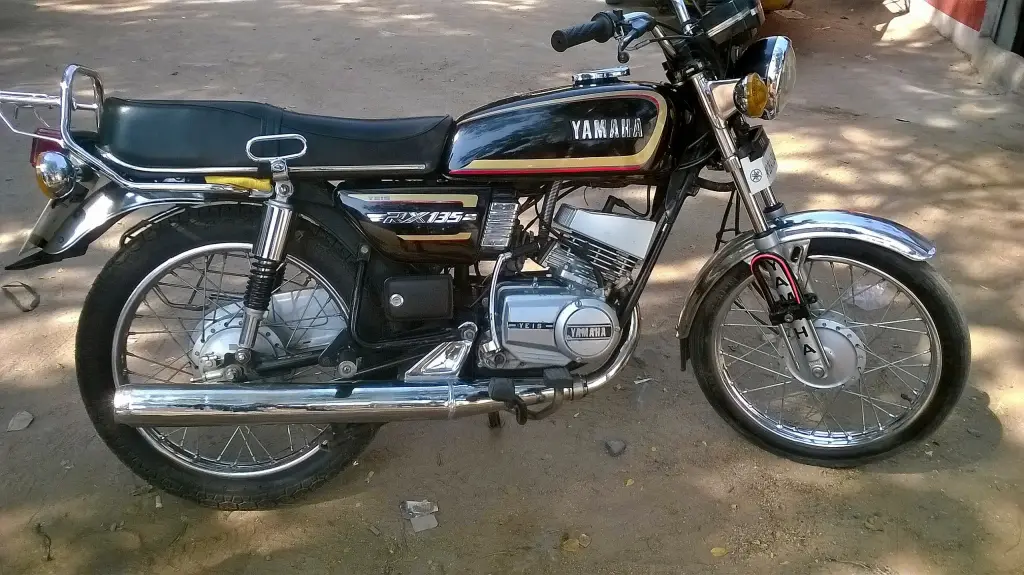
The Yamaha RX-King 135 is a two-stroke motorcycle that Yamaha built and sold across Southeast Asia. It appeared in 1980 and stayed in production in Indonesia until 2009, passing through four generations.
Yamaha RX-King 135 at a glance
| Maker | Yamaha Motor Company |
|---|---|
| Class | Two-stroke motorcycle |
| First model | RX-K 135, 1980 |
| Names by market | RX-King (Indonesia), RX-K (Malaysia, Singapore), RXT 135 (Philippines), RX-135 (India) |
| Original power | 17.5 PS at 8,750 rpm |
| Original torque | 14.8 N·m at 8,000 rpm |
| Original weight | 99 kg |
| Indonesian production | from 1983 |
| First RX-King engine | Japanese-built Y1/Y2, 18.2 PS |
| Master engine | 18.5 PS at 9,000 rpm after 1991 |
| Euro 2 | catalytic converter from 2006 |
| Production end | 2009 in Indonesia |
Based on one source (English Wikipedia).
History of the Yamaha RX-King 135
The RX-K 135 was released in 1980 with a bikini fairing and was imported fully built-up to Indonesia. Its engine produced 17.5 PS at 8,750 rpm and 14.8 N·m at 8,000 rpm, and the bike weighed 99 kg. A related RX-S, later called the RX-Special, used a 115 cc engine and was also imported complete. The RX line had begun with the RX 125 in 1976 and the RX 100, and it was originally developed for India, where it was built by Rajdoot and Yamaha; the RX name stood for Rajdoot X.
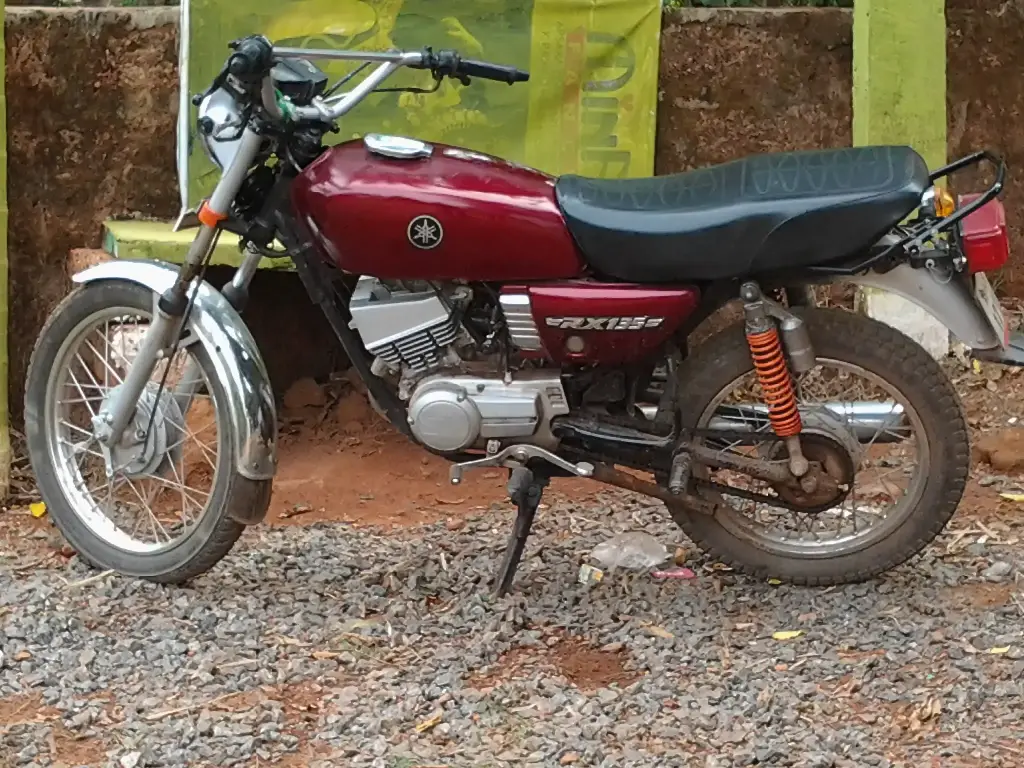
In 1983 the RX-K became the locally built RX-King, produced by Yamaha Indonesia Motor Manufacturing. The first RX-King had a reshaped fuel tank and an updated seat, and its raised handlebars earned it the nickname Cobra. It was especially desirable because it used an imported Japanese engine, engine codes Y1 and Y2, producing 18.2 PS and 15.1 N·m at 8,000 rpm. The engine had Yamaha’s Energy Induction System, developed after customer surveys showed that Indonesian buyers valued fuel economy.
A locally manufactured engine replaced the imported one after 1991, and the new model was nicknamed the RX-King Master. Power rose to 18.5 PS at 9,000 rpm, and the Master was remodelled in 1997. In 2002 the New RX-King arrived with a round headlight in place of the square unit, a new tail light, redesigned instruments and compliance with the stricter emissions rules of the time. From 2006 the Indonesian RX-King used a catalytic converter to meet Euro 2. The model also acquired a reputation as a getaway bike for street thieves and appeared in Indonesian songs, but it remained a cultural icon until production ended in 2009 after four generations.
Design and features
- Two-stroke performance: a light 99 kg motorcycle with about 18 PS.
- YEIS induction: Yamaha’s Energy Induction System tuned for economy and response.
- Local production: built in Indonesia from 1983 with imported and later local engines.
- Long evolution: four generations and updates through 2009.
Yamaha RX-King 135 versions
- RX-K 135 (1980–1982): imported original with a bikini fairing.
- RX-S / RX-Special: related 115 cc model imported complete.
- RX-King Cobra (1983–1990): first locally built version with Japanese Y1/Y2 engine.
- RX-King Master (1991–1997): local engine with 18.5 PS, remodelled in 1997.
- New RX-King (2002–2009): round headlight and updated instruments.
The RX-King shares its two-stroke heritage with the RX-Z and the RD350. More models are in the Yamaha collection.
Sources
- Yamaha RX-King 135, English Wikipedia: names, history, engines, generations, emissions