The WSK M06 B3 was one of the most popular motorcycles ever produced in Poland. Production started in 1971, and from 1975 the model was joined by a “bird family” of named versions – Gil, Lelek and Bąk – which differed mainly in colour, trim and riding position. The Gil and the base M06 B3 remained on the line until the plant closed in 1985.
WSK M06 B3 Gil and Lelek at a glance
| Maker | WSK, Świdnik |
|---|---|
| Production | 1971–1985 |
| Built (M06 B3) | 658,406 |
| Engine | S01-Z3A two-stroke single, 123 cm³, air-cooled |
| Bore × stroke | 52 × 58 mm |
| Power | 7.3 hp (5.4 kW) at 5,300 rpm |
| Torque | 9.8 Nm at 4,200 rpm |
| Gearbox | three-speed, chain final drive |
| Brakes | full-hub drum, 135 mm (185 mm from the Kos) |
| Wheels | 3 × 18, interchangeable |
| Dimensions | 2,020 × 645 × 1,000 mm |
| Dry weight | 97–98 kg |
| Top speed | about 80 km/h |
| Fuel consumption | 2.8 l/100 km at 60 km/h |
Only Polish Wikipedia covers this model; the Gil and Lelek were sold as named versions of the M06 B3, so they are described here in one article. Production figures for the individual versions come from the article on the WSK marque.
History of the WSK M06 B3 Gil and Lelek
The base model, 1971
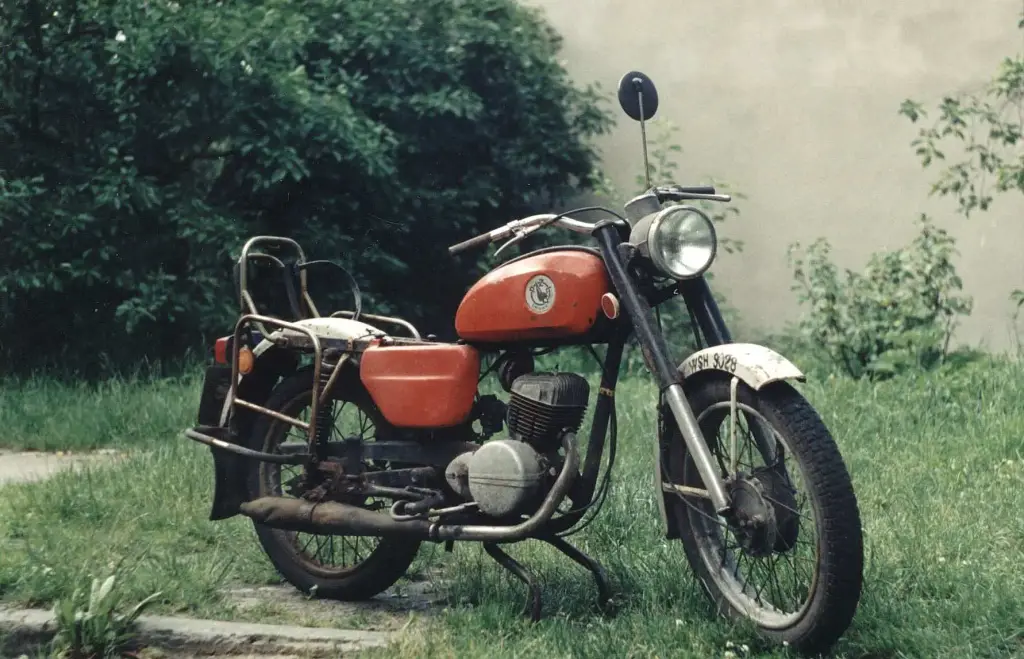
The M06 B3 entered production in 1971 as the next development of the long-running M06 family, which WSK had built at Świdnik since 1955 alongside aircraft work. Its single-cylinder two-stroke engine of 123 cm³ produced 7.3 hp and drove through a three-speed gearbox and chain; telescopic forks with oil damping, full-hub drum brakes and interchangeable 18-inch wheels made it a simple but capable everyday machine. The frame was a single tubular cradle, the fuel tank held 10.5 litres and the dry weight was about 98 kg.
The bird family, 1975–1978
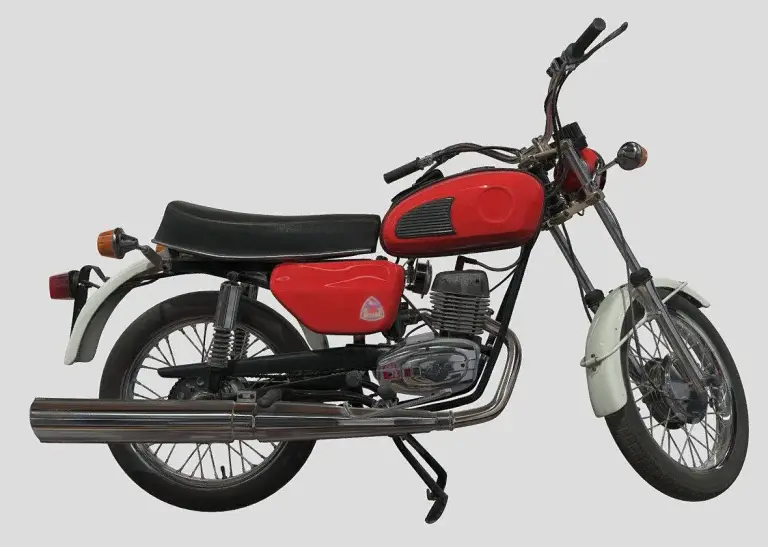
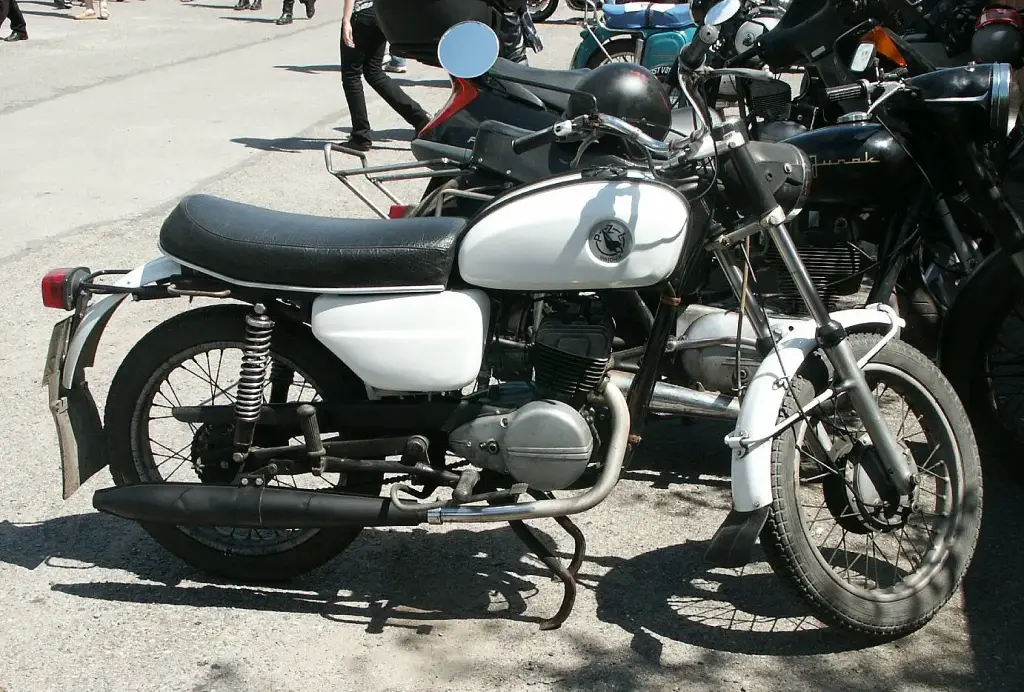
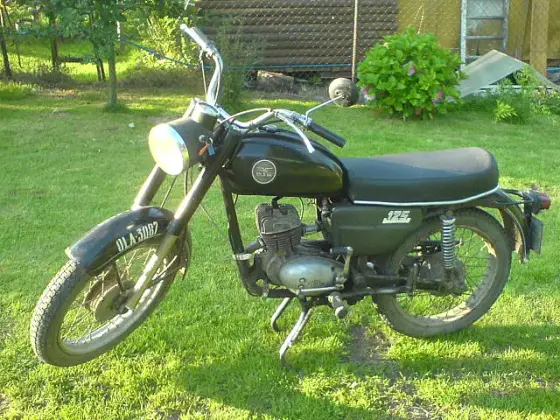
Between 1975 and 1978 WSK added versions that carried their own names on top of the M06 B3 code: Gil, Lelek and Bąk. They were painted in bright colours – yellow, red, blue, light green and brown – had a smaller 10.5-litre tank instead of 13 litres, a differently shaped seat and mudguards painted grey or in the colour of the tank. The Bąk was styled as a soft chopper, with a high handlebar and a reclined passenger seat. The Lelek, with its high-mounted exhaust and mudguard and wide handlebar, looked like an off-road motorcycle. The Gil was changed least: it received side panels with pressings and a front lamp and mudguards painted to match the tank and panels, and together with the base M06 B3 it was the lightest version at 97 kg dry.
Kos and the 1984 changes
Production of the Lelek and the Bąk ended in 1978. A year later WSK introduced the Kos, built alongside the Gil, with a new 185 mm front hub instead of 135 mm – the same size used on the M21W2 Perkoz – as well as a new type of mudguard and suspension. In 1982 side reflectors became standard, round ones at first and square ones from 1984, when the rear lamp became the LMT-1 unit shared with the Romet Chart. The 1984 model brought the biggest changes: white instead of black side-panel nuts, the engine hung at the front on a single bolt instead of two, a Unitra GB-015 diode rectifier, angular mudguards and a four-position ignition switch. The cast-iron cylinder gave way to an aluminium one, and the clutch cover was fastened differently. Quality fell noticeably: the aluminium cylinder could strip the thread of the exhaust nut, felt bearing seals were rarely fitted, and the front engine mount sometimes cracked.
The end, 1985
On 24 July 1985 the two-millionth WSK motorcycle, an M06 B3 Kos, left the line at Świdnik; it is now in the Moto Strefa WSK museum in the town. Production was stopped by a decision of 31 October, and the last machine left the factory on 5 November 1985 – the last motorcycle built in Poland. In 2020 the Polish vehicle register still listed 36,398 WSK motorcycles.
Design and features
- Telescopic front fork: with oil damping, a strong point of the M06 range since the 1960s.
- Full-hub drum brakes: 135 mm at first, 185 mm at the front from the Kos.
- Three-speed gearbox: chain drive to the rear wheel, ratios 2.93, 1.49 and 1.00.
- Small 10.5-litre tank: on the bird-family versions, down from 13 litres.
- Bright paint: yellow, red, blue, light green and brown on the named versions.
WSK M06 B3 Gil and Lelek versions
- M06 B3 (1971–1985): the base model, 658,406 built.
- Gil (1974–1980): 58,683 built; side panels with pressings, lamp and mudguards in body colour, 97 kg dry.
- Lelek (1975–1977): 12,438 built; high exhaust, high mudguard and wide handlebar gave it an off-road look.
- Bąk (1975–1977): 9,701 built; soft-chopper styling with a high handlebar and reclined passenger seat.
- Kraska (1978): about 12 built.
- Kos (1979–1985): 41,540 built; 185 mm front hub, new mudguard and suspension.
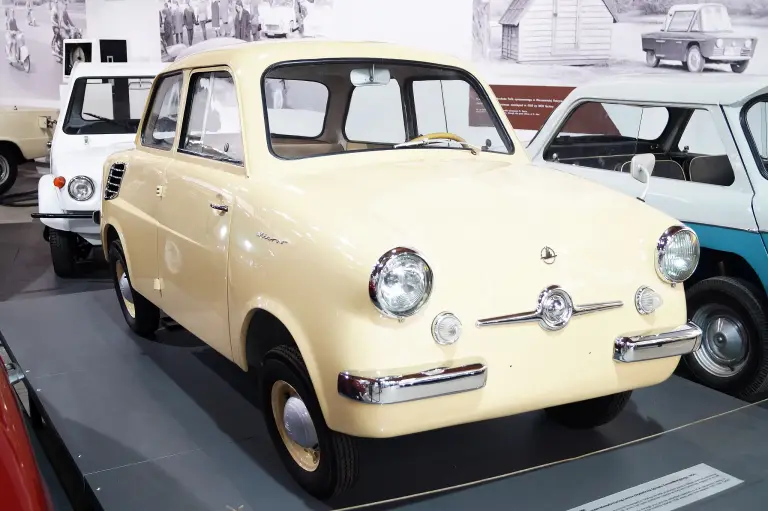
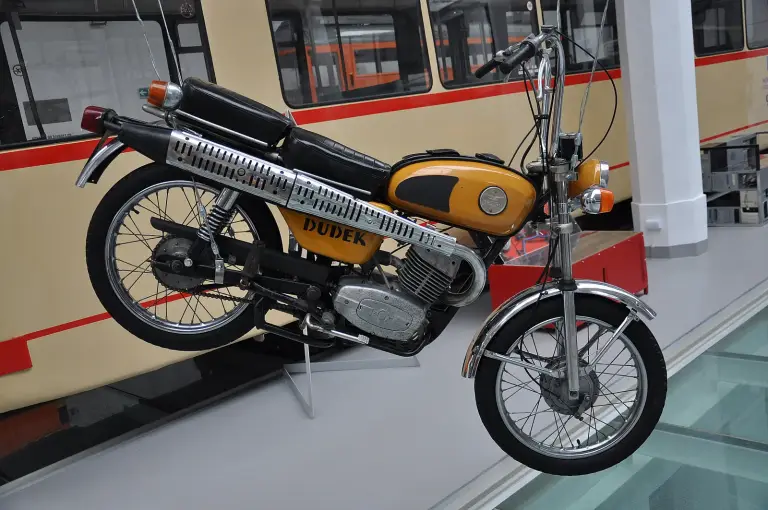
The M06 B3 was the 125 cc stablemate of the 175 cc WSK M21W2 Perkoz and WSK M21W2 Dudek; the WSK plants also built the Mikrus MR-300 microcar. More are in the WSK collection.
Sources
- WSK M06B3, Polish Wikipedia: model history, the bird family, 1984 changes, technical data
- WSK (motocykl), Polish Wikipedia: production numbers of the Gil, Lelek, Bąk and Kos versions