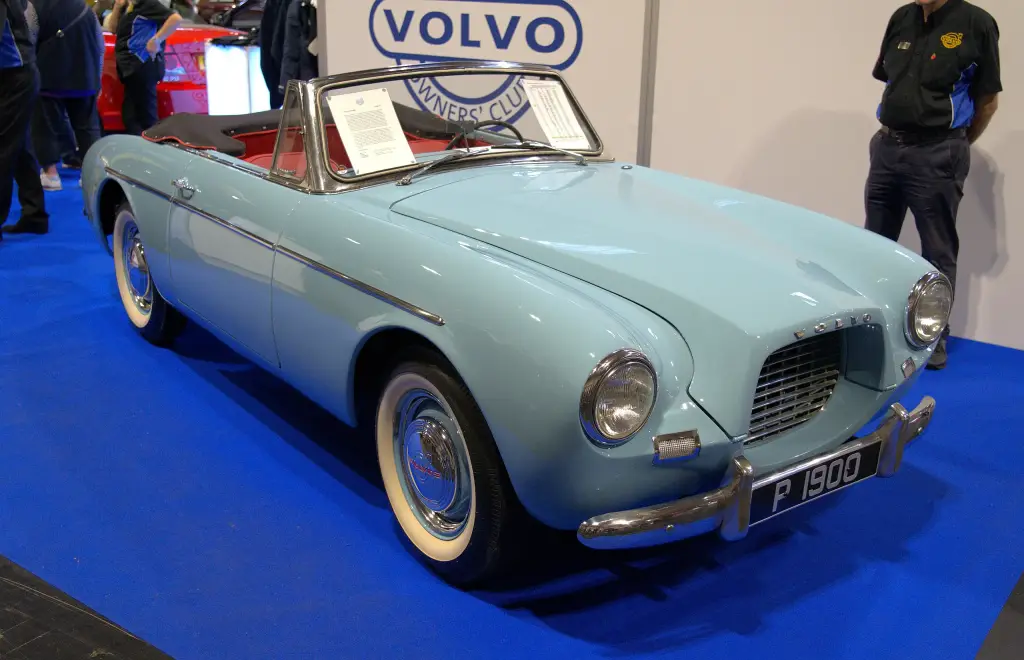
The Volvo P1900, also called the Volvo Sport, was a fibreglass-bodied roadster built from 1956 to 1957. Only 68 were made, and the project was cancelled after Volvo’s new president drove one and found the build quality unacceptable.
Volvo P1900 at a glance
| Production | 1956–1957 |
|---|---|
| Body | fibreglass roadster on a tubular steel chassis |
| Built | 68 cars, plus four or five prototypes |
| First 19 | assembled by Glasspar in California |
| Engine | 1,414 cc from the PV444, 70 hp at 5,500 rpm |
| Carburettors | twin SU with a different camshaft and larger intake valves |
| Gearbox | three-speed manual |
| Planned run | 300 cars |
| Why it ended | poor build quality and a flexible chassis |
| Legacy | its engine went into the US-market PV444 of 1957 |
History of the Volvo P1900
Volvo’s president and founder Assar Gabrielsson got the idea for the car after seeing a Chevrolet Corvette in the United States. He approached Bill Tritt of Glasspar, an American boatbuilder in Santa Ana, California, which had been building fibreglass car bodies since 1951, and Glasspar designed and tooled the glass-reinforced polyester body, made the moulds, built the first prototype and trained Volvo’s staff. Erik Quistgaard led the development team.
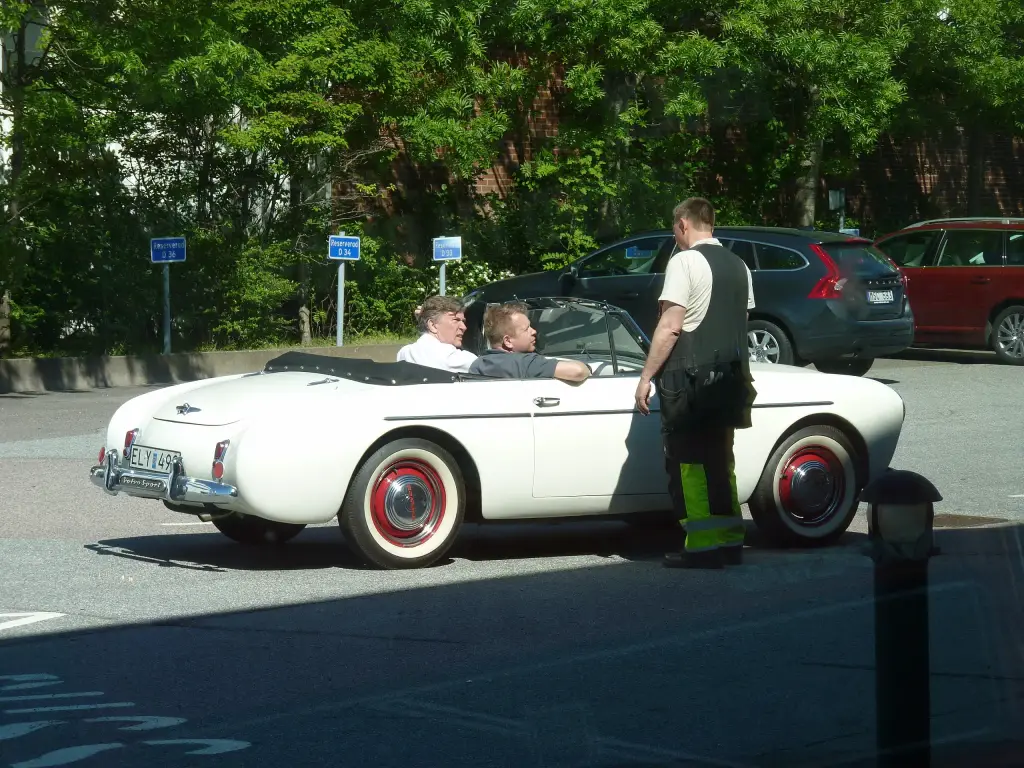
The car used a welded tubular-steel chassis and an upgraded version of the PV444’s 1,414 cc engine producing 70 hp at 5,500 rpm, with twin SU carburettors, a different camshaft, larger intake valves and higher compression than the PV444. Power went through a three-speed manual gearbox, and many other parts came from the PV444 as well.
The end
Demand was low and build quality did not meet Volvo standards. Gunnar Engellau, who replaced Gabrielsson as president in 1956, took one for a drive over a holiday weekend and was dissatisfied enough to cancel the remaining production the following week; he reportedly said either “I thought it would fall apart” or “I thought the doors would fall off”. The Volvo chassis was far too flexible for a fibreglass body, and Volvo resisted Glasspar’s recommendations to alter the frame.
Volvo had planned 300 cars but built 68 plus four or five prototypes. Forty-four were made in 1956, mostly for Sweden, and most of those survive; all but one of the 1957 cars went to Los Angeles and fewer remain. The last car off the line was chassis 67, although later research showed that chassis number 20 had been used for two separate cars. The upgraded engine was later fitted to the PV444 when it entered the US market in 1957.
Design and features
- Fibreglass body: one of the earliest European cars with a plastic body.
- American help: Glasspar of California designed and tooled it.
- Tubular chassis: welded steel frame taken from PV444 practice.
- Tuned 1.4-litre engine: 70 hp from twin SU carburettors.
- Rarity: 68 cars, most of the 1956 batch still surviving.
Volvo P1900 versions
- P1900 Sport (1956): 44 cars, mainly for Sweden.
- 1957 cars: almost all exported to Los Angeles.
- Prototypes: four or five built before series production.
The P1900’s failure led directly to the Volvo P1800, and its engine went into the Volvo PV444. More cars are in the Volvo collection.
Sources
- Volvo P1900, English Wikipedia: design, engine, production, cancellation