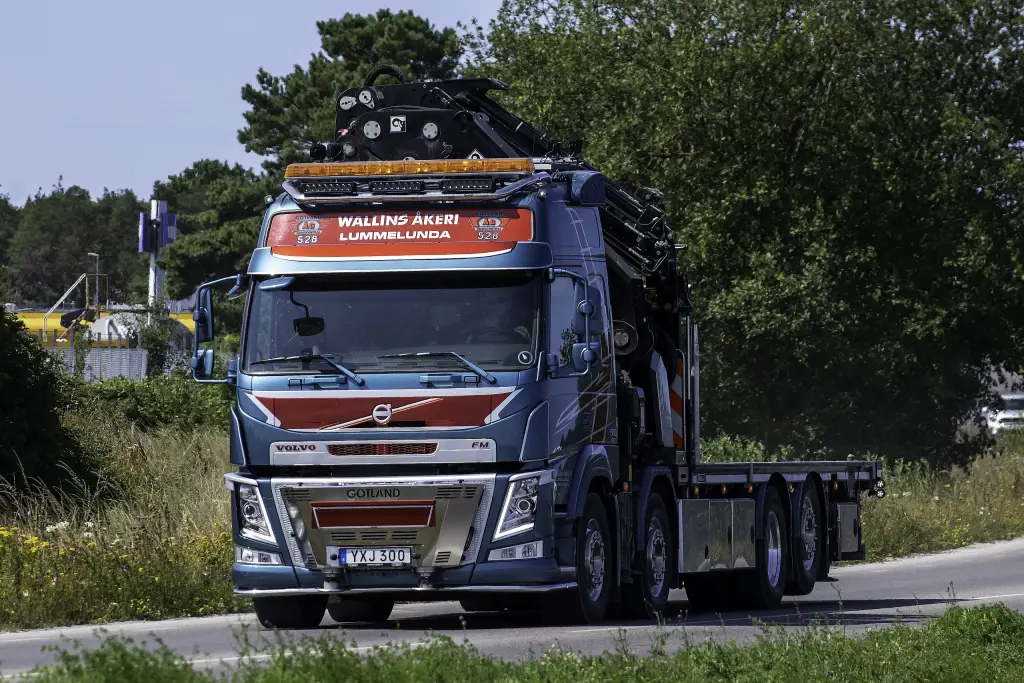
The Volvo FM is a heavy truck range introduced in 1998 as the FM7, FM10 and FM12. Its name stands for Forward control, Medium height cab, and it is a multipurpose range for distribution, construction and a mixture of on- and off-highway transport.
Volvo FM at a glance
| Introduced | 1998, as FM7, FM10 and FM12 |
|---|---|
| Name | Forward control, Medium height cab; figures were engine litres |
| Naming change | engine size dropped from the name in 2005 |
| Cabs | short day cab, sleeper cab, Globetrotter cab |
| First-generation engines | D7A 203 PS, D7C 250–290 PS, D10B 320–360 PS, D12C 380–420 PS |
| 2001 engines | new 9-litre D9A of 300–380 PS |
| Transmissions | manual and automatic, I-Shift automated from 2001 |
| 2005 engines | 13-litre D13A and improved 9-litre D9B, with VEB+ |
| Latest update | Euro VI version announced in 2013 |
History of the Volvo FM
The FM continued Volvo’s line of F7, FL7 and FL10 trucks and formed part of the company’s Global Family of Trucks, complementing the FH and the NH/VN ranges. Released alongside the facelifted FH, the FM7, FM10 and FM12 used Volvo’s electronic architecture and the upgraded D12 engine while carrying over the older D7 and D10 units, which traced their origins to the pushrod TD70 and TD100 but had modern electronic controls for more power, better economy and lower emissions.
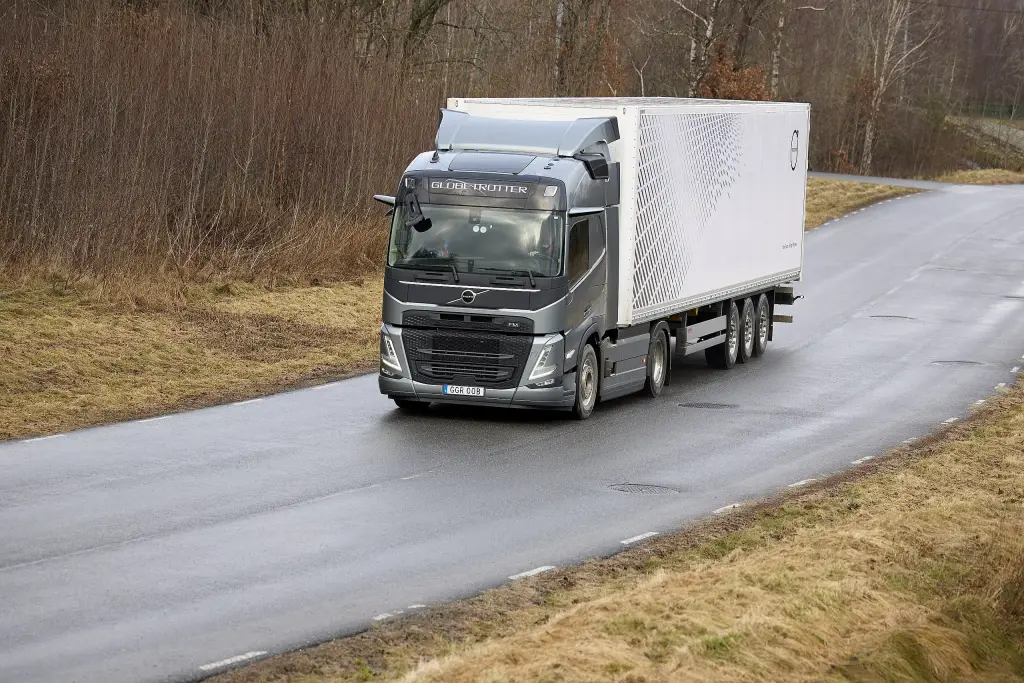
The FM shared many parts with the FH, including the layout of the driver’s area, dashboard and seats; the main difference was the lower cab. Three cab sizes were offered at first: short day cab, sleeper cab and Globetrotter cab. Electric cab tilt was an option, and the electrical system used SAE J1939 and SAE J1708 data links for diagnostics through the instrument display. Engine outputs ran from 250 to 420 PS, and the D12C gave the FM12 so much power and such a strong engine brake that it took sales from the bigger FH12.
Second generation
A major revision in 2001 dropped the 7- and 10-litre engines in favour of the new 9-litre D9A, which followed the D12 layout of a single overhead camshaft, four valves and electronic unit injectors but with the timing gears at the rear of the engine, a first for Volvo and later standard across the range. Outputs were 300–380 PS and 1,400–1,700 Nm. The same revision introduced the I-Shift automated gearbox, replacing the Geartronic, and the FUPS front underrun protection system.
In 2003 the FM12 with a 460 PS D12D arrived with a new version of the Powertronic automatic. The 2005 generation brought the 13-litre D13A and an improved D9B, a second-generation I-Shift and the VEB+ engine brake with an extra rocker arm and a fourth cam lobe per cylinder, along with Euro IV engines using selective catalytic reduction. From 2005 the engine size disappeared from the model name. In 2013 Volvo announced a Euro VI version of the FM.
Design and features
- Medium-height cab: lower than the FH for distribution and site work.
- Shared with the FH: common parts, dashboard and driveline.
- D9A of 2001: timing gears at the rear, later a Volvo standard.
- I-Shift: the automated gearbox that replaced Geartronic.
- VEB+: a stronger engine brake introduced with the D13A in 2005.
Volvo FM versions
- FM7: 7-litre entry model of the first generation.
- FM10: 10-litre version.
- FM12: 12-litre models, including the 460 PS version of 2003.
- FM with D9A (2001): 9-litre, 300–380 PS.
- FM with D13A (2005): 13-litre Euro IV engines and VEB+.
The FM sits below the Volvo FH, shares its braking layout with the Volvo FE and has a construction-focused relative in the Volvo FMX. More trucks are in the Volvo collection.
Sources
- Volvo FM, English Wikipedia: introduction, cabs, engines, 2001 and 2005 generations