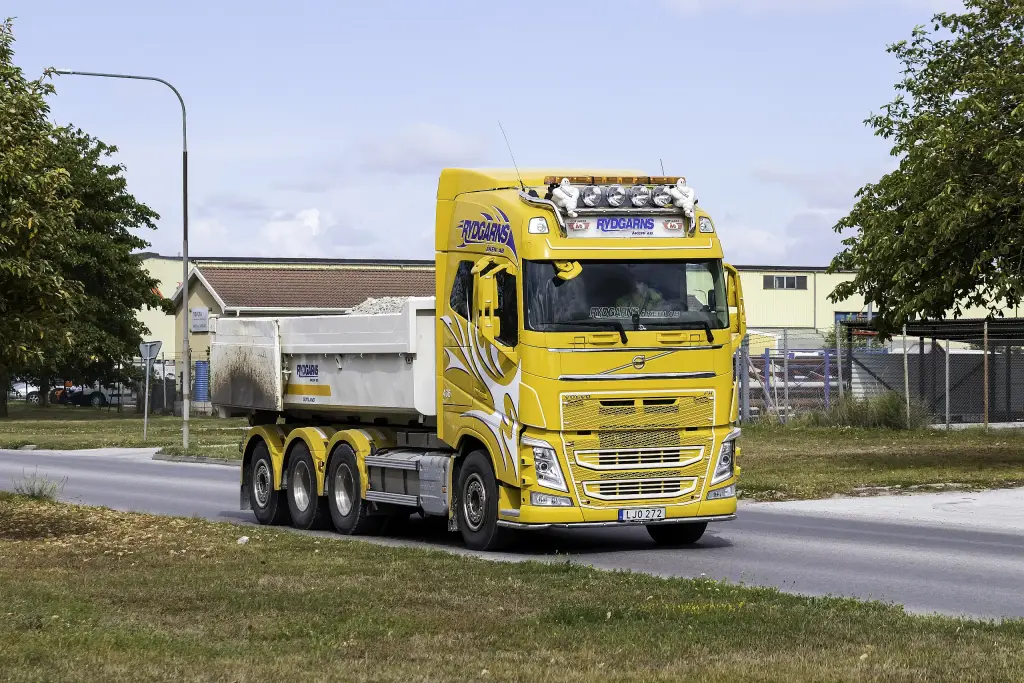
The Volvo FH is Volvo Trucks’ heavy truck range, introduced in late 1993 as the FH12 and FH16. Its name stands for forward control high entry, the numbers give engine capacity in litres, and the range has sold more than 400,000 trucks worldwide.
Volvo FH at a glance
| Launched | 1 September 1993, as FH12 and FH16 |
|---|---|
| Development | seven years |
| Name | Forward control, High entry; figures are engine litres |
| Sold | more than 400,000 worldwide |
| Cab | hot-dip galvanised high-tensile steel, built in Umeå |
| Cab weight | almost 30% lighter than the previous cab |
| Engine | D12A 12-litre overhead-cam six with electronic unit injectors |
| Safety | first heavy truck with an SRS airbag, 1995 |
| Brake | Volvo Engine Brake (VEB) |
| Relaunch | September 2012 with major technology upgrades |
History of the Volvo FH
On 1 September 1993 Volvo unveiled the replacement for the F cab-over series, which had been in production for almost fifteen years. The FH took seven years to develop, and the all-new 12-litre engine with an overhead camshaft and electronic unit injectors placed Volvo among the world’s leading engine designers. The launch of the FH12 and FH16 also marked the start of Volvo’s global programme, and one aim of the new engine was progress towards Euro 6 emissions standards. The FH12 won Truck of the Year in 1994.
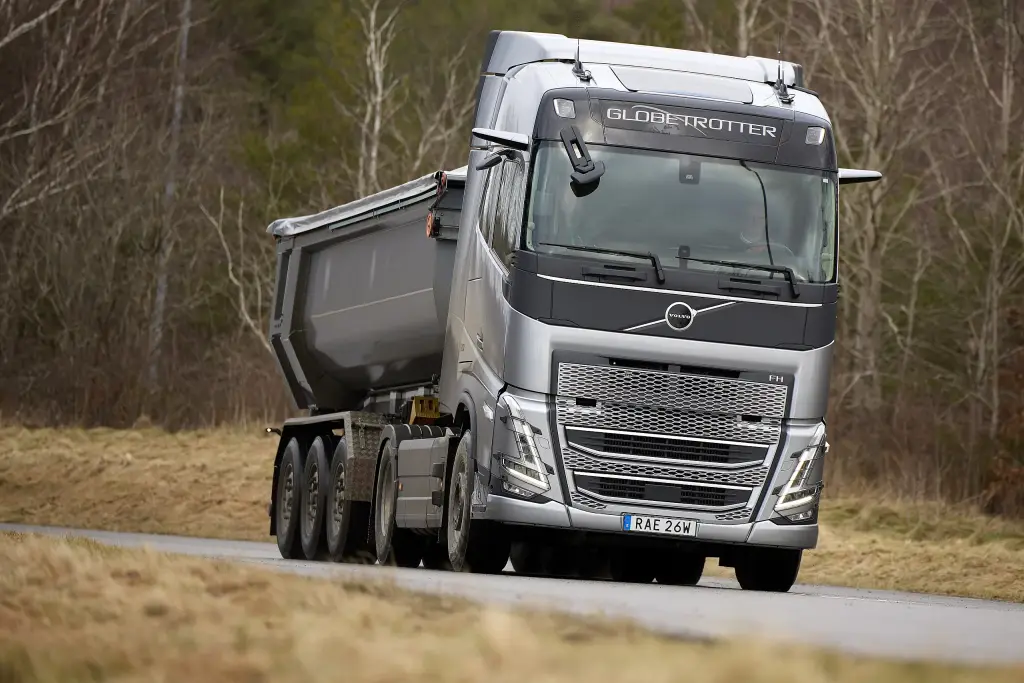
The cab
The cab was produced in Umeå from hot-dip galvanised high-tensile steel, allowing thinner panels and box sections at the same strength and cutting the cab’s weight by almost 30%. It was more aerodynamic, with a sharper windscreen rake, wedge-shaped sides and streamlined mirrors, and was tested in a wind tunnel. Volvo subjected it to a severe impact test: a 15-tonne static weight on the roof and a one-tonne pendulum striking the rear wall and windscreen pillars, after which the doors still had to open. In 1995 the FH became the first heavy-duty truck fitted with an SRS airbag.
The D12 engine
The D12A was one of Volvo Trucks’ largest engine projects since the 1950s. It kept the direct-injection in-line six layout of about twelve litres but used entirely new fuel and valve systems: a single overhead camshaft, four valves per cylinder, one centrally mounted electronic unit injector, an integrated compression brake and two-piece steel and aluminium pistons. It was built at a purpose-built plant in Skövde on a largely automated line, and was designed as a world engine that could be developed for more power and lower emissions.
The Volvo Engine Brake introduced on the D12A uses a secondary cam profile and oil pressure to open the exhaust valves briefly, combining exhaust and compression braking. A facelift in 1998, known as Version 98, came with the new FM series and brought minor cab changes plus major upgrades to the electrical system, engine and gearbox under the TEA electronic architecture. Volvo relaunched the FH in September 2012 with significant technology upgrades.
Design and features
- Light, strong cab: galvanised high-tensile steel, almost 30% lighter than before.
- D12A engine: overhead camshaft, four valves and electronic unit injectors.
- VEB: an engine brake using a second cam profile for extra retardation.
- Safety firsts: an SRS airbag in a heavy truck for the first time in 1995.
- Huge success: more than 400,000 sold, with a major relaunch in 2012.
Volvo FH versions
- FH12 (1993): the 12-litre model, Truck of the Year 1994.
- FH16 (1993): the sixteen-litre flagship.
- Version 98 (1998): facelift with TEA electronics.
- 2012 FH: relaunched with new technology and cab.
The FH replaced the Volvo F10, F12 and F16 and sits above the Volvo FM. More trucks are in the Volvo collection.
Sources
- Volvo FH, English Wikipedia: launch, cab, D12 engine, VEB, facelift, sales