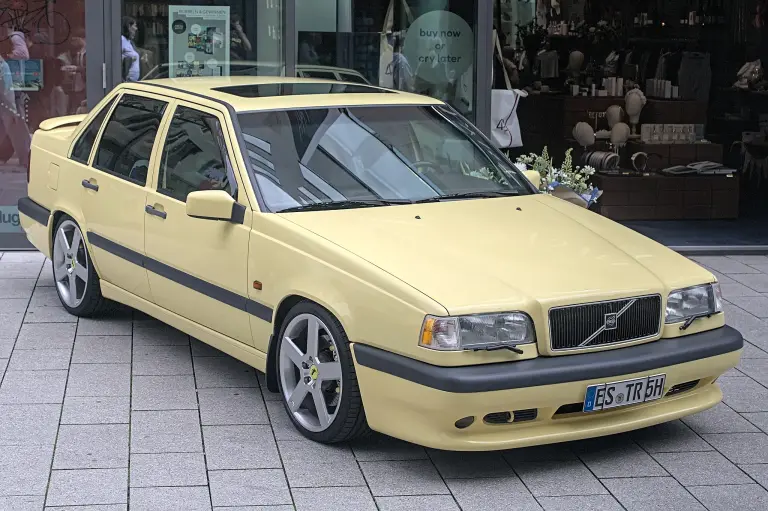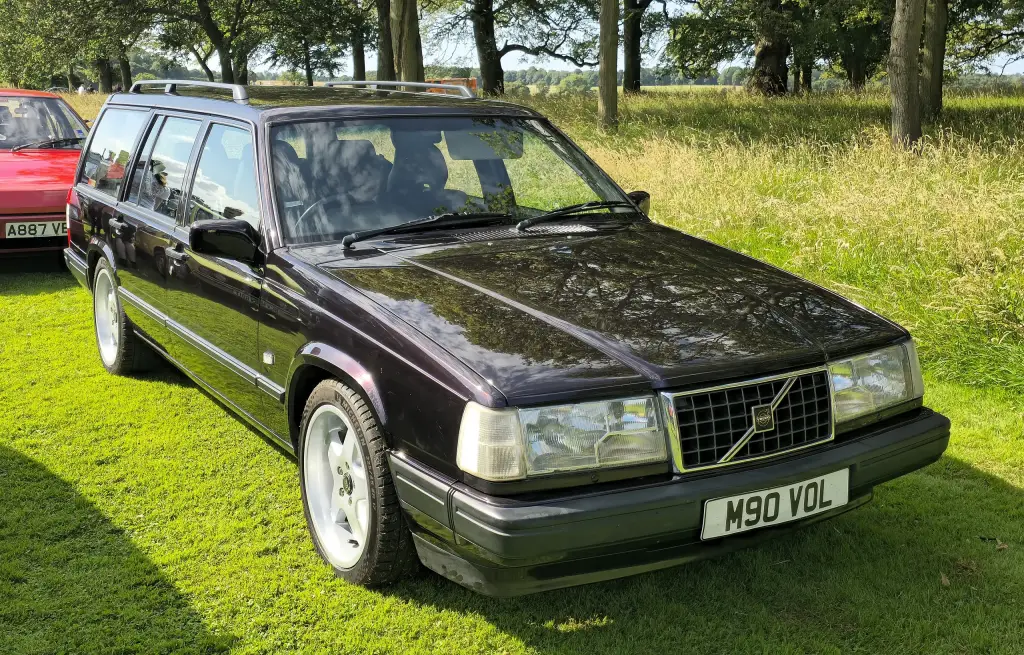
The Volvo 900 Series was built from 1990 to 1998. The 940 was essentially a reskinned 740 with a taller boot, while the 960 was an evolution of the 760 with a new family of modular engines. At the end of its life the 960 was renamed S90 and V90.
Volvo 900 Series at a glance
| Production | 1990–1998 |
|---|---|
| Models | 940 (September 1990), 960 (1991) |
| Bodies | four-door saloon, five-door estate |
| 940 engines | 2.0 B200 and 2.3 B230 fours, 16-valve versions, 2.4 VW diesel |
| Turbo | 2.3 B230FT, 165 PS; Turbo+ kit raised it to 190 PS |
| Gearboxes | M46, M47 and M90 manuals, AW70/71/72 and ZF 4HP22 automatics |
| 940 built | 246,704 saloons and 231,677 estates |
| Renamed | 960 became S90 and V90 for 1997 |
| Special editions | Polar and Super Polar in Italy, Classic in northern Europe |
History of the Volvo 900 Series
The 940 arrived in September 1990 as a cosmetic reskin of the 740, differing completely from the C-pillar back on the saloon. The taller boot cut rearward vision but opened a larger, more useful luggage compartment. The dashboard and seats were new, with slightly more headroom and an optional integrated child booster seat. The 940 shared its drivetrains and most of its options with the 740, and its front sheet metal too; the 760 and 960 kept their own front end, independent rear suspension and interior.
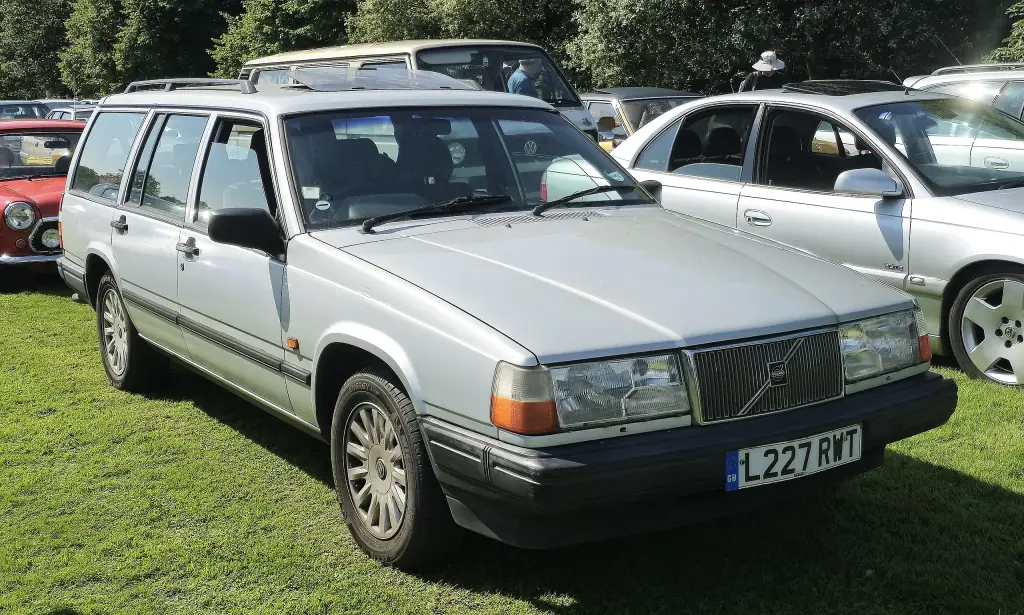
Engine choices carried over: 8-valve 2.0 and 2.3-litre fours, naturally aspirated or turbocharged, 16-valve versions in 1991 and 1992, and the 2.4-litre Volkswagen six-cylinder diesel and turbodiesel. The 2.3 turbo made 165 PS, and Volvo sold a chip kit called Turbo+ that lifted it to 190 PS. The low-pressure B230FK arrived in 1994 with 135 PS and almost no turbo lag. A 155 PS turbocharged 2.0 was first shown in February 1991 for Italy and other markets with tax thresholds at two litres.
Trim by market
The SE badge meant different things in different countries: in Sweden an ordinary 940 with a few extras, in Britain a high trim with any engine, in Australia a 2.3 Turbo with painted bumpers, in Thailand a light-pressure turbo with leather and airbags, and in the United States a car using the 960’s body with the four-cylinder B230FT engine. Italian estates from 1993 were badged Polar or Super Polar, and Sweden, Germany and Switzerland received a Classic series at the end of the run.
In 1995 the manual gearbox became a full five-speed M90 and the ZF automatic was dropped for petrol cars. Production ran from 1990 to 1998 with 246,704 saloons and 231,677 estates. The 960, substantially revised for 1995, was renamed S90 and V90 before production ended, and the 900 Series remained Volvo’s last rear-wheel-drive cars for decades. Some were completed as chassis for ambulances and hearses after the main run.
Design and features
- Rear-wheel drive: the end of a long Volvo tradition.
- Turbo choices: full-pressure 165 PS, Turbo+ to 190 PS and the lag-free B230FK.
- New interior: a redesigned dashboard, more headroom and an optional child booster seat.
- Market variants: SE, Polar and Classic editions tailored to local taxes and tastes.
- Longevity: coachbuilt ambulance and hearse conversions continued after 1998.
Volvo 900 Series versions
- 940 saloon and estate: the volume models, in GL, GLE, SE and Turbo trim.
- 940 GLE 16V: 2.3-litre B234 with four valves per cylinder.
- 940 Polar and Super Polar: Italian estate editions from 1993.
- 960: six-cylinder evolution of the 760, revised for 1995.
- S90 and V90 (1997): the renamed 960 at the end of the run.
The 900 Series replaced the Volvo 700 Series, and its S90 and V90 names were later reused on new front-wheel-drive cars. More cars are in the Volvo collection.
Sources
- Volvo 900 Series, English Wikipedia: 940 history, engines, trim, production figures