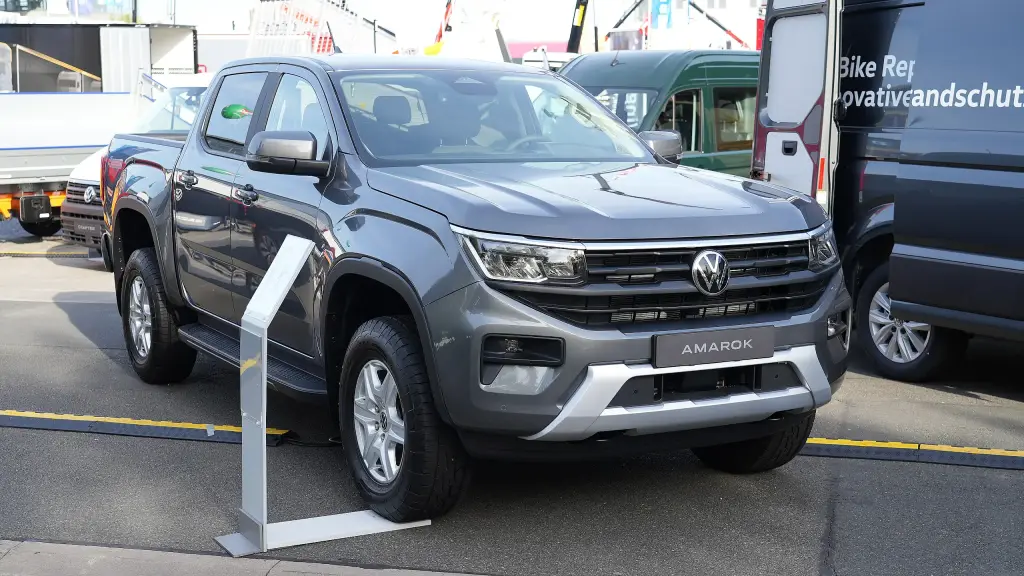
The Volkswagen Amarok is a mid-size pickup truck produced since 2010 and the first pickup from Volkswagen Commercial Vehicles. It is a body-on-frame design with double wishbones at the front and leaf springs at the rear, offered as a single cab or a double cab, with rear-wheel drive or 4motion four-wheel drive. The first generation was built in Argentina and Germany and sold 830,000 units between 2010 and 2022.
Volkswagen Amarok at a glance
| Maker | Volkswagen Commercial Vehicles |
|---|---|
| Production | since 2010; first generation 2010–2022 |
| Assembly | General Pacheco, Argentina, and Hanover, Germany |
| Body | body-on-frame, double wishbones at the front, leaf springs at the rear |
| Cabs | single cab and double cab |
| Drive | rear-wheel drive or 4motion |
| Engines 2010 | 2.0 TDI of 90 kW (122 PS) and 120 kW (163 PS) bi-turbo |
| Engines 2016 | 3.0 V6 TDI of 121, 150 and 167 kW (162, 201 and 224 PS) |
| Facelifts | 2016 and 2024 |
| First-generation sales | 830,000 between 2010 and 2022 |
| 100,000th Amarok | 8 October 2011 |
| Second generation | based on the Ford Ranger |
History of the Volkswagen Amarok
The Amarok was presented to the public in General Pacheco, Argentina, on 7 January 2010. The project went back to 2005, when Volkswagen Commercial Vehicles announced its intention to build a robust pickup and off-road family, and it was previewed as the Robust Pick-Up concept in September 2008, a search-and-rescue vehicle said to be 95 per cent of the production design. After the Argentine launch, 45 Amaroks served as support vehicles on the 2010 Dakar Rally. The truck was built at General Pacheco for South America, Mexico, Oceania, South Africa, Russia and Europe, and from mid-2012 also in Hanover, where 40,000 units a year were planned for Europe and smaller markets.
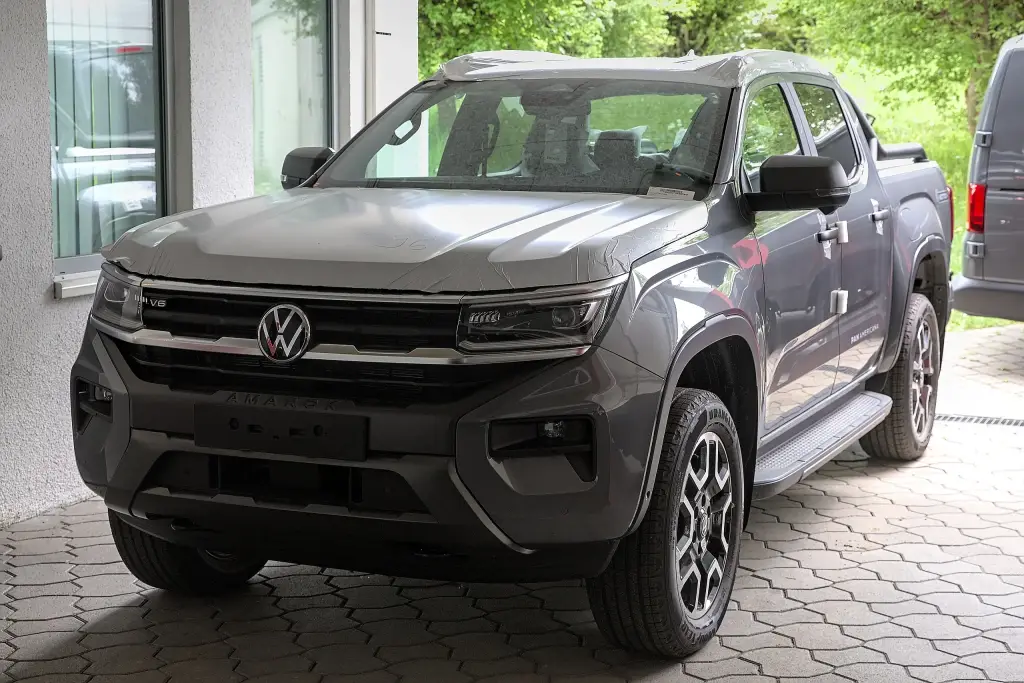
At launch the engine range was made up of 2.0-litre common-rail TDI diesels taken from the Transporter T5 and tuned for more torque: the entry version produced 90 kW (122 PS) and 340 N·m, the bi-turbo 120 kW (163 PS) and 400 N·m. Combined consumption was between 7.6 and 8.1 l/100 km depending on drive, which promised a range of about 1,000 km. For 2012 the 90 kW engine was raised to 103 kW and an eight-speed automatic became available with the bi-turbo. A limited Dark Label edition followed on 22 September 2014 with the 180 PS bi-turbo, 420 N·m and a 3,200 kg towing capacity.
The 2016 facelift brought a new interior close to the Transporter T6, new lights and grille, and most importantly a 3.0-litre V6 TDI in place of the four-cylinder flagship, with 121, 150 or 167 kW (162, 201 or 224 PS); the most powerful version had 550 N·m and reached 100 km/h in 8 seconds, with 23 per cent more power and 28 per cent more torque than the old bi-turbo. A 580 N·m version of the V6 arrived in 2019. A second facelift, designed by Volkswagen’s Brazilian studio, was launched for the Argentine market in the summer of 2024, and the second-generation Amarok is based on the Ford Ranger.
Design and features
- Body-on-frame: double wishbones in front and leaf springs behind, with rear-wheel drive or 4motion.
- Two cabs: single cab and double cab, with a 3,200 kg towing capacity on some versions.
- V6 TDI: the 3.0-litre engine of 2016 replaced the four-cylinder flagship and reached 224 PS.
- Dakar support: 45 Amaroks served the 2010 Dakar Rally.
- Two continents: built in General Pacheco, Argentina, and in Hanover, Germany.
Volkswagen Amarok versions
- First generation (2010): 2.0 TDI and bi-turbo engines, single or double cab.
- Dark Label (2014): limited edition with the 180 PS bi-turbo and 420 N·m.
- 2016 facelift: new interior and the 3.0 V6 TDI.
- 2024 facelift: new front end for the Argentine market.
- Second generation: based on the Ford Ranger.
The Amarok was the first pickup from Volkswagen Commercial Vehicles, whose van range is led by the Transporter and the smaller Caddy. More cars are in the Volkswagen collection.
Video: 2 PickUps im Vergleich: Ford Ranger vs. VW Amarok
Video by Car-News.TV on YouTube.
Sources
- Volkswagen Amarok, English Wikipedia: launch, plants, engines, facelifts, sales