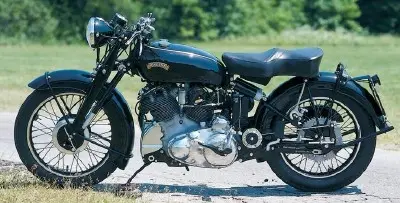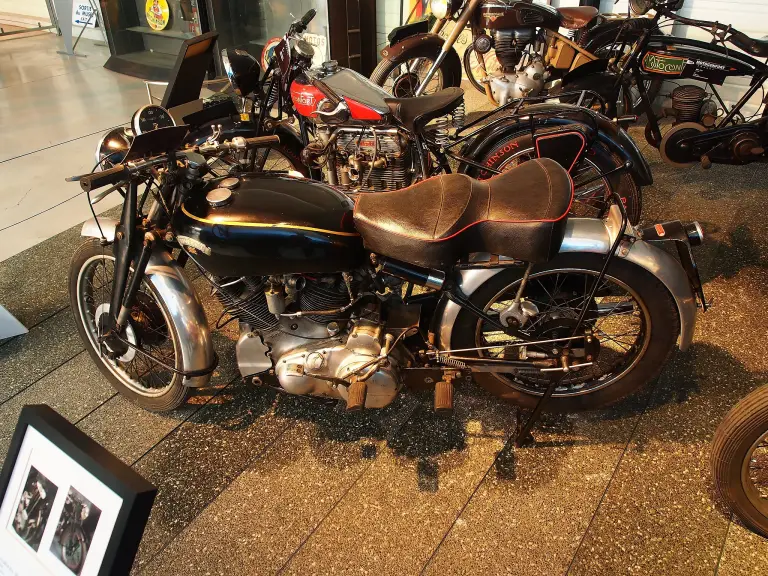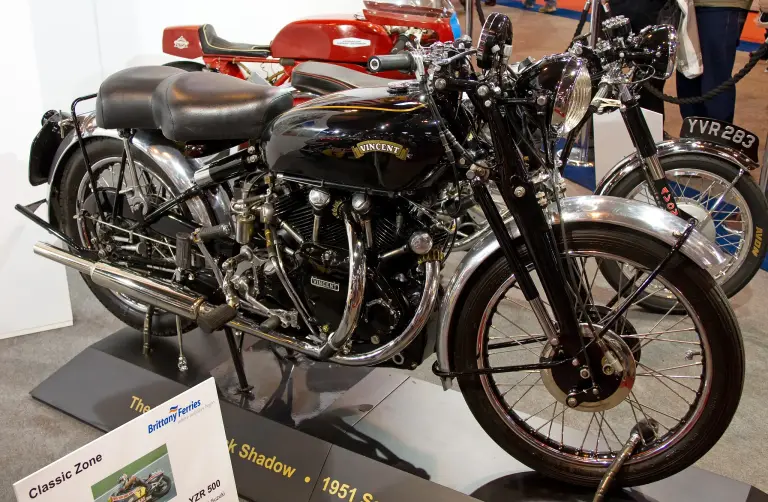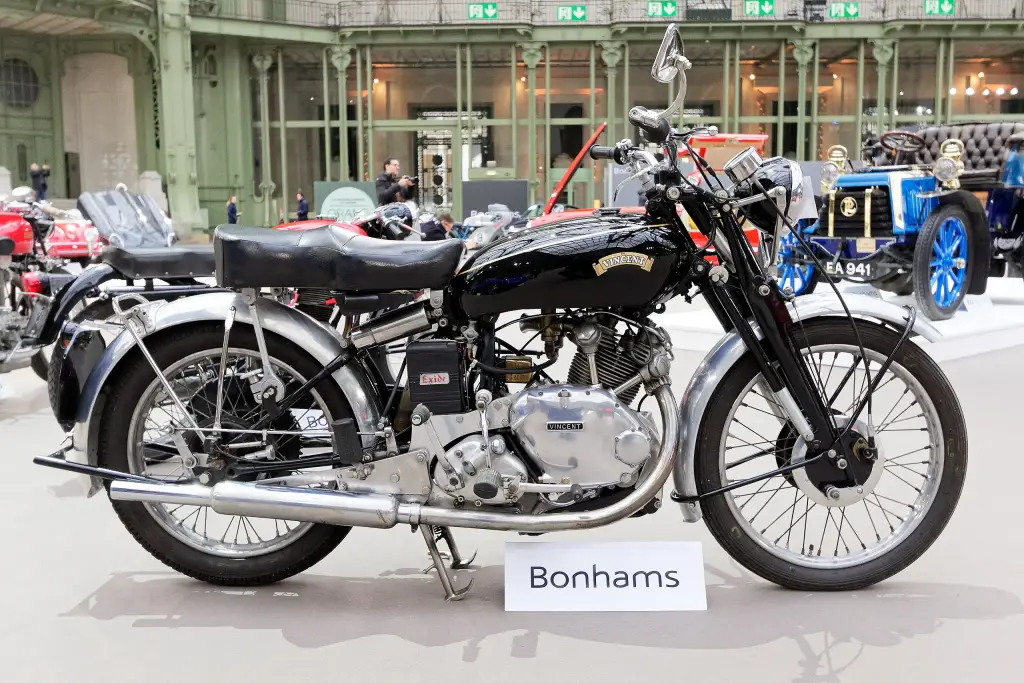
The Vincent Comet was the sports machine among the four 499 cc single-cylinder models built by Vincent in Stevenage. Its engine was a high-camshaft overhead-valve single with a light alloy barrel and head, and its cycle parts were close to those of the V-twins, including the Girdraulic fork and the cantilever rear suspension.
Vincent Comet at a glance
| Maker | Vincent H.R.D., Stevenage, Hertfordshire |
|---|---|
| Engine | 499 cc air-cooled single, OHV, high camshaft |
| Barrel and head | light alloy with a cast-iron liner |
| Compression ratio | 7.3:1 |
| Carburation | the larger carburettor, as on the Black Shadow |
| Gearbox | Burman BAP four-speed |
| Frame | “backbone” type, combined frame and oil tank |
| Engine mounting | stressed member of the frame |
| Front suspension | Vincent Girdraulic fork |
| Rear suspension | sprung cantilever with hydraulic damping |
| Related models | Meteor, Comet Special (TT replica with lights) |
| Production ended | 1955 |
Based on one source: the English Wikipedia article on the Comet.
History of the Vincent Comet
From Series A to Series C
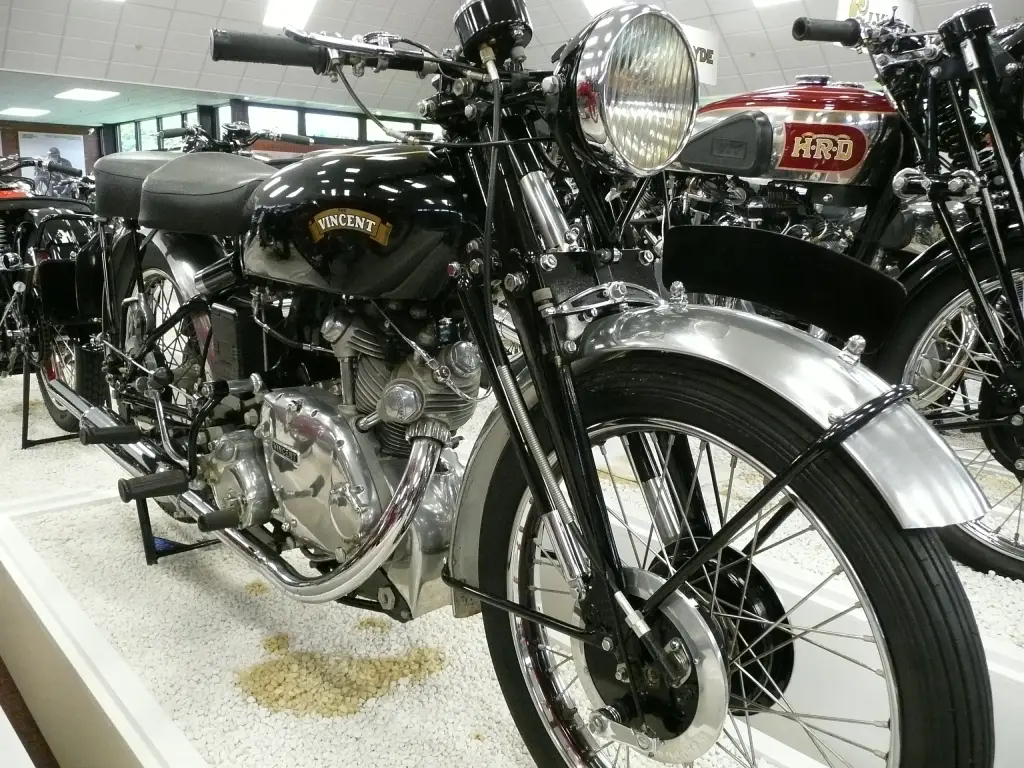
The Comet was one of four 499 cc single models: the sports Comet, a TT racing machine, the Comet Special (a TT model with lights and horn, using a bronze head) and the standard Vincent Meteor, which shared many of the same cycle parts. The prototype Series A was refined into a production Series B, but after the Second World War it was the Series C that represented the ultimate Vincent 500 cc single. A Series D was designed and one was built at the factory; others had to be assembled from spare parts because Vincent production ceased in 1955.
An engine built for racing conditions
The most unusual feature of the valve design was a pair of double valve guides with the forked rocker arm attached to a shoulder between them. This eliminated side forces on the valve stem and ensured maximum valve life under racing conditions. The Meteor version of the engine produced 26 bhp (19 kW) at 5,300 rpm, and the Series A Comet could reach 90 mph (140 km/h), which was not enough for Phil Vincent and his racing customers.
Half a Rapide?
Riders joked that the Comet was really only half of the desirable Rapide twin. In fact its specification had more in common with the higher-performance Black Shadow twin: it shared the 7.3:1 compression ratio and the larger carburettor, though unlike the Shadow it had neither polished internals nor selective assembly. The 499 cc engine acts as a stressed member of the frame, and most other components are common with the post-war twins. Unlike them, the Comet used a Burman BAP four-speed gearbox held by a vertical cast aluminium piece that mated with the backbone frame. All Comets had Vincent’s Girdraulic forks and sprung cantilever rear suspension with hydraulic damping, at a time when most manufacturers still built rigid frames.
Design and features
- Double valve guides: forked rockers push on a shoulder between the guides, removing side load from the valve stem.
- Backbone frame: a combined frame and oil tank with the engine as a stressed member.
- Burman BAP gearbox: a separate four-speed unit, unlike the unit-construction twins.
- Modern suspension: Girdraulic fork and cantilever rear with hydraulic damping when rivals were still rigid.
- Shadow-like tune: 7.3:1 compression and the larger carburettor, without the Shadow’s polished internals.
Vincent Comet versions
- Series A Comet: the prototype series, good for about 90 mph.
- Series B Comet: the production development of the Series A.
- Series C Comet: the ultimate form of the 500 cc single.
- Comet Special: a TT replica with lights and horn and a bronze head.
- Series D Comet: designed and built once at the factory before production ended in 1955.
The Comet was the single-cylinder stablemate of the Vincent Rapide and shared its chassis ideas with the Black Shadow; the history of the firm is in Vincent HRD. More machines are in the Vincent collection.
Sources
- Vincent Comet, English Wikipedia: models, valve design, specifications