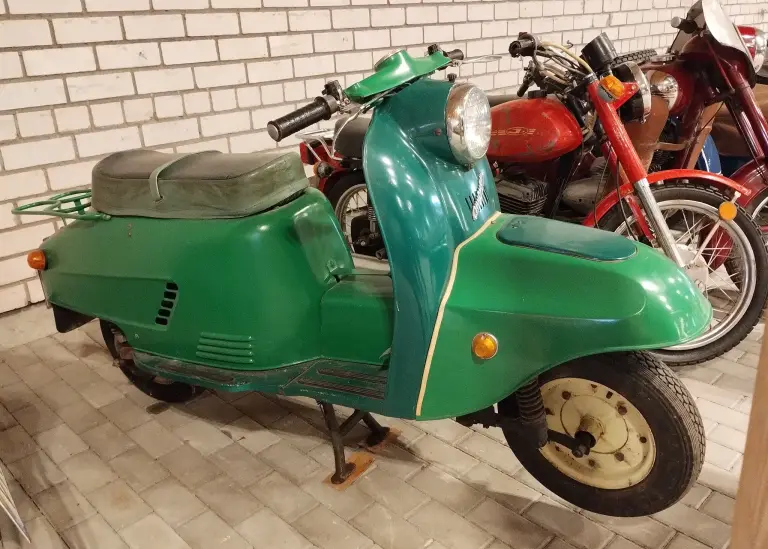
The Tula T-200 was the first Soviet scooter with a 200 cc engine, built by the Tula Machine-Building Plant (TMZ) from 1957. It was modelled on the German Goggo 200 and began a series of Tula scooters that remained in production until 1996.
Tula T-200 at a glance
| Maker | Tula Machine-Building Plant (TMZ), Tula, USSR |
|---|---|
| Production | from 1957; the Tula scooter series continued until 1996 |
| Prototype | Goggo 200 by Hans Glas GmbH |
| Engine | 199 cc single-cylinder two-stroke, forced air cooling |
| Power | 8 hp |
| Top speed | 80 km/h |
| Weight | 155 kg |
| Gearbox | four-speed, foot change |
| Final drive | chain |
| Electrics | 12 V, dynamo-starter |
| Fuel consumption | about 3.4 l/100 km at 50 km/h |
| Later models | T-200M, TG-200, T-200K |
Based on one source: the Russian Wikipedia article on the Tula scooter.
History of the Tula T-200
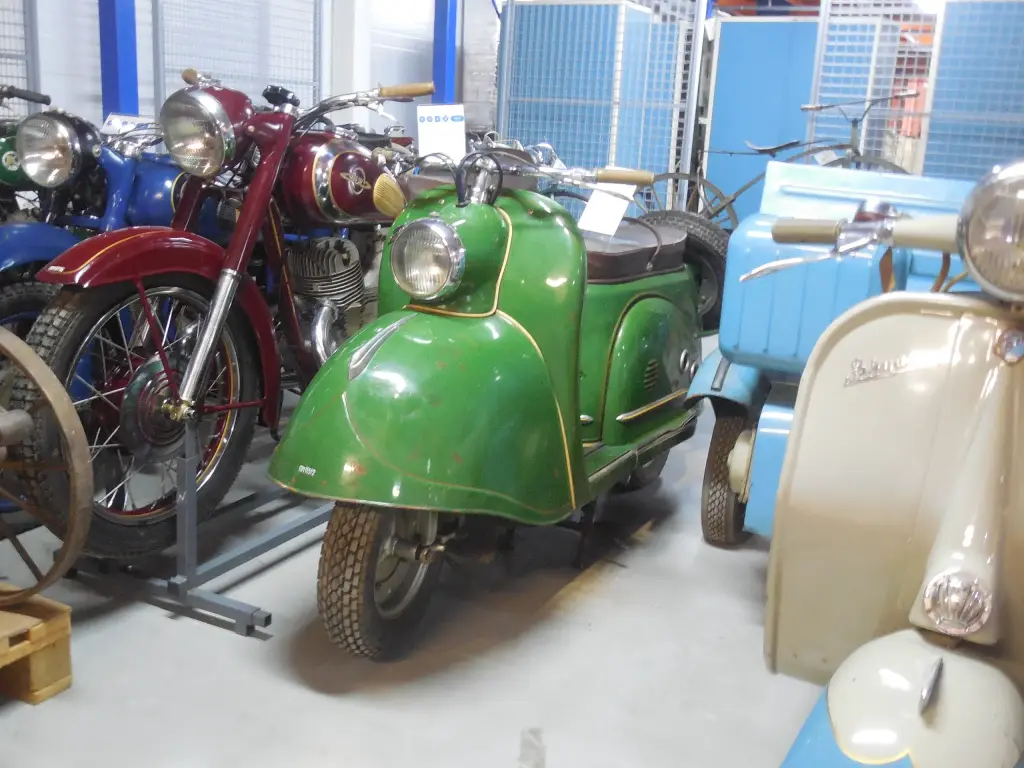
After the Second World War the Tula Machine-Building Plant, like other Soviet defence factories, turned to civilian products. Soviet industry already built motorcycles on equipment taken from Germany as reparations, but the market for modern scooters remained empty. A government decree gave two plants the task of developing one: the Vyatka plant in Vyatskiye Polyany based its scooter on the Italian Vespa, while the Tula designers took the German Goggo 200 by Hans Glas GmbH as their model. The Puch and Peugeot scooters were also considered, but the Goggo’s 10-inch wheels suited Soviet roads better than the 8-inch wheels of the Peugeot S55, and the German machine was more modern and better equipped than the 125–150 cc designs of the time.
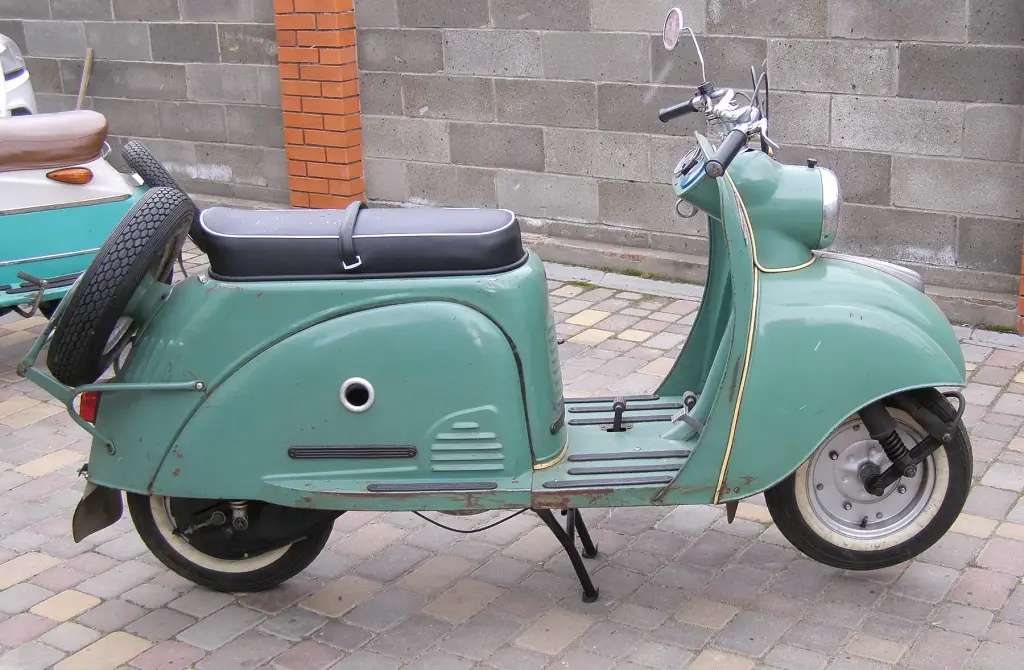
In 1957 TMZ built the first T-200, painted bright blue. It had a 199 cc engine with forced air cooling, a four-speed gearbox, a chain final drive and 12-volt electrics, and it was started by a dynamo-starter. The engine drove through a foot pedal change, and fuel consumption was about 3.4 litres per 100 km at 50 km/h. At 155 kg the T-200 was 15 kg heavier than the Goggo, and its 8 hp gave a top speed of 80 km/h against the German prototype’s 9.5 hp. For its time the Tula was a luxurious scooter.
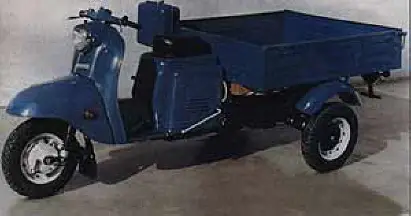
The design was developed through several models. The lighter T-200M appeared in 1961 with a 9 hp engine, a new contact-oil air filter, a reshaped front mudguard and a new front fork. TMZ also built the three-wheeled TG-200 cargo scooter and the T-200K with a sidecar. The engine from the Tula-200 was later used in other machines: in the early 1970s the Siberian Research Institute of Agriculture developed the SSS-5 seed drill around it and showed a pre-production example at the Selkhoztekhnika-72 exhibition in Moscow in autumn 1972.
Design and features
- First of its class: the first Soviet scooter with a 200 cc engine.
- German basis: developed from the Goggo 200, with 10-inch wheels chosen for Soviet roads.
- Modern equipment: electric starting, 12-volt electrics and a four-speed gearbox.
- Long-lived family: the Tula scooter line was built from 1957 to 1996.

Tula T-200 versions
- T-200 (1957): the original bright-blue scooter with an 8 hp engine.
- T-200M (1961): lighter model with a 9 hp engine and a new front fork and mudguard.
- TG-200: three-wheeled cargo version.
- T-200K: version with a sidecar.
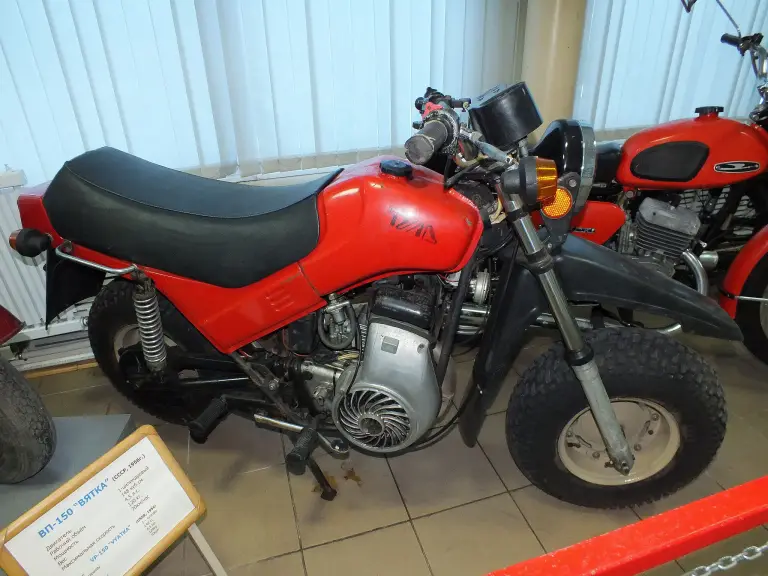
The T-200 began the Tula range that later included the Tula Turist scooter and the Muravey cargo tricycle. More vehicles are in the Tula collection.
Sources
- Тула (мотороллер), Russian Wikipedia: history, design, specifications, later models