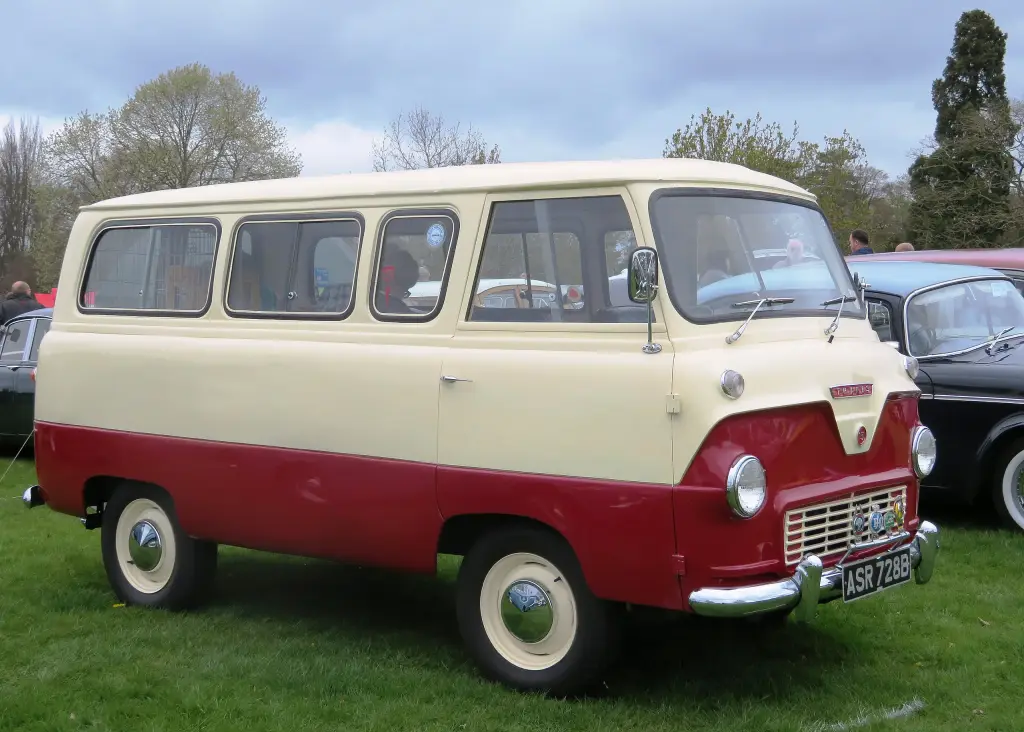
The Ford Thames 400E was the forward-control light commercial range that Ford of Britain introduced in September 1957. It replaced the long-serving Fordson E83W and was built in 10, 12 and 15 cwt versions on one common chassis, as a van, pickup, estate car and minibus. Production ended in September 1965 after about 187,000 vehicles.
Ford Thames 400E at a glance
| Maker | Ford of Britain, Dagenham |
|---|---|
| Production | September 1957 – September 1965 |
| Built | about 187,000 |
| Payload classes | 10, 12 and 15 cwt (510, 610 and 760 kg) |
| Layout | forward control, rear-wheel drive |
| Chassis | separate outrigger chassis, 84 in (2,100 mm) wheelbase |
| Front suspension | independent, coil springs and transverse wishbones |
| Petrol engine | 1,703 cc Consul ohv four, 53 bhp in low compression form |
| Diesel option | Perkins 4/99 1.6-litre four, 42 bhp |
| Gearbox | three-speed with synchromesh on the upper two ratios, column change |
| From 1963 | 55 bhp (low compression) or 58 bhp (high compression), four-speed all-synchromesh gearbox |
| Body styles | van, chassis cab and pickup, estate car, minibus |
History of the Ford Thames 400E
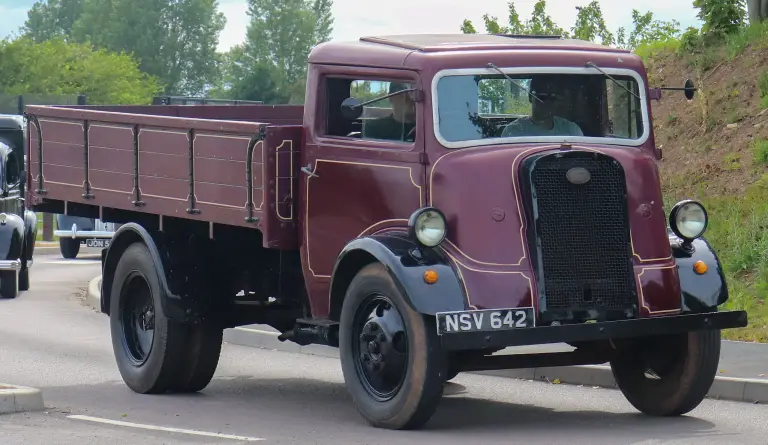
By the mid-1950s Ford lagged well behind its rivals in the light commercial market. The model still on offer in 1957 was the Fordson E83W, a trustworthy but antiquated van released back in 1938. Ford therefore studied the competition in the sector, among them the Morris Commercial 10 cwt and 15/20 cwt models, the Austin 10 cwt and later its 25 cwt, the Trojan 15 cwt van and the Bedford 10/12 cwt. The answer was a new 10, 12 and 15 cwt range of the forward-control type, all built on the same outrigger chassis with a wheelbase of 84 inches (2,100 mm), which carried a van body of 180 cubic feet (5.1 m³).
Chassis, cab and suspension
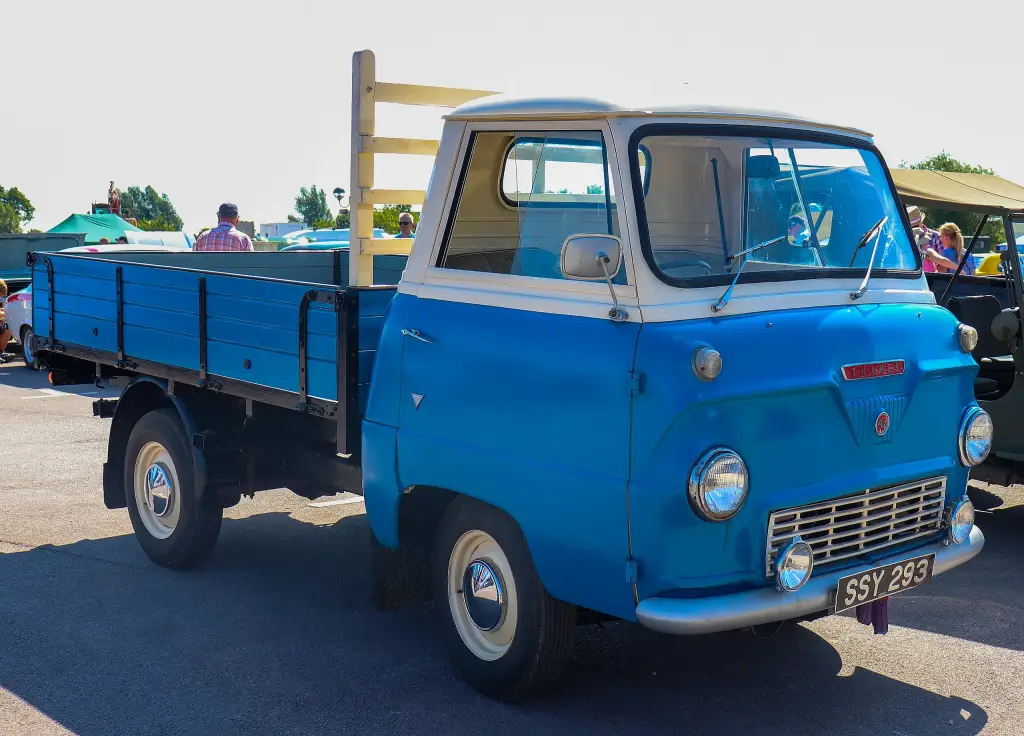
The outrigger chassis came in two forms. The cab and chassis and pickup versions had an open back, with an extra rear crossmember to carry the spare wheel and close the ends of the chassis horns, and their cab bodywork was bolted on so that it could be removed for easier conversion by coachbuilders. The van, estate car and express bus had a closed back, where the steel bodywork was welded to the chassis in places for ease of construction; the result was best described as a body-reinforced separate chassis rather than a unitary one. Ford sanctioned independent front suspension, but not the MacPherson strut type that Dagenham had pioneered on its passenger cars: the strut height would have restricted the cab design of a forward-control van, so coil springs and transverse wishbones were chosen instead.
Consul engines and the Perkins diesel
An ideal engine and transmission already existed in Ford’s passenger car range: the Consul’s 1,703 cc overhead-valve engine with its three-speed gearbox, synchromesh between the upper two ratios and a column gearchange. In the van it was fitted in low compression form, 6.9:1, developing 53 bhp (40 kW) at 4,400 rpm, with the Consul’s regular 7.8:1 high compression head available as an option. A second option was the Perkins 4/99, a 1.6-litre four-cylinder diesel producing 42 bhp (31 kW) — marginal for performance, but offering useful long-term economies over the petrol engine.
Estate cars, minibuses and the 1963 update
Production began in September 1957, and the model was announced as the Thames 400E series, with a bold Thames nameplate on the front beneath a circular emblem that identified the vehicle’s capacity class. The range was soon adapted for carrying passengers: an 8/10-seater estate car derivative appeared, along with a 12-seat minibus based on the 15 cwt model. The estate car proved so successful that a De Luxe version followed, with chrome-plated overriders on the front bumper, chrome side mouldings and window trims, and dual exterior mirrors.
In January 1963 an improved version of the 1,703 cc engine was introduced, uprated to 55 bhp (41 kW) in low compression form, while premium petrol users could have a high compression head giving 58 bhp (43 kW). A four-speed all-synchromesh gearbox also became available, and when it was fitted a heavy-duty back axle with a four-pinion differential was specified. Production continued until September 1965, by which time a total of 187,000 had been built. Publicity for the model had included hiring the Cy Laurie band to make the promotional film short Band Wagon in 1958, which is preserved in the Ford Film and Video Collection at the National Motor Museum, Beaulieu.
Design and features
- Forward-control layout: the cab sits over the front wheels, which shortens the vehicle and frees space for a 180 cubic foot van body on an 84-inch wheelbase.
- Outrigger chassis: open-back versions for coachbuilders and closed-back versions for vans, estate cars and buses, all from the same design.
- Independent front suspension: coil springs and transverse wishbones instead of the MacPherson struts used on Ford passenger cars.
- Consul running gear: a 1,703 cc engine of 53 bhp with an optional high compression head, a three-speed column-change gearbox and an optional Perkins diesel.
- Passenger derivatives: an 8/10-seater estate car, a 12-seat minibus and a chrome-trimmed De Luxe estate.
Ford Thames 400E versions
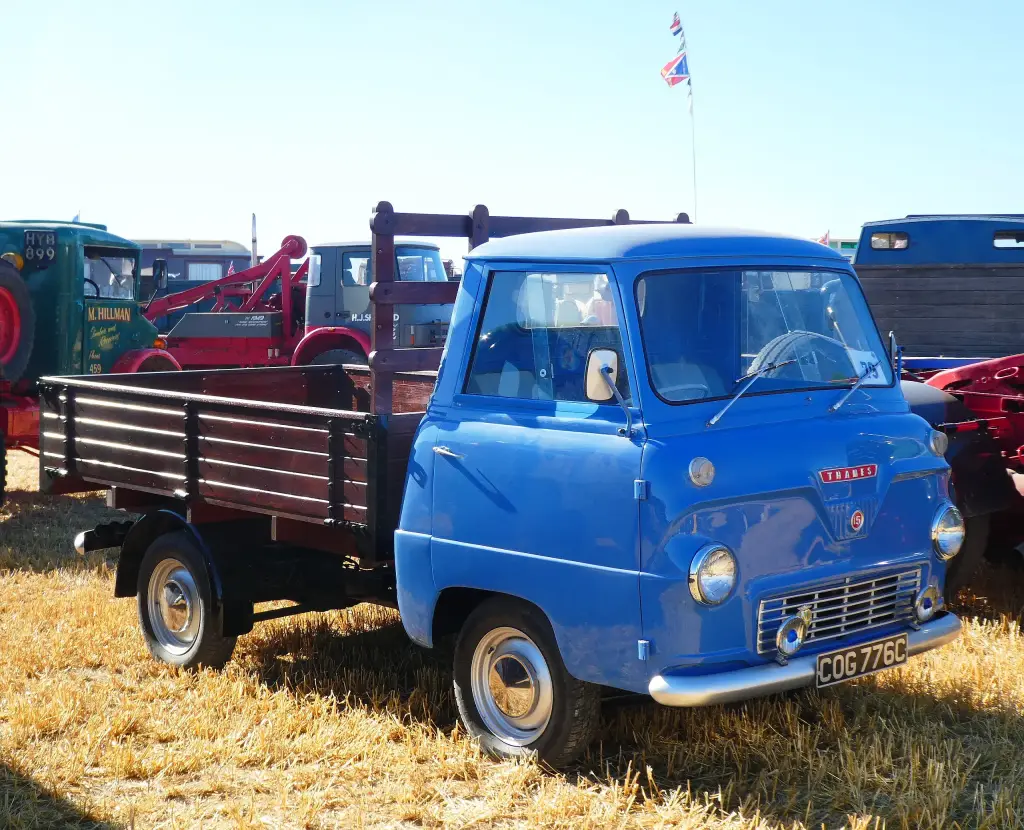
- Van (10, 12 and 15 cwt): the standard closed-body commercial version.
- Chassis cab and pickup: open-back models supplied for customers’ own coachwork.
- Estate car (8/10 seats): a passenger-carrying derivative, later available in De Luxe form with chrome trim.
- Minibus (12 seats): based on the 15 cwt model.
- 1963 specification: 55 or 58 bhp engines, four-speed all-synchromesh gearbox and a heavy-duty four-pinion back axle.
- Perkins diesel: the 4/99 1.6-litre option of 42 bhp.
The 400E succeeded the Fordson E83W and was replaced in the range together with the larger Thames ET lineage by Ford’s later commercial models. More British vans and trucks are in the Thames collection.
Video: Ford Thames 400E walkaround
Video on YouTube.
Sources
- Ford Thames 400E, English Wikipedia: chassis, engines, body styles, 1963 update, production