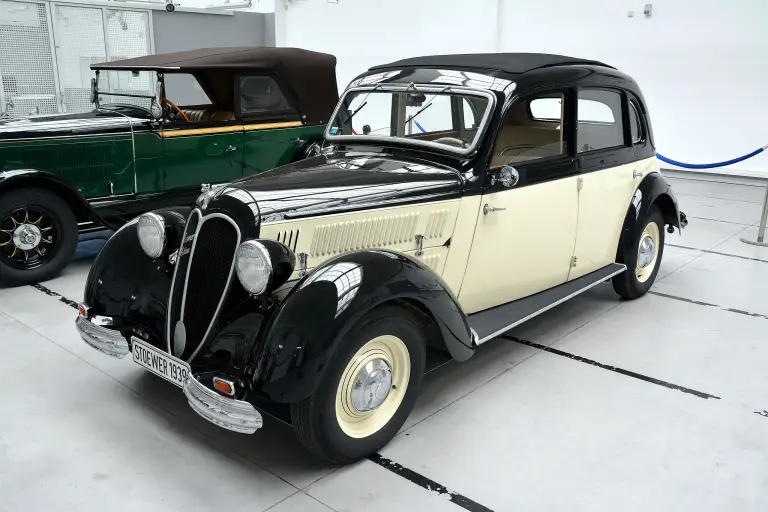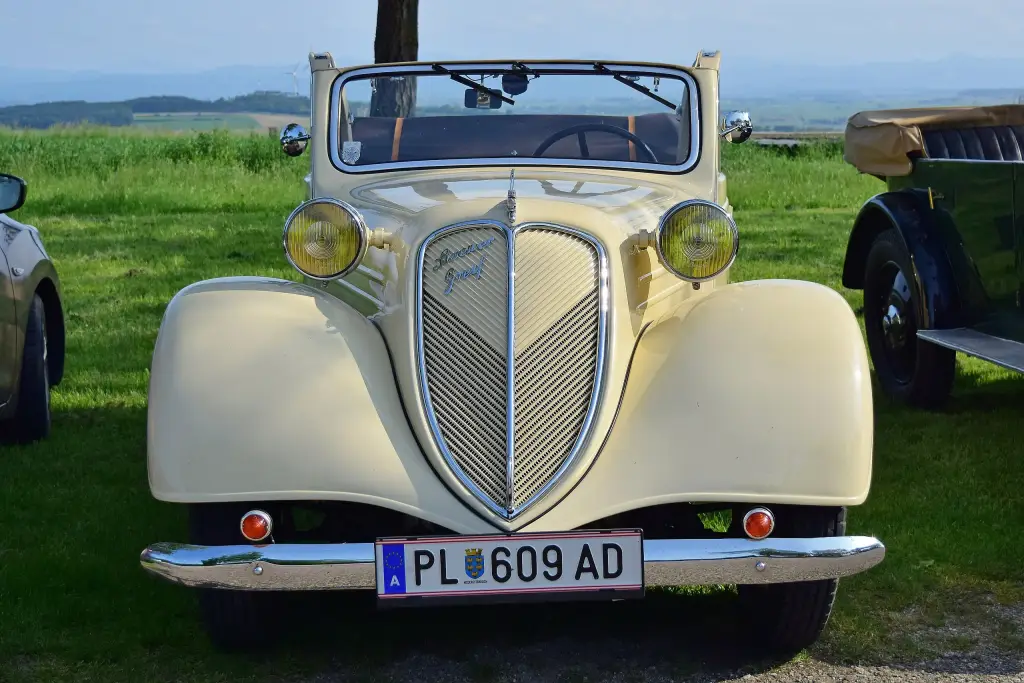
The Stoewer Greif Junior was a middle-class small car that Stoewer introduced in 1935 as the successor to the R 180. It was not a Stoewer design of its own: the licence and tools came from Tatra by way of the bankrupt Röhr company, and the car kept a rear-mounted air-cooled boxer engine and rear-wheel drive.
Stoewer Greif Junior at a glance
| Maker | Stoewer-Werke AG, Stettin (now Szczecin, Poland) |
|---|---|
| Production | 1935–1939 |
| Predecessor | Stoewer R 180 |
| Origin | licence and tools of the Tatra 30, taken over from Neue Röhr AG |
| Engine | air-cooled four-cylinder OHV boxer, front-mounted |
| Drive | rear-wheel drive, four-speed gearbox |
| Front suspension | axleless layout on two transverse leaf springs |
| Rear suspension | swing axle with a transverse leaf spring |
| Body styles | 2-door tourer, 2-door saloon, cabriolet, roadster |
| Built | 4,000 |
The Greif Junior is described in detail only in German Wikipedia; the English article on the Stoewer company gives the wider context.
History of the Stoewer Greif Junior
Bought in, not designed
When the Neue Röhr AG of Ober-Ramstadt went bankrupt, Stoewer was able to take over the licence and tools of the Tatra 30 and so avoid the cost and risk of developing a new small car of its own. The model, presented in 1935 as the successor to the R 180, was named after the griffin in the coat of arms of Stettin, the company’s home town. At first the former Röhr Junior was built unchanged.
A body of Stoewer’s own
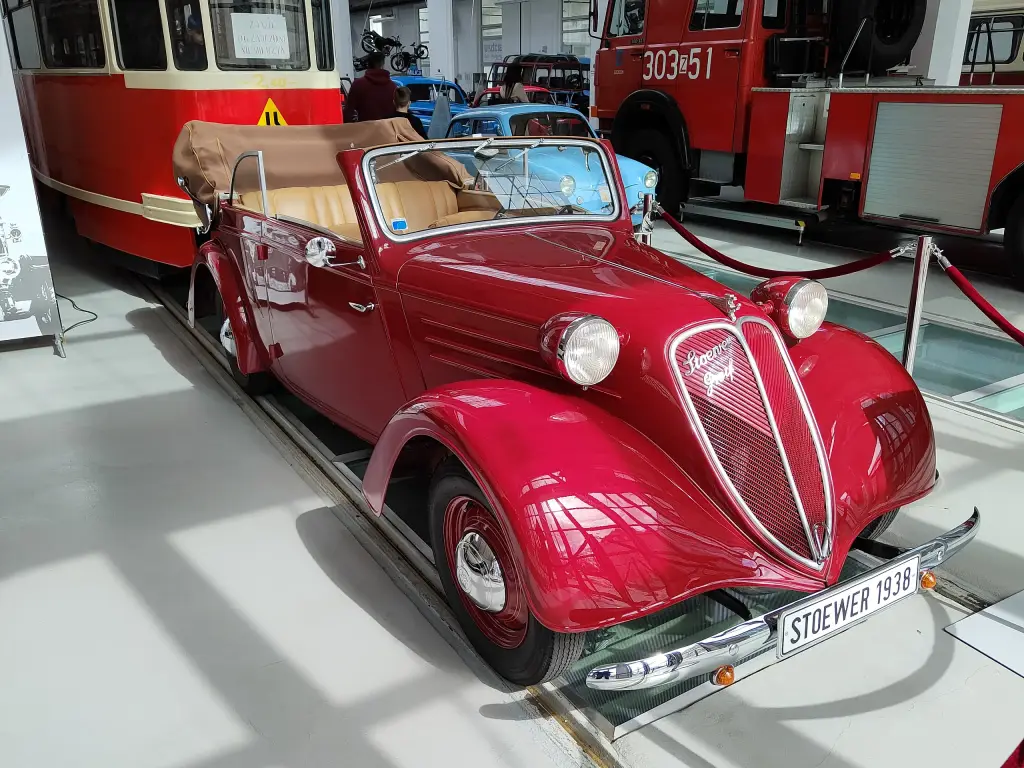
After about 900 cars had been made, the Greif Junior received a completely new and more elegant body of Stoewer’s own design in the spring of 1936. The chassis kept the unusual layout of the Tatra-derived car: the front wheels hung on an axleless construction with two transverse leaf springs, while the rear wheels were carried on a swing axle located by a transverse leaf spring. The engine was an air-cooled four-cylinder overhead-valve boxer mounted at the front, driving the rear wheels through a four-speed gearbox.
The end of the line
The Greif Junior was offered as a two-door tourer, a two-door saloon, a cabriolet and a roadster. By 1939 exactly 4,000 had been built. It was Stoewer’s last small car and, in its air-cooled boxer layout, an exception among the company’s otherwise front-wheel-drive and water-cooled models; the larger V8 Greif, which followed the Junior name, was the last car designed by Stoewer itself, while the Arkona and Sedina closed the civilian range.
Design and features
- Tatra licence: the design came from the Tatra 30 by way of the bankrupt Röhr company.
- Air-cooled boxer: a four-cylinder OHV engine at the front, driving the rear wheels.
- Unusual suspension: an axleless front layout on two transverse leaf springs and a swing rear axle.
- New body for 1936: after about 900 cars the original body gave way to a more elegant Stoewer design.
- Long run: about 4,000 cars built between 1935 and 1939, far more than the R 180 it replaced.
Stoewer Greif Junior versions
- T2 tourer: the two-door open body.
- L2 saloon: the two-door closed body.
- Cb2 cabriolet: the two-door convertible.
- R2 roadster: the two-door roadster.
- Early cars: the unchanged Röhr Junior body, about 900 built before the spring 1936 revision.
The Greif Junior replaced the R 180, and the later Sedina was the company’s last civilian saloon. More cars are in the Stoewer collection.
Sources
- Stoewer Greif Junior, German Wikipedia: origin, body, chassis, production figures
- Stoewer, English Wikipedia: place of the model in the company’s history