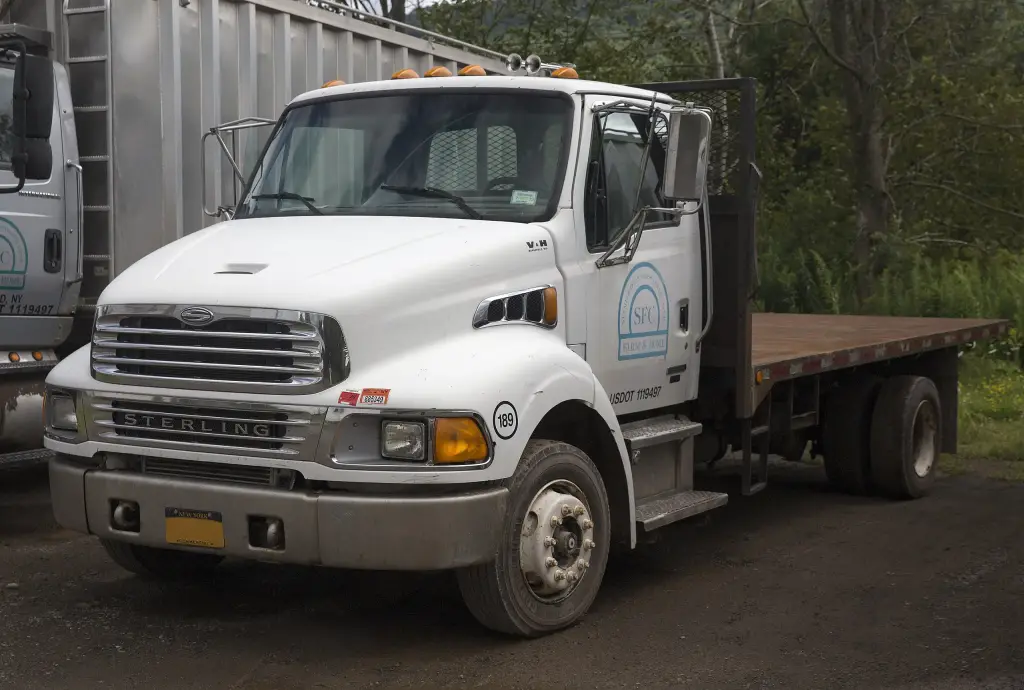
The Sterling Acterra was the medium-duty truck that broadened the Sterling range beyond heavy conventionals. Introduced in 1999, it put the familiar L-line cab on the Freightliner Business Class chassis and covered Class 5 to Class 8, which made it the brand’s answer to the growing market for lighter vocational trucks.
Sterling Acterra at a glance
| Maker | Sterling Trucks Corporation (Daimler) |
|---|---|
| Production | 1999–2009 |
| Class | Class 5–8 medium-duty |
| Cab | L-line conventional cab |
| Chassis | Freightliner Business Class |
| Body options | cab/chassis for third-party upfitters |
| Typical work | freight distribution, construction, snow ploughing, refuse |
| Assembly | St. Thomas, Ontario; Portland, Oregon |
| Markets | United States, Canada, Mexico, Australia, New Zealand |
| Brand discontinued | 2009 |
There is no separate Wikipedia article on the Acterra; this page uses the model section of the English article on Sterling Trucks and the German article on the marque.
History of the Sterling Acterra
A new market for an old name
Sterling returned to the American market in 1998, a year after Freightliner bought Ford’s heavy-truck lines. The brand’s first products were conventional heavy trucks derived from the Ford L-Series, but in the 2000s Daimler expanded the range downwards into medium-duty Class 5–7 trucks. The Acterra, on sale from 1999 to 2009, was the central model of that expansion.
L-line cab, Business Class chassis
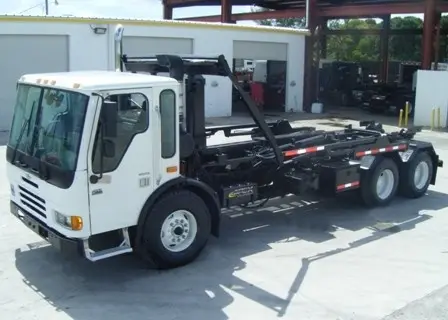
The Acterra’s formula was simple: it used the conventional cab of the L-line but sat on the Freightliner Business Class chassis. That gave Sterling a medium-duty truck with a familiar face and a proven mechanical package, and it meant the Acterra could be ordered as a bare cab/chassis for a body builder to finish. With third-party bodies the trucks went into freight distribution and heavy vocational work such as construction, snow ploughing and refuse collection.
The end of the brand
Daimler announced the closure of Sterling on 14 October 2008 as it consolidated its North American truck business under Freightliner and Western Star. The last Acterras were ordered in January 2009 and the St. Thomas plant in Ontario closed that March, while the Portland, Oregon plant stayed open until June 2010 to finish other work. For the Acterra the result was a ten-year production run that ended with the marque.
Design and features
- Medium-duty coverage: Class 5 to Class 8 in a single model line.
- Business Class chassis: Freightliner engineering under a Sterling cab.
- Vocational flexibility: supplied as cab/chassis for refuse, construction and municipal bodies.
- Familiar cab: the L-line conventional cab shared with the heavy trucks.
Sterling Acterra versions
- Acterra (1999–2009): the standard medium-duty range.
- Freight chassis: box and flatbed bodies for distribution work.
- Vocational chassis: refuse, construction and snow-plough bodies fitted by upfitters.
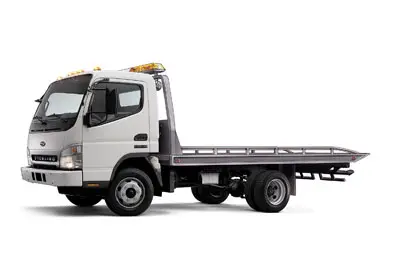
The Acterra sat below the heavy L-Line and A-Line, and the lightest truck in the range was the Fuso-based Sterling 360. More trucks are in the Sterling collection.
Video: 2002 Sterling Acterra Wrecker Cummins Diesel Start Up, Engine, And In Depth Tour
Video on YouTube.
Sources
- Sterling Trucks, English Wikipedia: Acterra dates, class, cab and chassis, body work
- Sterling (Nutzfahrzeugmarke), German Wikipedia: Daimler takeover, closure dates