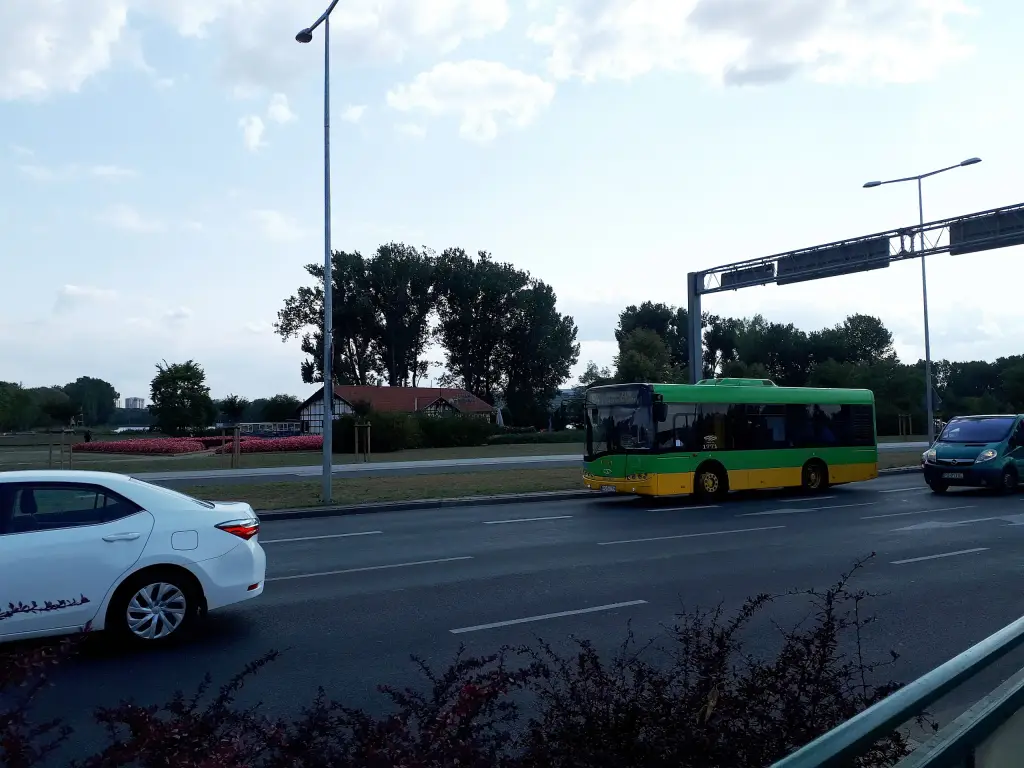
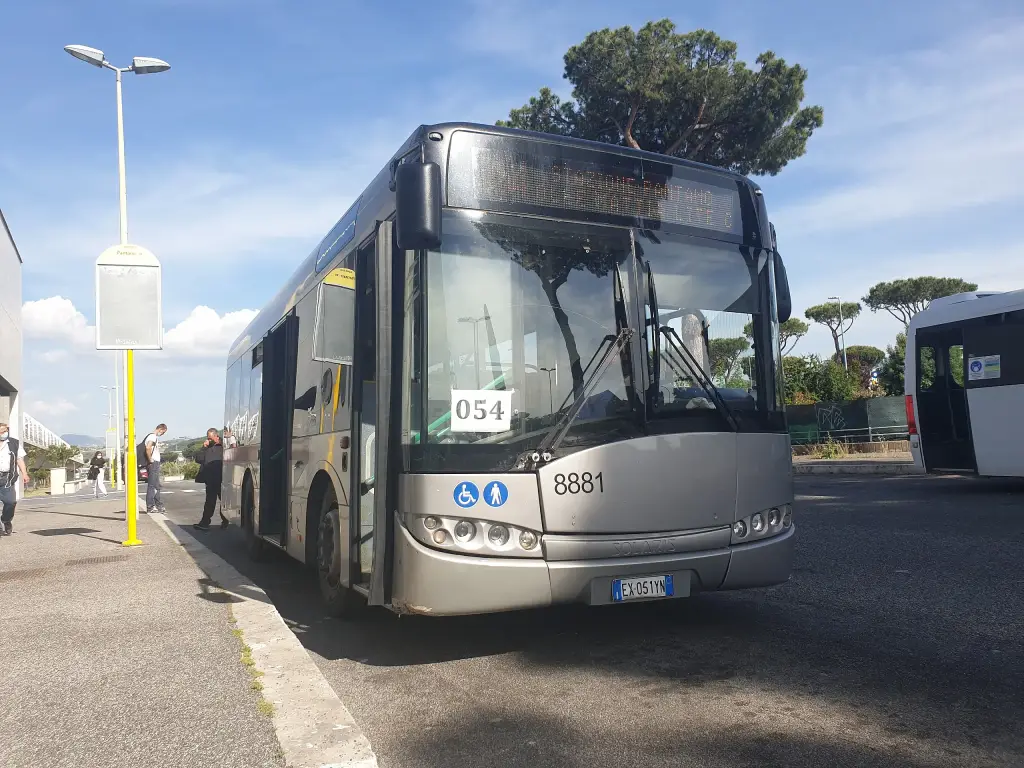
The Solaris Alpino is a low-floor midibus built by Solaris Bus & Coach in Bolechowo near Poznań as part of the Solaris Urbino family. Introduced in 2006 and produced from 2007, it was the shortest model in the range and was designed for narrow mountain roads and tight city-centre streets.
Solaris Alpino at a glance
| Maker | Solaris Bus & Coach, Bolechowo near Poznań, Poland |
|---|---|
| Production | 2007–2018 |
| Class | midi low-floor city bus |
| Length | 8.6 m |
| Width | 2400 mm, against 2550 mm for other Urbino models |
| Engine | Cummins ISBe4 250B, 6.7 litres, 250 hp |
| Emissions | Euro 4, later Euro 5 or EEV; CNG engine available |
| Gearbox | Voith Diwa 854.5 automatic, ZF optional |
| Turning circle | 15.8 m, about 2.2 m less than the Urbino 10 |
| Approach and departure angles | 8 degrees, against 7 for the other Urbino models |
| Kerb weight | 8,600–10,300 kg |
| Related model | Alpino 8.9 LE low-entry from 2008 |
History of the Solaris Alpino
Prototype and start of production
The Alpino was conceived as a smaller stablemate of the Urbino 10 for operators on routes with low passenger flows, narrow mountain roads or tight residential streets. Its prototype was shown at the Transexpo fair in Kielce in autumn 2006, and series production began in the spring of 2007. Structurally and stylistically the bus followed the third generation of the Solaris Urbino.
A narrow body and a tight turning circle
The main structural difference from the rest of the Urbino range was the body width: 2400 mm instead of 2550 mm. Together with a short wheelbase and front wheels that could turn by up to 50 degrees, this gave the Alpino a turning circle of 15.8 metres, some 2.2 metres less than the Urbino 10. The short front and rear overhangs raised the approach and departure angles to 8 degrees. The bus was fitted with Cummins engines, a Voith Diwa automatic gearbox and ZF axles with smaller 22.5-inch wheels; ABS, ASR, EBS and an ECAS suspension with a 70 mm kneel on the right side were standard.
Export and the Athens order
The Alpino was intended above all for the Alpine countries, Switzerland and Austria, but it also found buyers in large cities. In July 2008 Solaris signed the largest order in its history to that date with the Athens operator ETHEL for 320 buses, including 220 Alpino with Euro 4 engines, delivered by the first half of 2009.
The 8.9 LE and the end of production
In 2008 the range grew with the low-entry Alpino 8.9 LE, more than 30 cm longer, with a longer wheelbase and rear overhang and with the engine lying under the floor at the rear instead of standing in an engine tower. It was later renamed Urbino 8.9 LE, and in 2011 it formed the basis of the first fully electric Solaris city bus, the Urbino 8.9 LE electric. The low-floor Alpino 8.6 remained in production until 2018, when it was withdrawn along with the other third-generation Urbino models and replaced in the offer by the low-entry 8.9 LE versions.
Design and features
- Narrow body: 2400 mm wide, 15 cm less than the standard Urbino, for mountain roads and old town streets.
- High manoeuvrability: front wheels steering up to 50 degrees and a 15.8 m turning circle.
- Strong engine for its size: a 250 hp Cummins unit in a bus weighing 8,600–10,300 kg, for steep climbs.
- Low floor throughout: a true low-floor layout, unlike the later low-entry 8.9 LE.
- Modern chassis systems: ABS, ASR, EBS, retarder and ECAS kneeling.
Solaris Alpino versions
- Alpino 8.6: the original low-floor midibus of 2007–2018.
- Alpino 8.9 LE: the longer low-entry version from 2008, later renamed Urbino 8.9 LE.
- Urbino 8.9 LE electric: the fully electric derivative presented in 2011.
The Alpino belonged to the Solaris Urbino family, and Solaris also built the tourist coach Solaris Vacanza. More Polish buses are in the Solaris collection.
Sources
- Solaris Alpino, English Wikipedia: history, engines, Athens order
- Solaris Alpino, Polish Wikipedia: dimensions, turning circle, production years, 8.9 LE