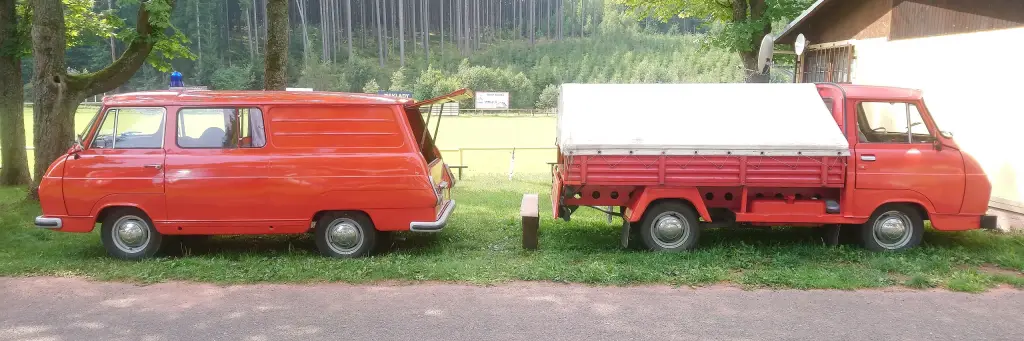
The Škoda 1203 was a small forward-control van, minibus and light truck introduced in 1968 and built at AZNP’s Vrchlabí plant until 1981. It was the only series-produced vehicle of its kind in Škoda’s history, and in its modified TAZ form it remained in production in Slovakia until the 1990s and beyond.
Škoda 1203 at a glance
| Maker | AZNP, Vrchlabí; later TAZ, Trnava |
|---|---|
| Production | 1968–1981 in Vrchlabí; TAZ from 1975 |
| Factory type | 997, modernised type 776 |
| Layout | engine at the front, rear-wheel drive |
| Body | forward-control, semi-monocoque |
| Bodies | van, minibus, ambulance, pick-up, flat-bed |
| Basis | chassis engineering of the Škoda 1202 |
| Engine | 1,221 cc four-cylinder, later 1,433 cc in the TAZ 1500 |
| Built | around 70,000 in all |
| Later makers | TAZ Trnava and Ocelot Auto, Žacléř |
History of the Škoda 1203
Twelve years from plan to production
The first plans for the 1203 were drawn up in 1956, as part of the search for a replacement for the slow, hand-built utility versions of the 1201. The Vrchlabí works built a series of trambus prototypes from 1956 to 1958, but the project was repeatedly stopped, and the 1202 was developed in its place as a stopgap. Suppliers of parts and accessories could not be secured, and production did not begin until 1968. The new vehicle took its chassis engineering from the 1202, but wrapped it in a forward-control monocoque body with the engine between and beside the front seats.
What it was like to use
The 1203 offered a large, square load space that could be used for many purposes, and it became one of the most common vehicles of its class in Czechoslovakia, helped by the almost complete absence of competitors. Its weaknesses were equally well known: the engine was weak and prone to overheating, the gearchange was awkward and the handling was poor when the van was empty. Owners complained for decades and the factory changed little, yet the type stayed in production for more than thirty years and did much to support the small businesses that appeared after 1989.
Trnava, the TAZ 1500 and the end
Five years after the Vrchlabí production of the 1203 ended in 1981, a modernised type, the 776, was introduced and part of the work moved to Trnava in Slovakia, where the whole production was soon concentrated. In 1985 came another modernisation, the TAZ 1500, with a 1,433 cc engine. The 1203 was also built in small-series production by Ocelot Auto in Žacléř between 1994 and 2010. Around 70,000 vehicles of the family were made in all, and the TAZ 1500 was its direct descendant.
Design and features
- Forward-control monocoque: Škoda’s first and only series-produced vehicle of this layout.
- Flexible load space: one body served as van, minibus, ambulance and pick-up.
- Long life: unchanged in essentials for over thirty years across two countries.
- Known weaknesses: a weak, easily overheated engine and poor handling when empty.
Škoda 1203 versions
- 1203 van: the basic panel delivery version.
- 1203 minibus: passenger body on the same shell.
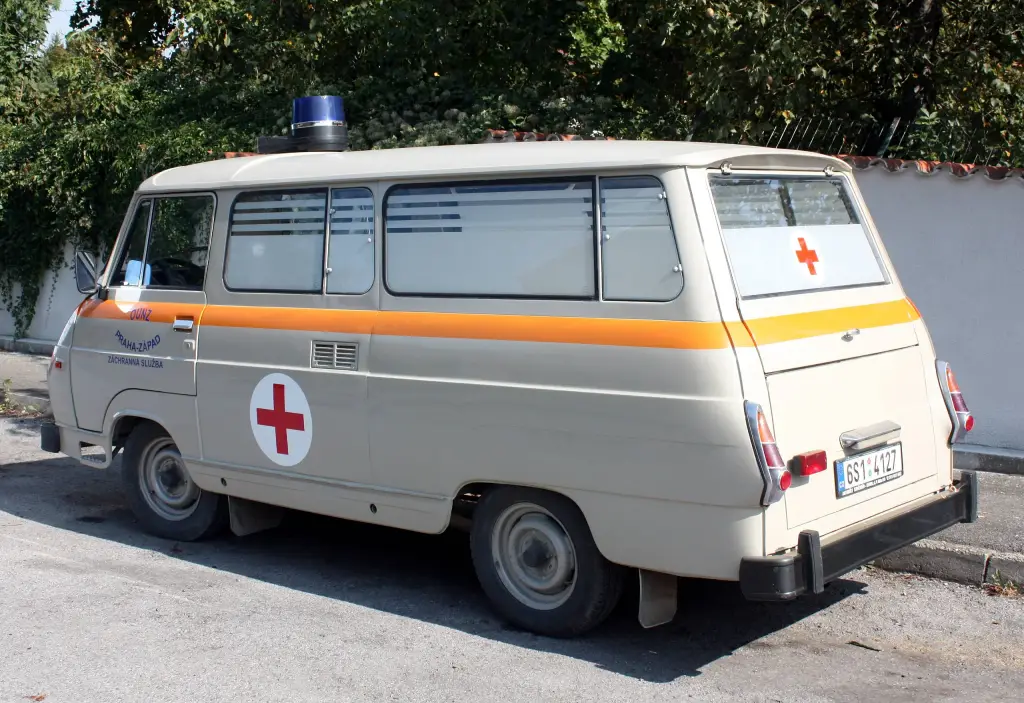
- 1203 ambulance: medical version, widely used in Czechoslovakia.
- TAZ 1500 (1985): modernised Slovak-built version with a 1,433 cc engine.
- Ocelot Auto cars: small-series production in Žacléř from 1994.
The 1203 replaced the Škoda 1202 in the utility role. More cars are in the Škoda collection.
Video: Škoda 1203 sanitka (1989) + bonus
Video by jaffarski on YouTube.
Sources
- Škoda 1203, English Wikipedia: production dates, types, engine, total
- Škoda 1203, Czech Wikipedia: development, layout, criticism, TAZ and Ocelot production