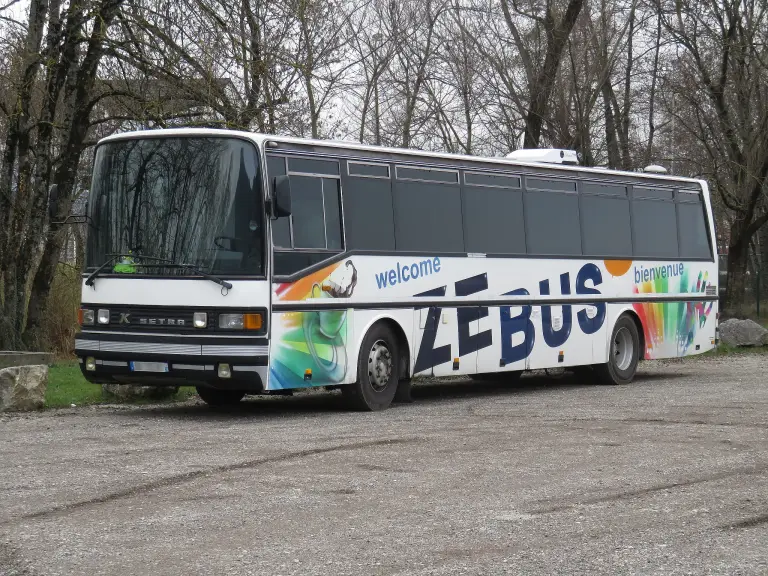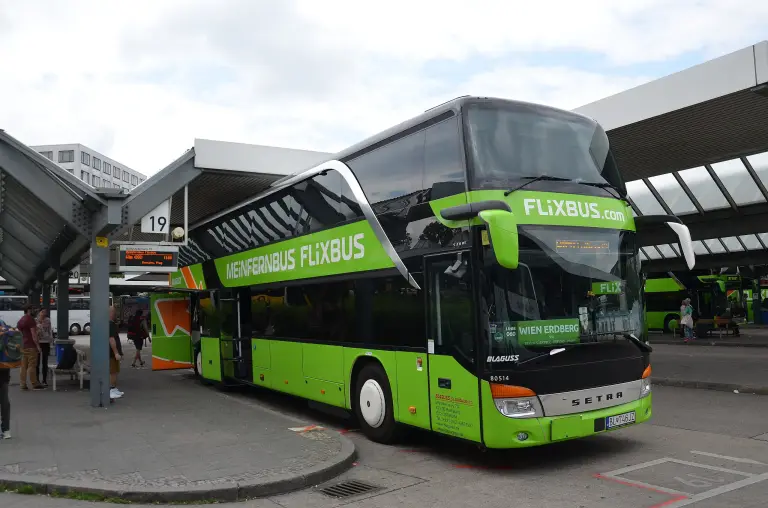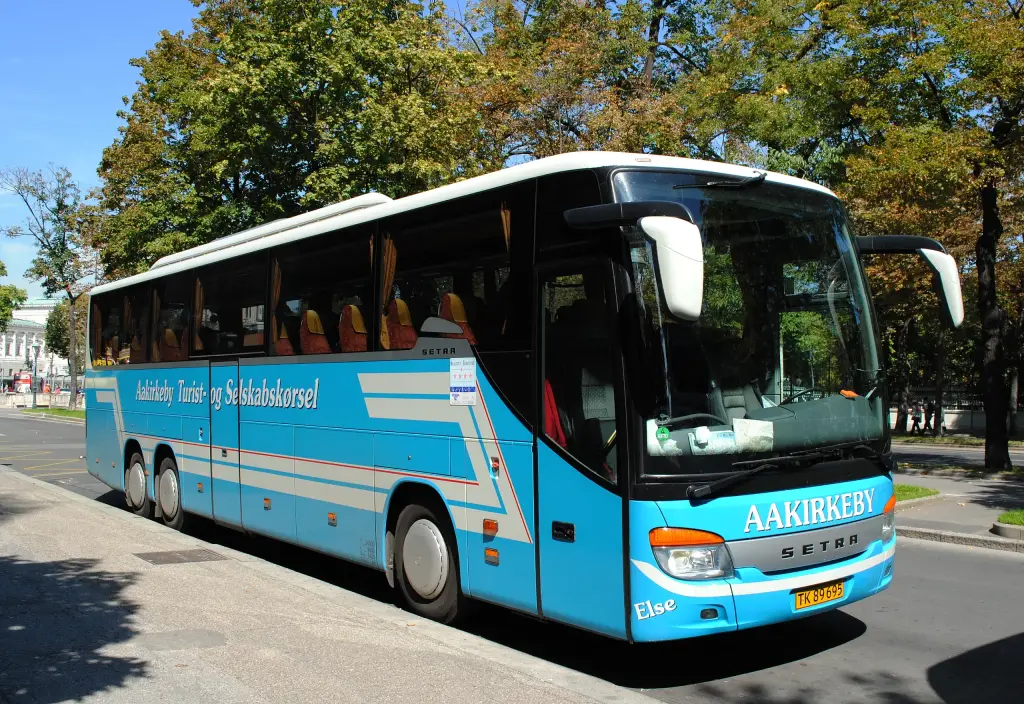
The Setra TopClass 400 was the top coach range of the German manufacturer Setra, presented in 2002 and replaced in 2013 by the TopClass 500. It was offered in three lengths, from the 51-seat S 415 HDH to the S 417 HDH, the longest version of the range.
Setra TopClass 400 at a glance
| Maker | Setra (EvoBus, Daimler) |
|---|---|
| Range | TopClass 400 |
| Presented | 2002 |
| Replaced by | TopClass 500, from 2013 |
| Direct successor | S 517 HDH |
| Models | S 415 HDH, S 416 HDH, S 417 HDH |
| Seats | 51 in the S 415 HDH, 55 in the S 416 HDH |
| Longest model | S 417 HDH, with seventeen seat rows |
| Floor | HDH means extra-high floor |
| Sister ranges | MultiClass and ComfortClass of the 400 series |
There is no Wikipedia article on the S 415 or the S 416; the German article on the S 417 HDH names both as related versions, and this page is based on it together with the English article on Setra.
History of the Setra TopClass 400
The TopClass 400 was presented in 2002 as Setra’s top range of touring coaches. Within the 400 series it sat above the MultiClass and ComfortClass ranges, and the three names replaced the older individual model names that Setra had used up to then.
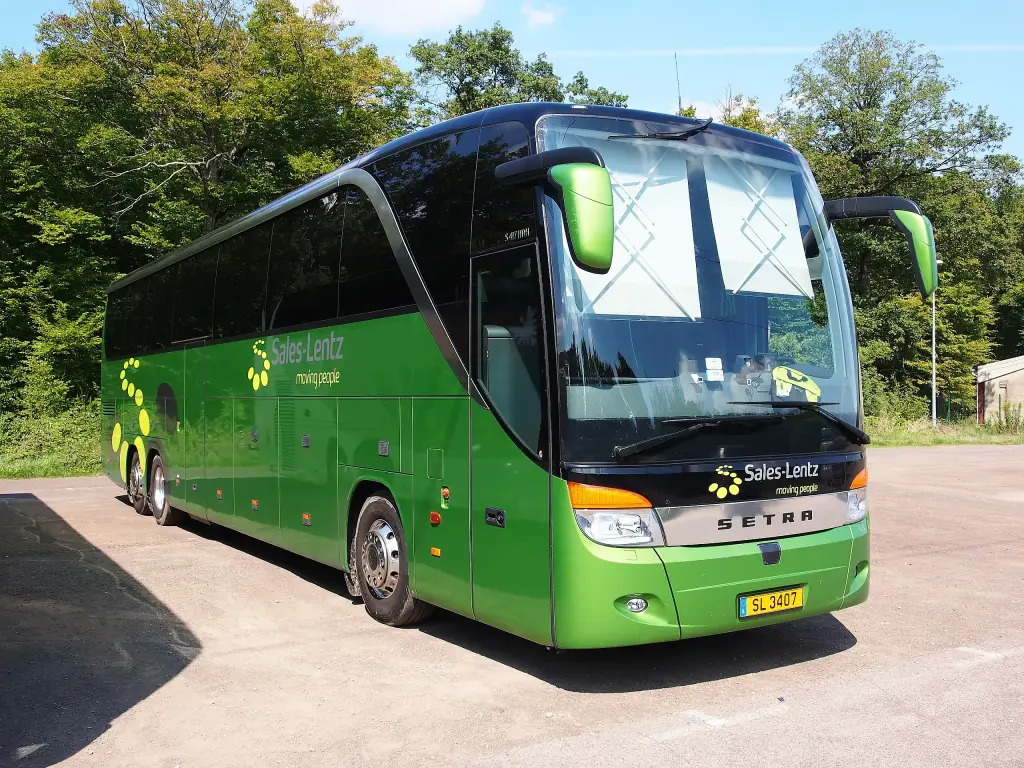
Three lengths
The range was built around three lengths. The S 415 HDH was the shortest, with 51 seats, and the S 416 HDH offered 55 seats. The S 417 HDH was the longest version of the TopClass 400; in the Setra naming system the number gives the maximum number of seat rows, so the S 417 has seventeen. The letters HDH stand for an extra-high floor, the tallest of the floor variants that Setra offered on its coaches.
The end of the range
In 2013 the TopClass 400 was replaced by the TopClass 500. The direct successor of the S 417 HDH was the S 517 HDH, which carried the same place at the top of the range into the new generation.
What the name means
Setra takes its name from „selbsttragend“, the German word for self-supporting, a reference to the integral construction of its first coach, the S 8 of 1951, whose body and chassis formed a single load-bearing structure. The company was called Karl Kässbohrer Fahrzeugwerke until 1995, when it was sold to Daimler-Benz; since then Setra has been a brand of the Daimler subsidiary EvoBus.
In the 400 series the suffixes after the type number describe the equipment: H for a high floor without wheel arches in the passenger compartment, HD for a high floor, HDH for an extra-high floor, DT for a double-deck touring coach, MD for a mid-height floor, UL for interurban buses and NF for low-floor buses.
Design and features
- Top of the range: the TopClass 400 was Setra’s most luxurious coach family of its generation, above the MultiClass and ComfortClass.
- Extra-high floor: the HDH suffix marks the tallest floor variant, which gave a large luggage hold below the passenger deck.
- Three lengths: the same family was sold as the 51-seat S 415 HDH, the 55-seat S 416 HDH and the seventeen-row S 417 HDH.
- Clear naming: the first two digits give the seat rows and the letters the floor and body type, so each model can be identified from its badge.
- Short life: the range ran from 2002 to 2013, when the TopClass 500 took over.
Setra TopClass 400 versions
- S 415 HDH: the shortest coach of the range, with 51 seats.
- S 416 HDH: the middle version, with 55 seats.
- S 417 HDH: the longest version, with seventeen seat rows and the place of flagship in the range.
The intercity bus of the earlier 200 series is described in the article on the Setra S 215 UL, and the only double-decker of this range in the article on the Setra S 431 DT. More buses are in the Setra collection.
Sources
- Setra S 417 HDH, German Wikipedia: range, dates, models and seats
- Setra, English Wikipedia: naming system, company history