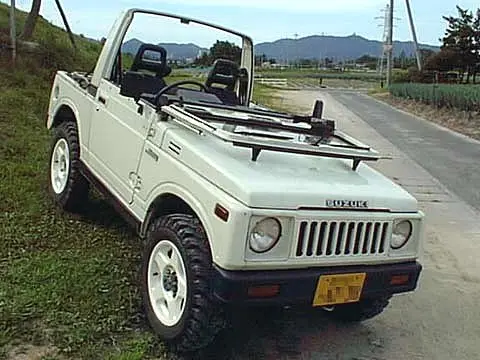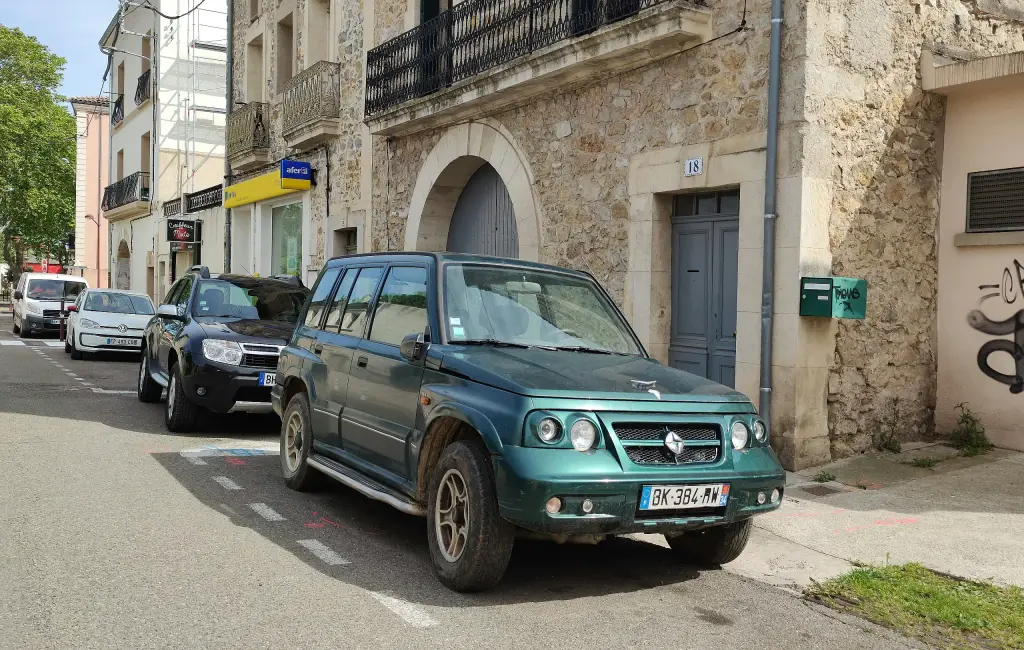
The Santana Vitara was the Spanish-built version of the first-generation Suzuki Vitara, produced in Linares until 2005. When the licence ended, Santana developed its own restyled derivative on the same base: the three-door Santana 300 and the five-door Santana 350, sold from 2005 to 2009.
Santana Vitara at a glance
| Production (Santana) | until 2005 |
|---|---|
| Based on | first-generation Suzuki Vitara |
| Bodies | 3-door and 5-door |
| Engines | 1.6 petrol; 2.0 V6; 2.0 turbodiesel |
| 1990 update | 16-valve 1.6, optional 4-speed automatic |
| 1994 update | 2.0 V6 and Mazda-sourced turbodiesel |
| 1996 update | facelift, 2.5 V6 |
| Santana 300 | 3-door, 2005–2009 |
| Santana 350 | 5-door, 2005–2009 |
| Spanish diesel | 2.0-litre, exported to Chile 2000–2002 |
History of the Santana Vitara
The first-generation Vitara was introduced in Japan in July 1988 as the Suzuki Escudo; in North America it was sold as the Sidekick from the 1989 model year. The original three-door used a 1.6-litre eight-valve engine with 81 PS. In August 1990 a 16-valve version with 100 PS arrived, together with an optional four-speed automatic, and a five-door with a longer wheelbase followed three months later; European deliveries of the five-door began in the summer of 1991. A 2.0-litre V6 and a Mazda-sourced 2.0-litre turbodiesel were added in December 1994, and the 1996 facelift brought a 2.5-litre V6 and a 2.0-litre four-cylinder.
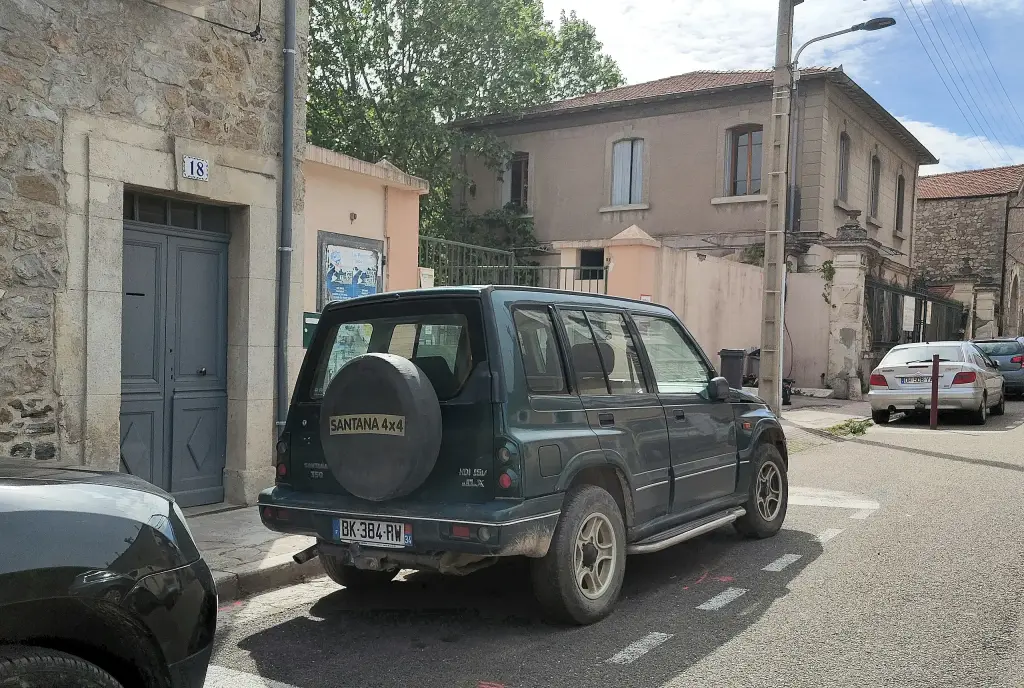
The first-generation range
The three-door was sold as a convertible or a hardtop; North American Sidekicks came in JA, JX and JLX trim, the base JA using a 1.3-litre 64 hp engine and the others the 1.6-litre. Some markets received a carburetted 1.6 without a catalytic converter, rated at 75 PS. Rear anti-lock brakes were introduced in 1991, and the 1996 Sport used a 1.8-litre engine with 120 hp. The five-door was expected to overlap with the shorter three-door, but it appealed to a new segment and doubled Suzuki’s Japanese sales.
Built in Linares
Santana Motor built the Vitara in its Linares factory until 2005, and Spanish-built cars with the 2.0-litre diesel were exported to Chile between 2000 and 2002, where they were sold alongside the second-generation Grand Vitara. When the Vitara licence came to an end, Santana developed a model on the same base: the Santana 300, a three-door, and the Santana 350, a five-door. They had a new exterior design and a more modern engine and were produced from 2005 to 2009.
Design and features
- Two body styles: three-door and five-door.
- Wide engine range: 1.6 petrol, 2.0 V6 and 2.0 turbodiesel.
- Spanish production: assembled by Santana in Linares until 2005.
- Santana 300/350: a restyled derivative with new engines, built 2005–2009.
- Export version: Santana-built 2.0 diesels went to Chile in 2000–2002.
Santana Vitara versions
- 3-door Vitara: the original short-wheelbase model.
- 5-door Vitara: long-wheelbase version from late 1990.
- 1.6 16-valve: from 1990, with optional automatic.
- 2.0 V6 and 2.0 turbodiesel: from 1994.
- Santana 300: three-door restyle, 2005–2009.
- Santana 350: five-door restyle, 2005–2009.
The Vitara followed the smaller Santana SJ413 in Santana’s Suzuki era, and the Santana Aníbal was its own utility design. More vehicles are in the Santana collection.
Video: "I Disfrutalo" Suzuki Vitara Espana (Santana-motor.s.a)
Video by Michel Frenken on YouTube.
Sources
- Suzuki Vitara, English Wikipedia: first-generation history and engines
- Suzuki Vitara, Spanish Wikipedia: Santana production, 300/350, Chilean exports
- Santana 300, Spanish Wikipedia: 300/350 bodies and production years