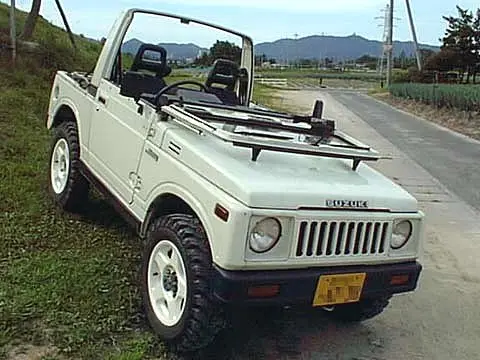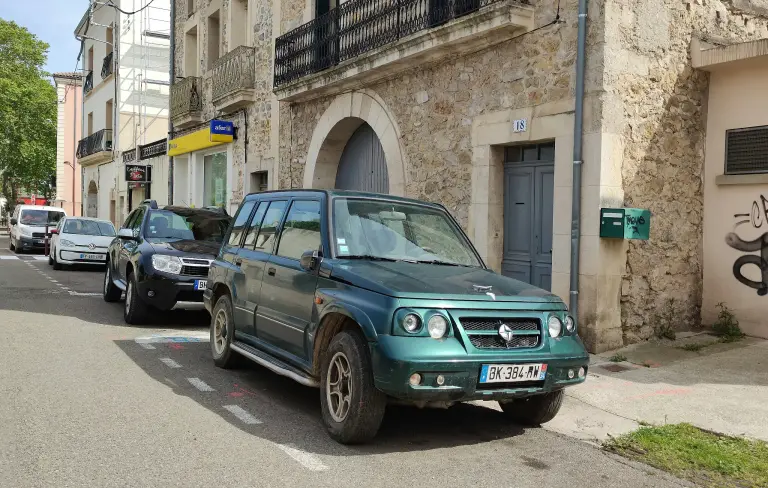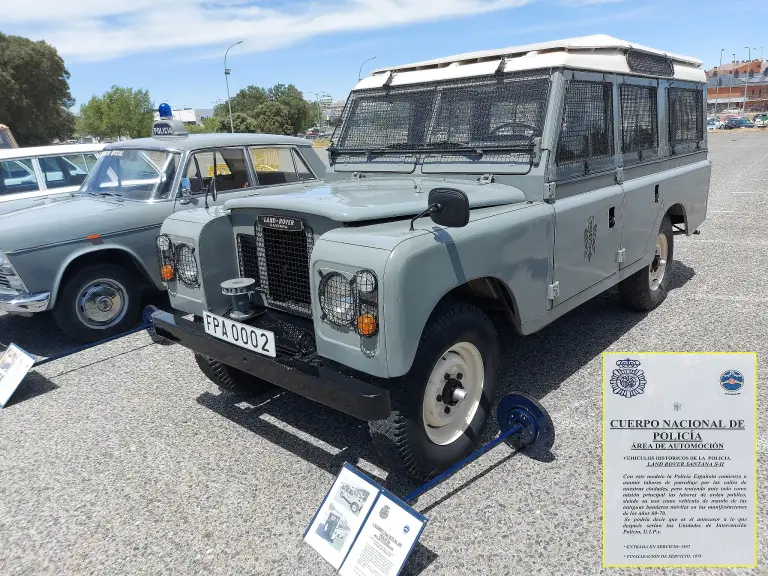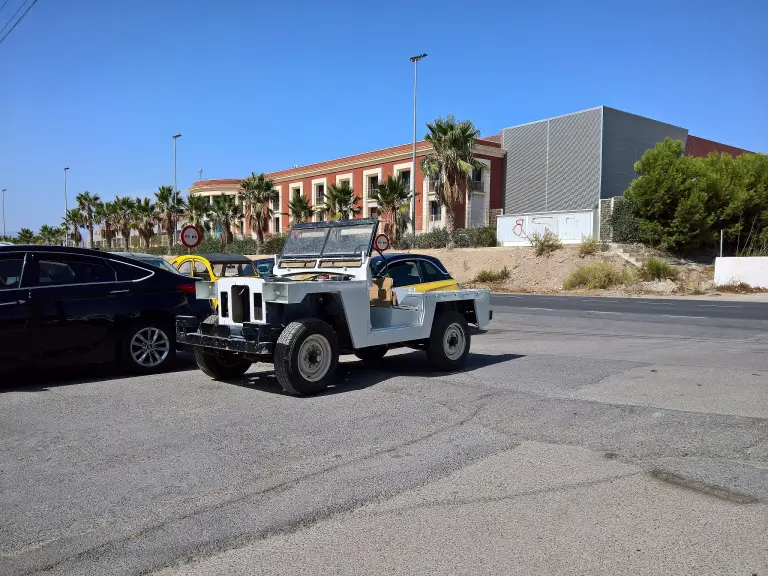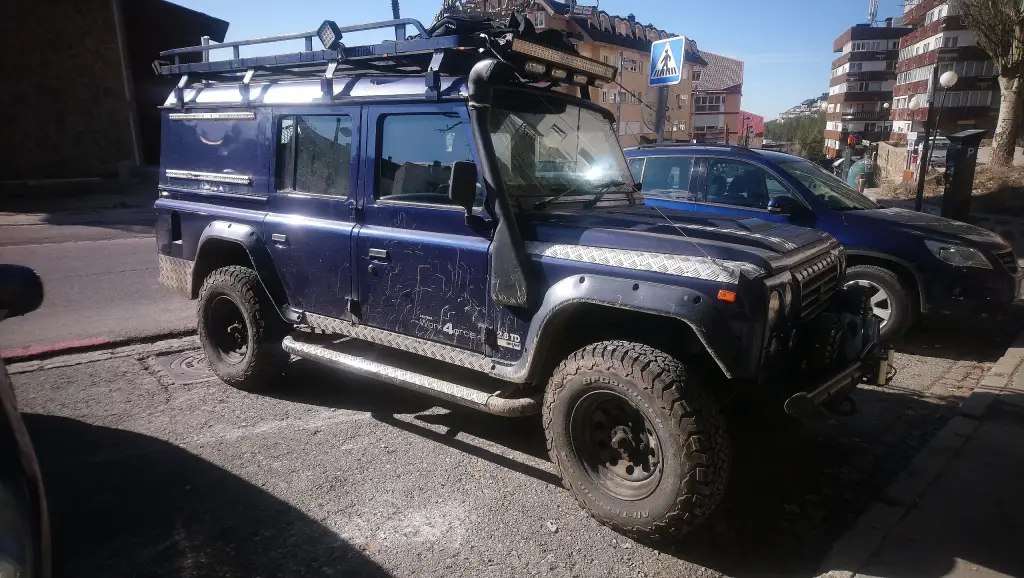
The Santana Aníbal was a no-frills off-roader made by Santana Motor in Linares from 2004 to 2011. It was an updated Santana 2500, itself a descendant of the Land Rover Series built under licence in Spain, and it was sold in export markets as the PS10 because the Aníbal name belonged to the maker of the Hummer.
Santana Aníbal at a glance
| Production | 2004–2011 |
|---|---|
| Factory | Linares (Jaén), Spain |
| Export name | PS10 |
| Based on | Santana 2500 |
| Bodies | 3-door, 5-door, single- and double-cab pickup |
| Engine | Iveco 2.8-litre four-cylinder turbodiesel, 125 hp |
| Transmission | 5-speed manual, dual-range transfer box, 4×2/4×4 |
| GVW | 3,050 kg |
| Kerb weight | 2,140 kg |
| Payload | 1,000 kg |
| Towing | 750 kg unbraked, 3,000 kg braked |
| Seats | 5 or 7 |
Based on one source: the Spanish Wikipedia article on the Santana Aníbal.
History of the Santana Aníbal
The Aníbal was developed as a replacement for the Santana 2500, the Land Rover-derived utility vehicle that Santana had built in the 1980s and 1990s. The project was led by the factory director José Antonio Navarro Yagüe from 1997; a scale model was approved in January 1998 and full-size prototypes followed. The new model was presented at the Madrid motor show on 23 May 2002 in three- and five-door form and as a pickup with single or double cab. A long-wheelbase three-door prototype was never sold. Development cost €19 million.
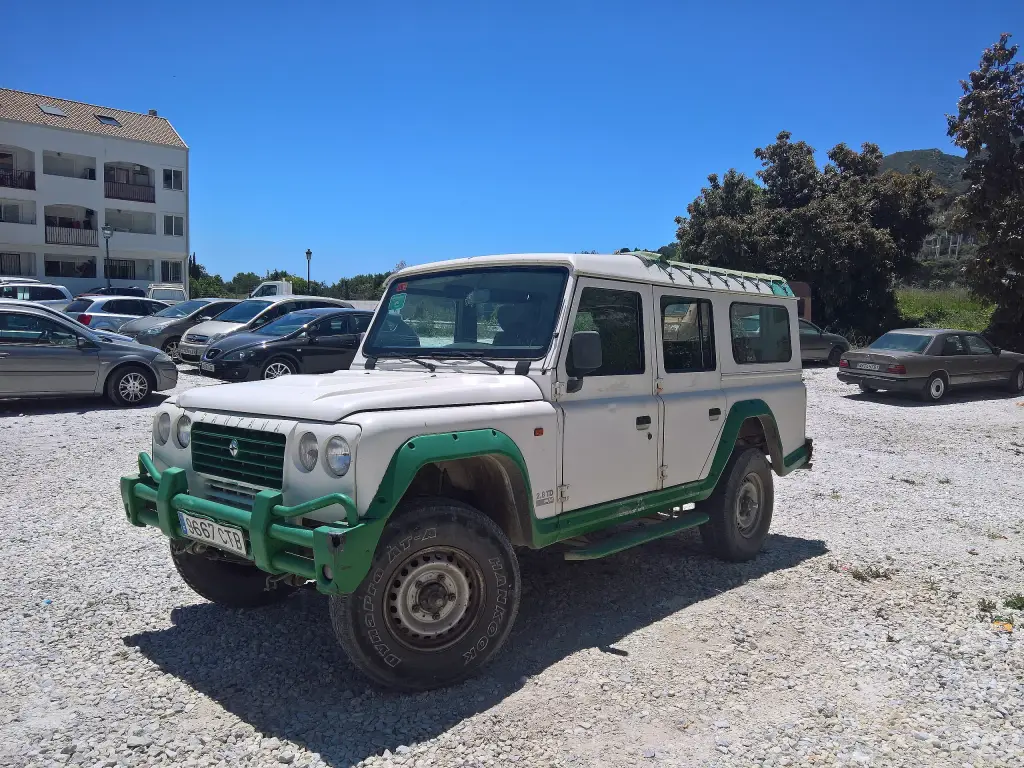
Mechanically the Aníbal stayed close to its predecessor: a separate chassis, live axles and a workmanlike body. It gained power steering and optional air conditioning, and its rear door was enlarged so that a Euro pallet could be loaded. There was no ABS or airbag option. The engine was an Iveco 2.8-litre four-cylinder common-rail diesel rated at 125 hp. In Spain the vehicle was called Aníbal; abroad it was the PS10, because the Hannibal name was already registered by the manufacturer of the Hummer.
The combination of price and ability brought orders from the Spanish army, which took up to 1,700 vehicles, and from France and the Czech Republic, which bought it as a light utility 4×4; Britain and Morocco also tested it. Civilian versions were exported elsewhere in Europe, although the short-wheelbase model was not offered in the United Kingdom. In July 2005 the British magazine 4×4 Magazine named the Aníbal/PS10 the best off-roader in the world. In 2006 Iveco agreed to take the vehicle as the basis of the Iveco Massif, restyled by Italdesign and built from July 2007 until the Santana factory closed in 2011; Santana also registered the name Mahorí for its own version, of which five were assembled.
Design and features
- Iveco power: a 2.8-litre common-rail turbodiesel with 125 hp.
- Load carrying: 1,000 kg payload and 3,000 kg braked towing.
- Euro-pallet door: the rear opening was enlarged for standard pallets.
- Utility specification: power steering and optional air conditioning, but no ABS or airbags.
- Military appeal: orders from Spain, France and the Czech Republic.
Santana Aníbal versions
- 3-door: short-wheelbase closed body.
- 5-door: long-wheelbase station wagon with up to seven seats.
- Single-cab pickup: open load bed.
- Double-cab pickup: four-door crew cab.
- PS10: the export name used outside Spain.
- Iveco Massif: the 2007–2011 Iveco-branded derivative.
The Aníbal continued the line that began with the Land Rover Santana and the Santana Ligero. More vehicles are in the Santana collection.
Video: Promo Santana PS10 ANIBAL #1
Video by DrXoomg on YouTube.
Sources
- Santana Aníbal, Spanish Wikipedia: history, names, engines, military orders, Massif