The Sanglas 400 was born in difficult years for the Barcelona firm. At the end of the 1950s, with staff cut from 200 to 50 and many components outsourced, the new 400 used a British two-stroke engine sold under the Rovena name. Its real importance came later, when the four-stroke 400T of 1967 became the reference for the whole Sanglas range until the company disappeared.
Sanglas 400 at a glance
| Maker | Sanglas, Barcelona and L’Hospitalet, Spain |
|---|---|
| First 400 | end of the 1950s |
| Engine of the first 400 | British Hispano Villiers unit of 250 cc, two-stroke, sold as Rovena |
| 400T | 423 cc four-stroke, designed in 1956–57, presented in 1967 |
| 400T role | reference model for the rest of the range |
| 400E | the model replaced in 1976 |
| 400F | introduced in 1976 in place of the 400E |
| 400Y | built after 1981 with a Yamaha XS twin |
| End of 400Y | 1982 |
| Workforce, late 1950s | reduced from 200 to 50 |
| Output, late 1960s | about 2,500 units a year |
There are no Wikipedia pages for the individual Sanglas models; this article uses the articles on the company in English and Spanish Wikipedia.
History of the Sanglas 400
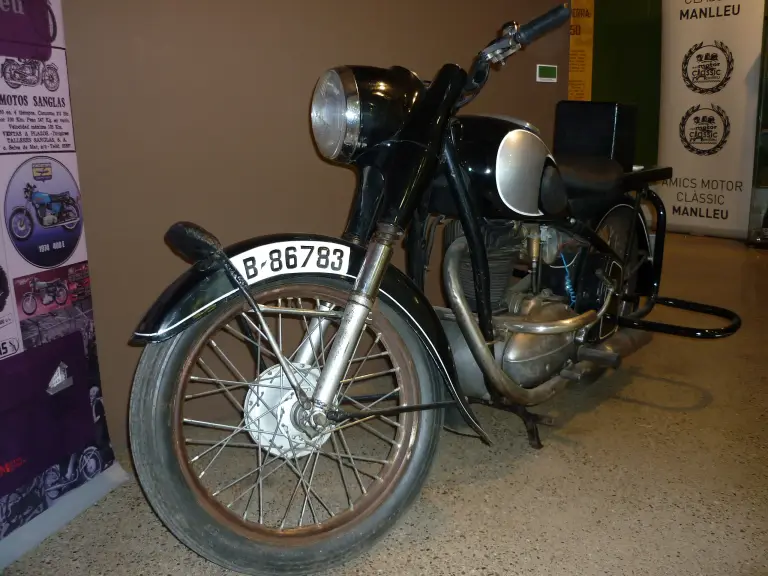
The first Sanglas 400 belongs to the hardest period in the company’s history. In 1958 annual production reached 500 units and the firm moved from Poble Nou to a modern factory in L’Hospitalet de Llobregat. During the financial and political crises of those years the workforce fell from 200 to 50 and many components were outsourced: the new Sanglas 400 was given Hispano Villiers engines, British 250 cc two-strokes, sold under the Rovena brand.
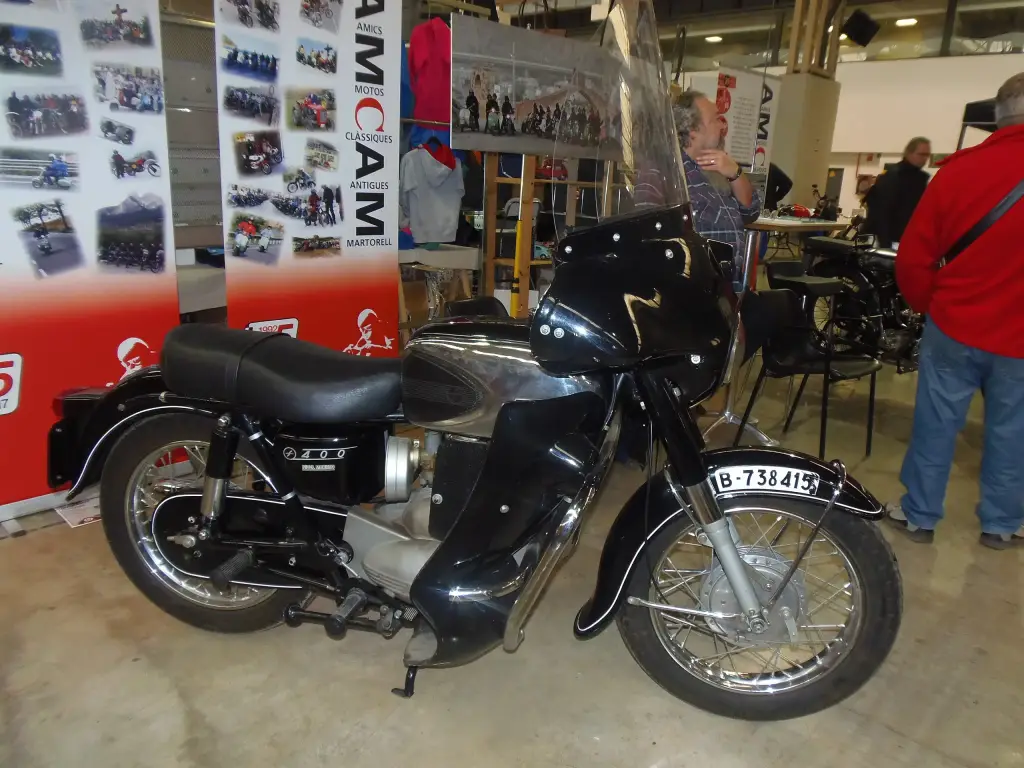
The model that mattered for the future was the 400T. Its four-stroke engine of 423 cc had already been designed in 1956–57, and the finished motorcycle was presented at the Barcelona trade fair in 1967. The 400T would serve as a reference for the rest of the line-up of the brand until its demise, and it placed Sanglas squarely back among builders of large four-stroke singles.
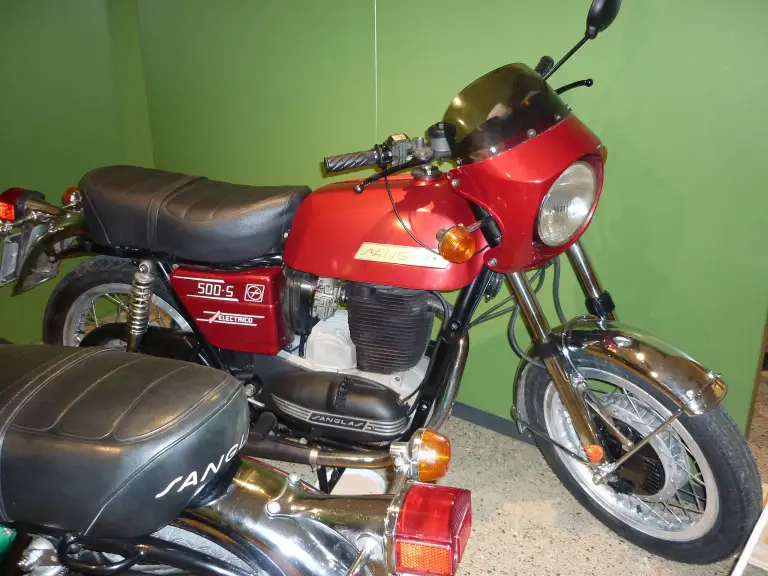
The 400 was developed through the 1970s. In 1976, the year the 500 S appeared with its disc brakes, the 400E was modified to become the 400F. By then Sanglas was selling only a few hundred large motorcycles a year, and in 1973 the total had been just 474 units because of the models’ lack of performance against newer competition.
The last chapter came under Yamaha influence. Sanglas was sold to the Spanish bank Banesto, and in 1981 the SEMSA company was formed with Yamaha, Banesto, Banco de Madrid and the Catalan development bank. Thanks to that agreement Sanglas began building the 400Y with a two-cylinder Yamaha XS engine; production of the 400Y ceased in 1982, and with it the Sanglas name disappeared from new motorcycles.
Design and features
- Outsourced engineering: the first 400 used a British Hispano Villiers two-stroke, badged Rovena, when Sanglas could no longer make every component itself.
- 400T four-stroke: a 423 cc engine designed in 1956–57 and presented in 1967, strong enough in concept to define the rest of the range.
- Steady updating: the 400E became the 400F in 1976, alongside the new 500 S.
- Yamaha finale: the 400Y of 1981–82 used a two-cylinder Yamaha XS engine instead of a Sanglas unit.
- Police service: Sanglas 400s were used by Spanish police forces in the 1960s and 1970s.
Sanglas 400 versions
- Sanglas 400 (late 1950s): Hispano Villiers 250 cc two-stroke, Rovena brand.
- Sanglas 400T (1967): 423 cc four-stroke single, the reference model of the range.
- Sanglas 400E: the version replaced in 1976.
- Sanglas 400F (1976): the updated 400E.
- Sanglas 400Y (1981–82): Yamaha XS two-cylinder engine, the last 400.
The 400 was the middle of the Sanglas range, between the Sanglas 350 and the Sanglas 500. More machines are in the Sanglas collection.
Video: Sanglas 400
Video on YouTube.
Sources
- Sanglas, English Wikipedia: history, engines, 400T, 400Y
- Sanglas, Spanish Wikipedia: Rovena engines, 400E to 400F, SEMSA