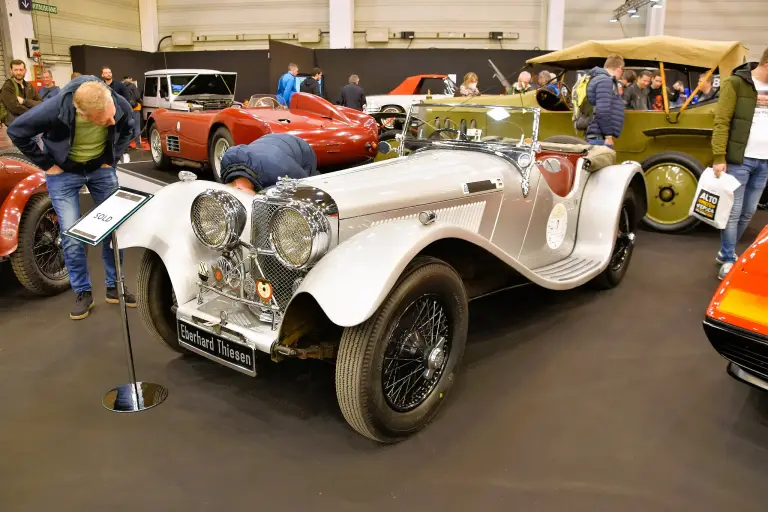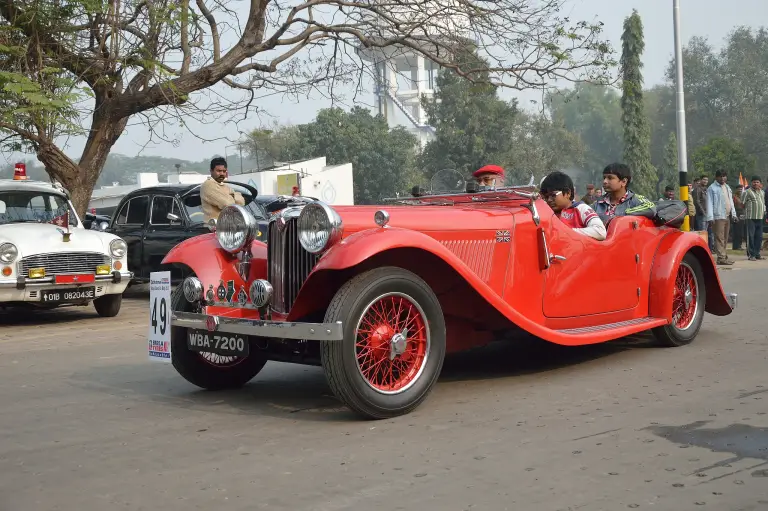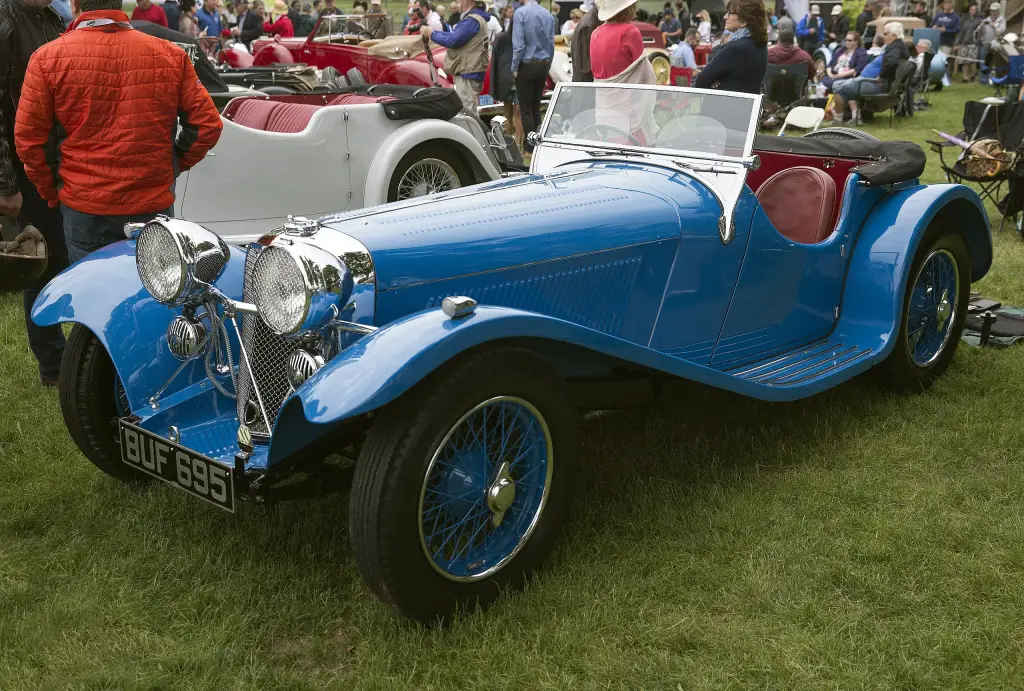
The SS 90 was a British sports car built by SS Cars in Coventry in 1935. It was admired for its elegant sporting body, but its side-valve engine did not deliver the performance its looks promised; only 23 were made, and 16 are thought to survive.
SS 90 at a glance
| Maker | SS Cars Ltd, Coventry |
|---|---|
| Production | 1935 |
| Body | two-seat sports car |
| Engine | 2,663 cc side-valve six, aluminium cylinder head, twin RAG carburettors |
| Power | 50 kW |
| Chassis | 2,642 mm wheelbase, shortened SS 1 chassis supplied by Standard |
| Suspension | half-elliptical springs, underslung rear axle |
| Brakes | Bendix |
| Wheels | 457.2 mm wire wheels, 139.7 × 457.2 Dunlop tyres |
| Top speed | about 150 km/h (93 mph), never independently tested |
| Built | 23, of which 16 survive |
Based on one source, the English Wikipedia article on the SS 90.
History of the SS 90
The SS 90 appeared in 1935, six years after the SS 1 had put the company on the map, and it was intended as a sporting flagship. Its styling was widely praised, but the sporting fraternity was less impressed: the car’s performance did not match its appearance. The answer came with the SS Jaguar 100, which used similar styling and suspension but an overhead-valve cylinder head. In 1945 the company changed its name to Jaguar.
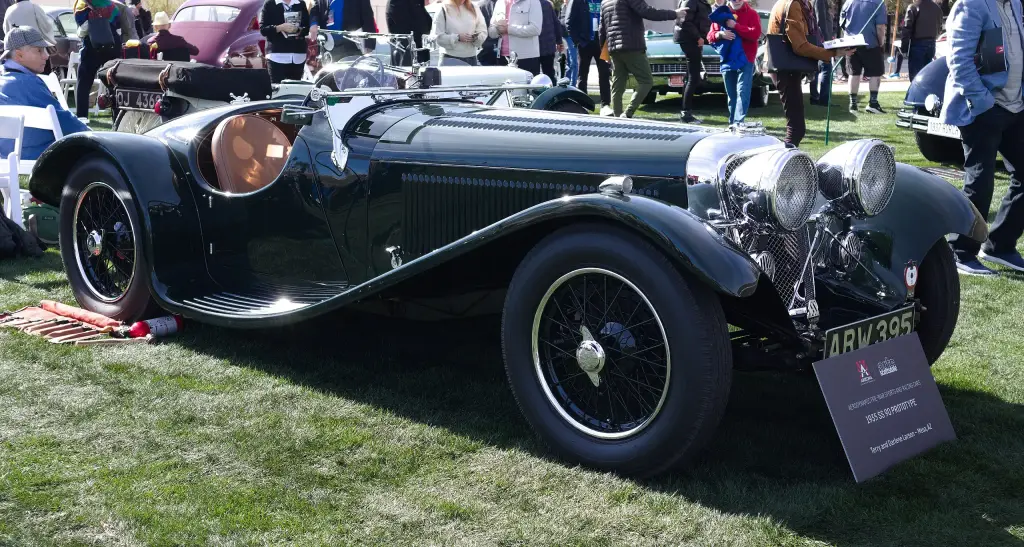
Mechanically the SS 90 was a development of the SS 1. Its 2,663 cc six-cylinder Standard engine was reworked with Dural connecting rods, an aluminium cylinder head with a 7:1 compression ratio and twin RAG carburettors, giving 50 kW. The chassis was a shortened SS 1 item, 2,642 mm long in wheelbase and again supplied by Standard, with half-elliptical springs all round, an underslung rear axle and Bendix brakes. Factory tyres were 139.7 × 457.2 Dunlop on 457.2 mm wire wheels. No magazine tested the car independently, so contemporary performance figures are unknown, although it was widely believed to be capable of reaching 150 km/h (93 mph). The prototype, ARW 395, was owned by Hugh Kennard from 1938 until at least November 1940. Of the 23 built, 16 survive, including the prototype.
Design and features
- Sporting styling: a handsome open two-seater that promised more than the engine delivered.
- Tuned side-valve six: Dural rods, an aluminium head and twin RAG carburettors.
- Shortened chassis: a 2,642 mm wheelbase version of the SS 1 frame.
- Extreme rarity: 23 built, 16 surviving, including the prototype.
SS 90 versions
- Prototype ARW 395: the works car, later owned by Hugh Kennard.
- Production SS 90: 23 cars built in 1935.
- Surviving cars: 16 are known to remain, the prototype among them.
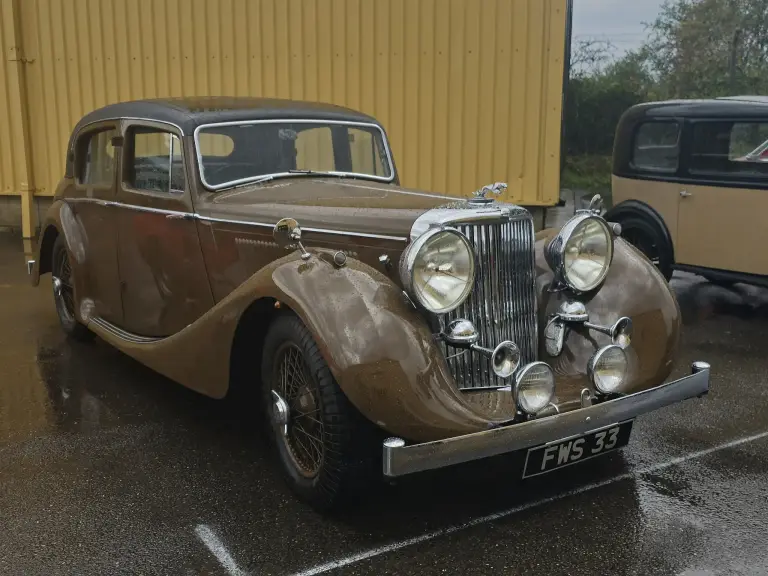
The SS 90 sat between the SS 1 and the faster SS Jaguar 100, and its saloon relatives became the SS Jaguar. More cars are in the S.S. collection.
Sources
- SS 90, English Wikipedia: engine, chassis, brakes, production and survivors