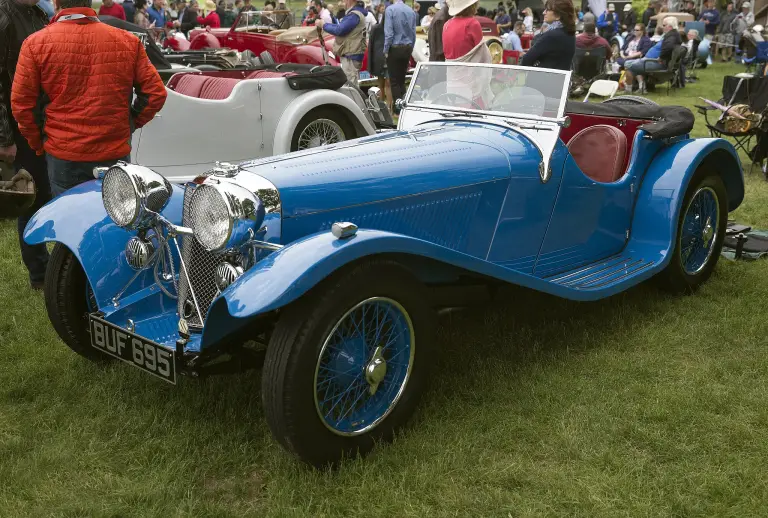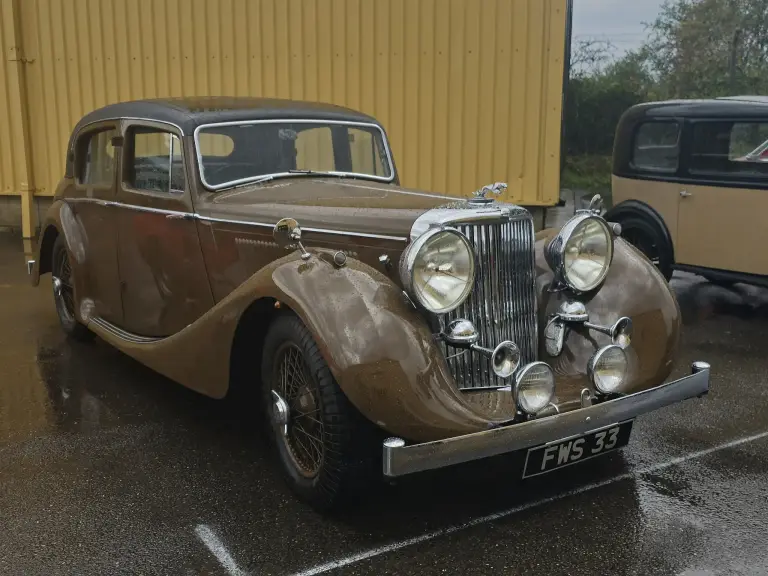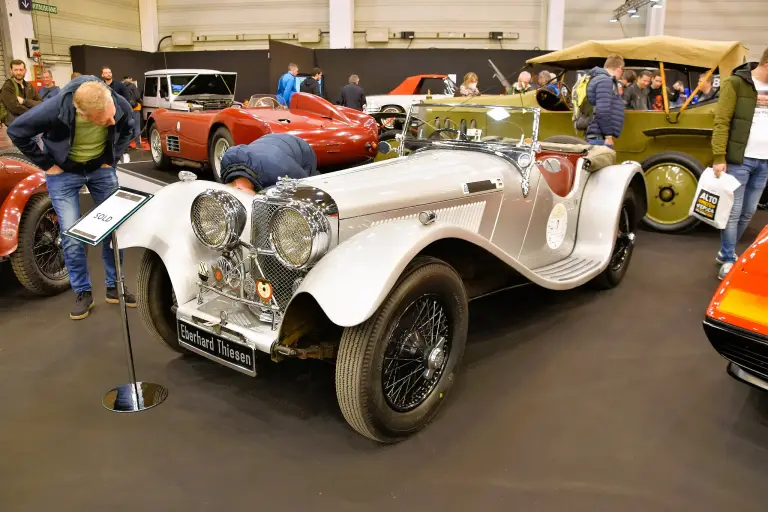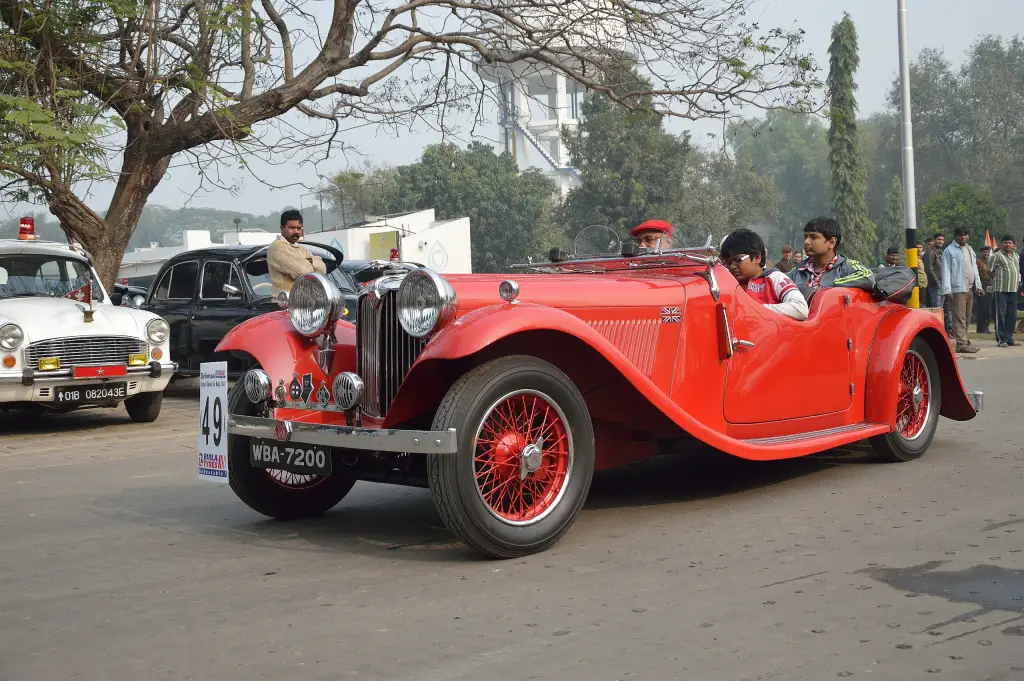
The SS 1 was the first car sold under the SS name. Built by the Swallow Coachbuilding Company in Foleshill, Coventry, it was a two-door sports saloon and tourer that relied on handsome styling and a low price rather than outright performance, and it established the Lyons formula that later became Jaguar.
SS 1 at a glance
| Maker | Swallow Coachbuilding Company, Foleshill, Coventry (SS Cars Ltd from 1934) |
|---|---|
| Production | 1931–1936 |
| Body styles | two-door sports saloon, tourer, fixed-head coupé |
| Engines | 2,054 cc or 2,552 cc side-valve six (1932–34); 2,143 cc or 2,663 cc (1934–36) |
| Power | 48–68 bhp |
| Top speed | 75 mph (121 km/h) |
| Chassis | Standard, underslung suspension from 1933 |
| Dimensions | 4,720 mm long, 1,613 mm wide (1,664 mm from 1934) |
| Weight | about 1,040 kg |
| Price | £310 for the basic coupé in 1932 |
| Built | just over 4,200 |
Based on one source, the English Wikipedia article on the SS 1.
History of the SS 1
The SS 1 was first shown at the 1931 London Motor Show and went into production in slightly modified form in 1932. It was the work of William Lyons’ Swallow Coachbuilding Company, which had begun with motorcycle sidecars and moved into building bodies for other makers before producing a complete car of its own. The SS 1 was a two-door sports saloon and tourer with a radiator top that read “SS One”, and it was praised for its apparent value for money and attractive appearance rather than for its speed. In 1932 the basic coupé cost £310.
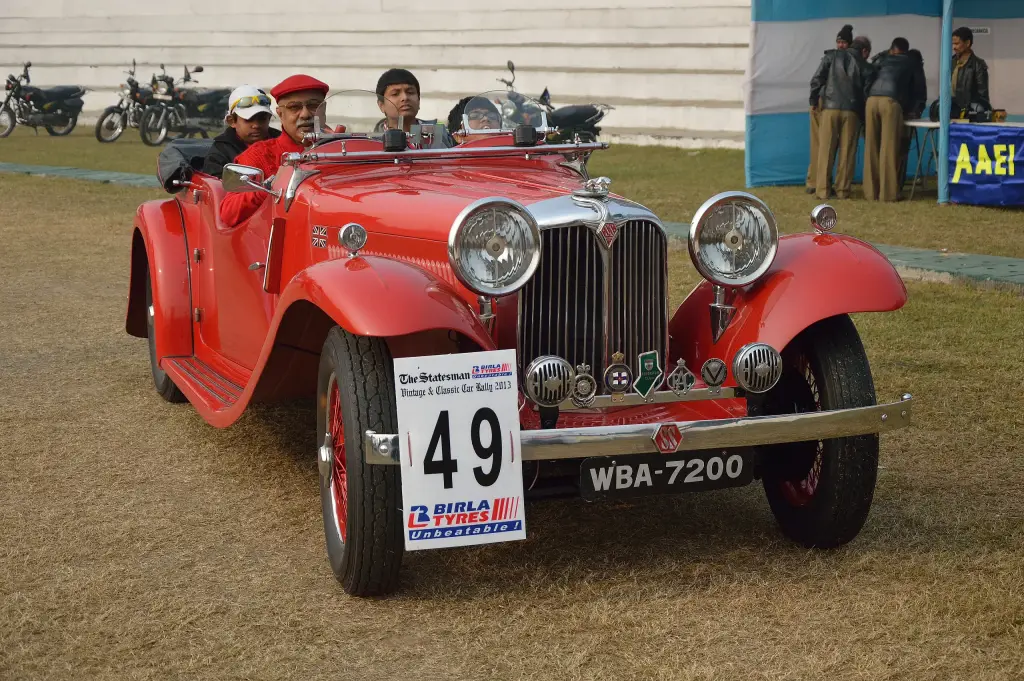
Under the bodywork the car was a conventional British assembly. The chassis was made by the Standard Motor Company, and so were the side-valve six-cylinder engines: a 15HP unit of 2,054 cc with 48 bhp or a 20HP unit of 2,552 cc with 62 bhp between 1932 and 1934. For 1934 to 1936 the two engines were enlarged to 2,143 cc and 53 bhp, and 2,663 cc and 68 bhp respectively. The chassis gained underslung suspension in 1933, and for 1934 it was modified with a wider track and better front footwells; the gearbox also received synchromesh. A top speed of 75 mph (121 km/h) was enough for the car’s market, where appearance and cost mattered more than pace. The car was 4,720 mm long and 1,613 mm wide, growing to 1,664 mm in 1934, and typically weighed around 1,040 kg.
The range grew steadily. The car was initially supplied as a four-seater fixed-head coupé; a tourer followed in 1933, a saloon in 1934, and in 1935 an Airline coupé and a drophead coupé joined the list. At the end of July 1934 William Lyons and Co, trading as SS Cars Limited, bought Swallow, and in 1945 the company changed its name to Jaguar Cars Limited. Just over 4,200 SS 1s were made, and the model gave the young marque both its styling language and its reputation for selling a great deal of car for the money.
Design and features
- Styling over speed: the SS 1 was bought for its looks and price rather than its performance.
- Standard mechanicals: chassis and side-valve six-cylinder engines were supplied by the Standard Motor Company.
- Underslung chassis: adopted in 1933, it lowered the car and improved its stance.
- Growing body range: coupé, tourer, saloon, Airline coupé and drophead coupé were all offered.
SS 1 versions
- Fixed-head coupé (1932): the original four-seater body, from £310.
- Tourer (1933): an open version added to the range.
- Saloon (1934): a closed four-seater with the wider-track chassis.
- Airline coupé (1935): a more streamlined closed coupé.
- Drophead coupé (1935): an open four-seater with a folding hood.
The SS 1 was followed by the SS 90 and the SS Jaguar 100, while its saloon successor was the SS Jaguar. More cars are in the S.S. collection.
Sources
- SS 1, English Wikipedia: origins, engines, body styles, dimensions, production