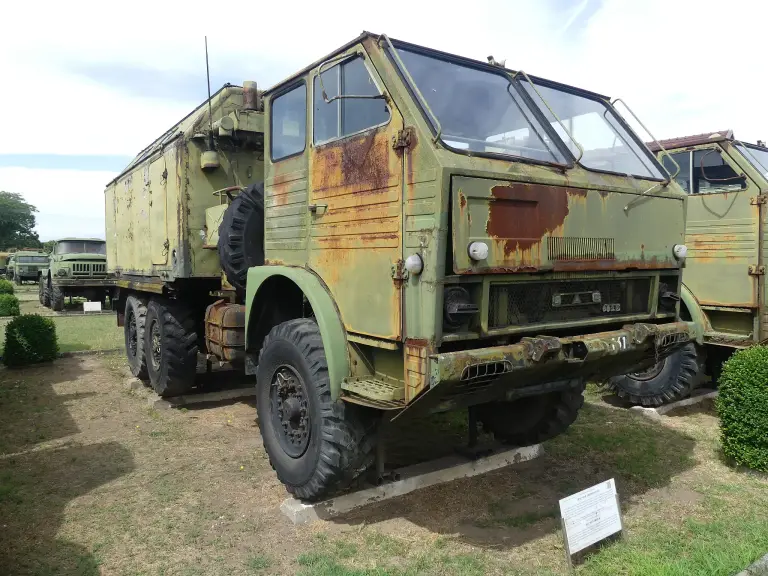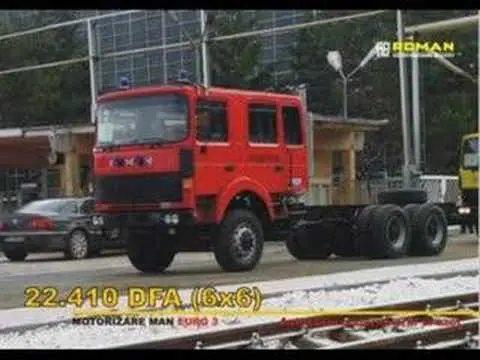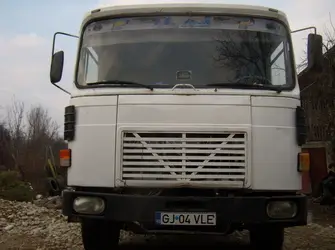
The Roman 10.215 was the 4×2 lorry of the Brașov range in the late 1970s and 1980s. Built from 1978 to 1988, it came as a box-body truck, a tipper and a tractor unit, and it used the 215 hp diesel engine that the works produced under MAN licence.
Roman 10.215 at a glance
| Maker | Roman works, Brașov (Steagul Roșu) |
|---|---|
| Production | 1978–1988 |
| Type | lorry, 4×2 |
| Bodies | F box body, FK tipper, FS tractor unit, L |
| Gross weight, box and tipper | 16,256 kg |
| Gross weight, tractor unit | 32,512 kg |
| Engine | 215 hp diesel, MAN licence |
| Later engine | 256 hp turbo, from 1987, in tractor units |
Only German Wikipedia has an article on the Roman works; the 10.215 is described there in the model list, and this page is based on that single source.
History of the Roman 10.215
The Brașov works, known for most of its life as Steagul Roșu, took a licence for MAN commercial vehicles in 1969. From then on its trucks were powered mainly by a 215 hp diesel of MAN design, and part of the production was sold under the DAC (Diesel Auto Camion) name as well as the Roman name.
The Roman 10.215 appeared in 1978 and remained in production until 1988. It was listed with a box body (F), a tipper (FK) and a tractor unit (FS), and its gross weights ranged from 16,256 kg for the box body and the tipper to 32,512 kg for the tractor unit. Examples were exported to East Germany from 1977 onwards, mostly tippers and tractor units, and by 1989 more than 2,800 Roman lorries had reached the DDR.
The 215 hp engine was the standard power unit of the range for most of the 1970s and 1980s; 256 hp turbocharged engines appeared in tractor units only from 1987. Almost all parts of the trucks were made in Romania. The works had been building lorries since the SR-101 of 1954, a copy of the Soviet ZIS-150, followed by the Carpați and Bucegi models. The 1987 Brașov uprising, in which about 20,000 workers took part, began at this plant. The 750,000th lorry left the works in 2000, and from 2002 the trucks received engines meeting the Euro 3 standard. In 2015 a court in Brașov opened insolvency proceedings against the company.
Design and features
- 215 hp diesel: the MAN-licence engine used across the range.
- Three main bodies: box truck, tipper and tractor unit.
- 4×2 layout: the lighter of the two classic Roman heavy lorry layouts.
- Long run: ten years in production, from 1978 to 1988.
- Export model: part of the lorries delivered to East Germany.
Roman 10.215 versions
- 10.215 F: box-body truck, 16,256 kg gross.
- 10.215 FK: tipper, 16,256 kg gross.
- 10.215 FS: tractor unit, 32,512 kg gross.
- 10.215 L: further body version listed for the model.
The heavier 6×4 member of the same range was the Roman 19.215, and the smallest was the Roman 8.135. More in our Roman collection.
Video: DAC 10215-Pornire
Video on YouTube.
Sources
- Roman (Nutzfahrzeughersteller), German Wikipedia: production years, bodies, weights, engines, works history