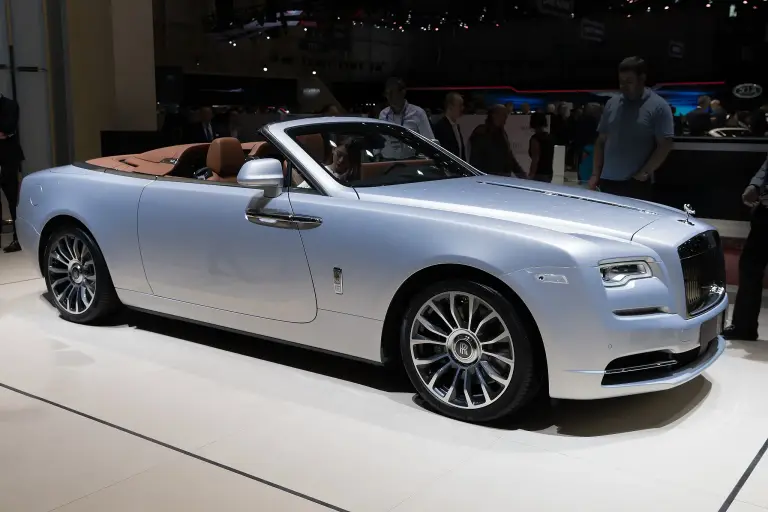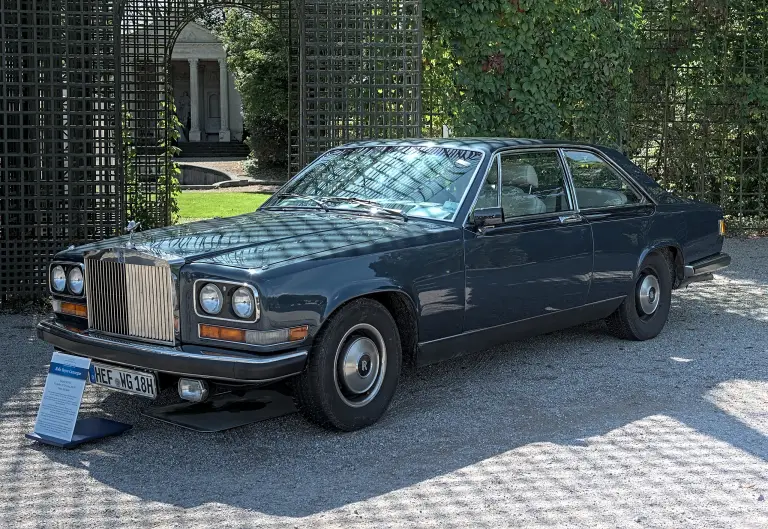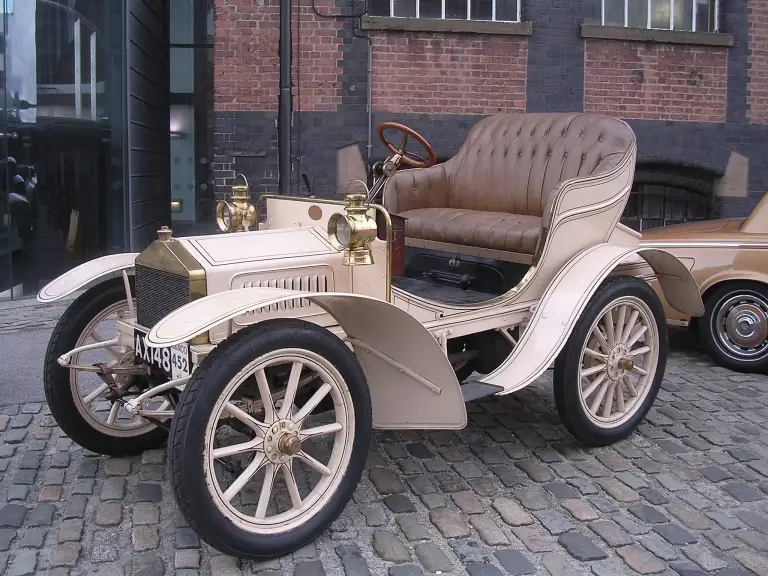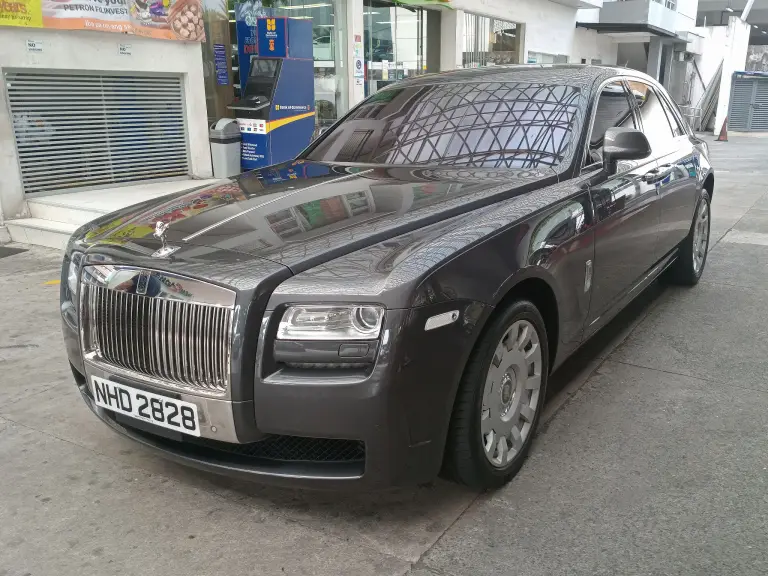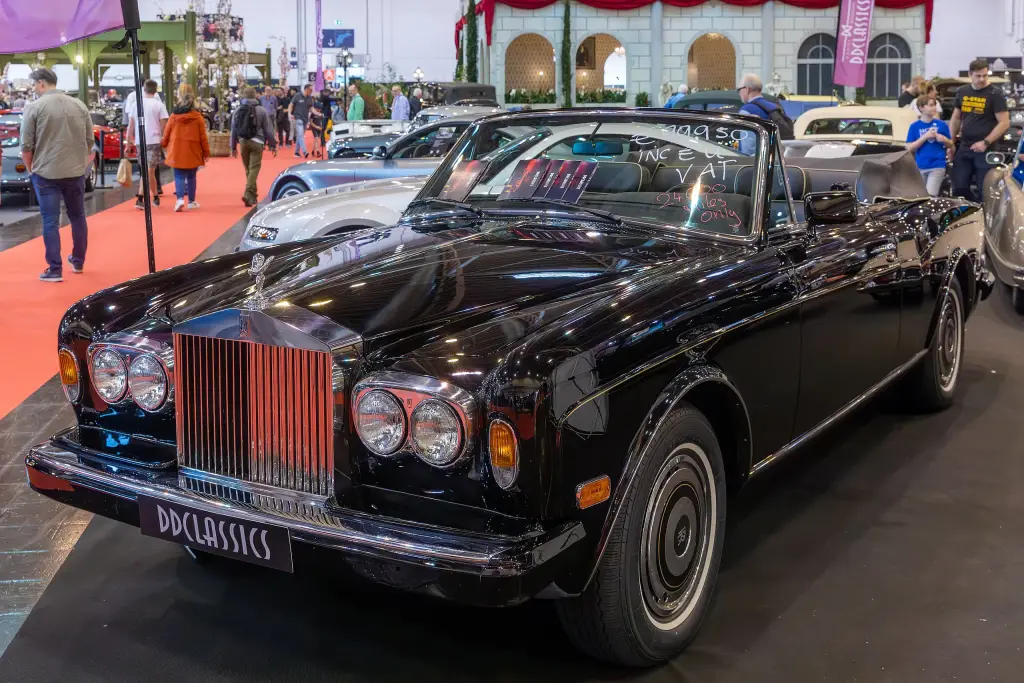
The Rolls-Royce Corniche is a two-door luxury car built from 1971 to 2002, first as a coupé and a convertible and later as a convertible only. It developed from the Mulliner Park Ward two-door versions of the Silver Shadow, and over three decades it became the car most associated with the very rich.
Rolls-Royce Corniche at a glance
| Maker | Rolls-Royce Motors, London then Crewe |
|---|---|
| Production | coupé 1971–1980; convertible 1971–1995 and 1999–2002 |
| Bodies | two-door coupé and convertible |
| Engine | 6.75-litre V8, aluminium block and heads |
| Carburation | twin SU, single Solex 4A1 from 1977 |
| Transmission | General Motors Turbo-Hydramatic 400, three speeds |
| Suspension | independent, coil springs, hydraulic self-levelling |
| Brakes | discs all round, ventilated from 1972 |
| Wheelbase | 3,042 mm, 3,048 mm from 1974, 3,061 mm from 1979 |
| Built | 1,090 saloons and 3,239 convertibles |
| Bentley version | the Continental from 1984 |
| Name | from the Grande Corniche road above Monaco |
This page is based on English Wikipedia only, so the figures could not be checked against a second source.
History of the Rolls-Royce Corniche
The 1939 prototype
The first car to carry the Corniche name was a 1939 prototype based on the Bentley Mark V, with coachwork designed in collaboration with several parties, most prominently the French designer Georges Paulin, and built by the Parisian firm Carrosserie Vanvooren. It covered 15,000 miles (24,000 km) of endurance testing in continental Europe before being destroyed by a bomb at a dock in Dieppe while waiting to be shipped back to England. No production model was built because of the Second World War, but the company registered the name for later use, and the unique car was re-created by Bentley’s Mulliner division for the heritage fleet, completed in 2019.
Corniche I
The Corniche was a development of the Mulliner Park Ward two-door versions of the Silver Shadow, sold as the 2-door Saloon and Drophead Coupé from 1965 and 1966; production stayed in London at Mulliner Park Ward and the new name was applied in March 1971. The car used the standard Rolls-Royce V8 of 6.75 litres with an aluminium-silicon alloy block, aluminium heads and cast-iron wet liners, bore 4.1 in and stroke 3.9 in. Twin SU carburettors were fitted at first, replaced by a single Solex 4A1 four-barrel in 1977, while de-smogged export models kept the twin SUs until 1980, when Bosch fuel injection arrived. A three-speed Turbo-Hydramatic 400 automatic from General Motors was standard.
Chassis and equipment
The Corniche had four-wheel independent suspension with coil springs and a hydraulic self-levelling system using the same principle as Citroën, at first on all four wheels and later on the rear only, with four-wheel disc brakes and ventilated discs from 1972. Its wheelbase grew from 3,042 mm to 3,048 mm in 1974 and 3,061 mm in 1979. It differed from other Silver Shadows in having exclusive half wheel covers with stainless steel trim for brake cooling, a three-spoke steering wheel with a wood rim and the first standard tachometer on a Rolls-Royce.
Fame and development
The Corniche immediately became a status symbol: Paul McCartney, Frank Sinatra and Tom Jones bought one, while David Bowie, Michael Caine, Elton John and Dean Martin put their names on two-year waiting lists, and the car appeared in countless films and television programmes. It was restyled in the spring of 1977 with rack-and-pinion steering, alloy and rubber bumpers, an aluminium radiator, an oil cooler and bi-level air conditioning, and received a modified independent rear suspension in March 1979. The fixed-roof version was dropped in March 1981, after the Silver Spirit had gone on sale, and there were cosmetic and interior changes for 1985. Corniche models received Bosch KE/K-Jetronic injection in 1977; the engine, called the L410I, produced about 240 PS (177 kW) and gave a top speed of 190 km/h. The Bentley version was renamed Continental in July 1984.
Corniche II, III and IV
The Corniche II name was used in the United States from 1986 and elsewhere from 1988, adding anti-lock brakes for 1988, redesigned seats and instrumentation and detail changes; 1,234 were made. The Corniche III was shown at the 1989 Frankfurt motor show with alloy wheels, colour-coded bumpers, a revised suspension, air bags and MK-Motronic injection; 452 were built. The Corniche IV of 1992 was presented at the Detroit show in January, by which time production had moved to Crewe ahead of the 1994 closure of the London works. Production of the Corniche I totalled 1,090 saloons and 3,239 convertibles, plus 69 Bentley Corniche saloons and 77 convertibles.
Design and features
- Mulliner Park Ward two-door: the Corniche was the named version of the two-door Silver Shadow.
- 6.75-litre V8: twin SU carburettors, later a Solex, then Bosch injection.
- Self-levelling suspension: hydropneumatic system licensed from Citroën.
- Exclusive details: half wheel covers, wood-rimmed three-spoke wheel and the first standard Rolls-Royce tachometer.
- Star owners: bought by Sinatra, McCartney and Tom Jones, with waiting lists for others.
Rolls-Royce Corniche versions
- Corniche I (1971–1987): coupé and convertible, 1,090 saloons and 3,239 convertibles.
- Corniche II (1986–1989): US name from 1986, anti-lock brakes from 1988, 1,234 built.
- Corniche III (1989–1993): new alloy wheels, air bags and MK-Motronic injection, 452 built.
- Corniche IV (1992–1995): the reworked car built after production moved to Crewe.
- Bentley Continental (1984–1995): the Bentley-badged version under its new name.
The Corniche was the two-door relative of the Silver Shadow and shared its platform with the Camargue. More cars are in the Rolls-Royce collection.
Sources
- Rolls-Royce Corniche, English Wikipedia: prototype, engineering, production, versions