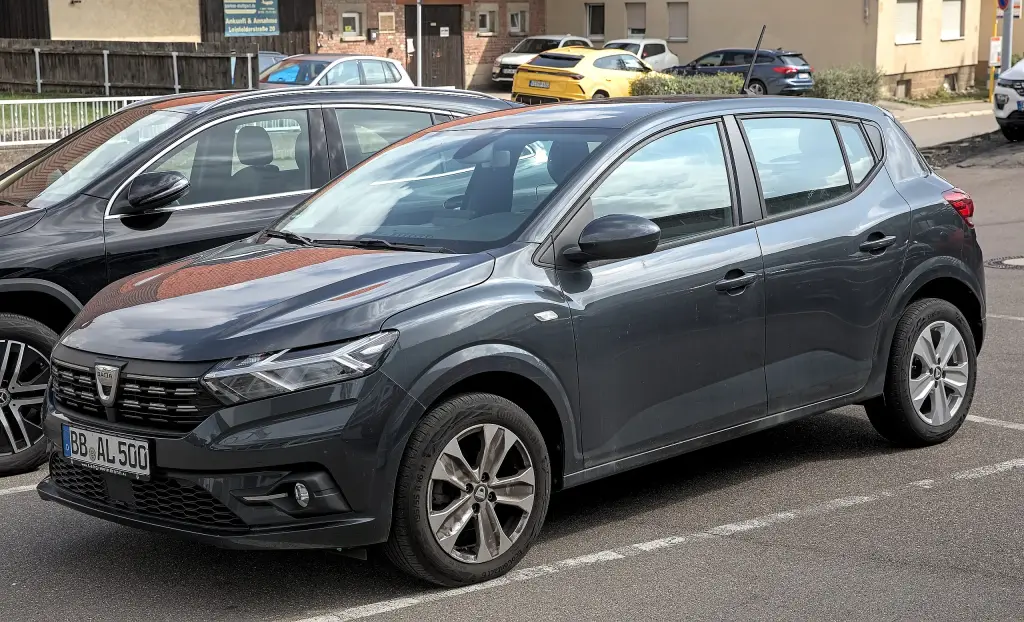
The Dacia Sandero is a subcompact hatchback produced by Renault and its Romanian subsidiary Dacia since 2007. It derives from the Logan but has a slightly shorter wheelbase, and in Russia, Latin America, Iran, Egypt and much of Africa it is sold as the Renault Sandero.
Dacia Sandero at a glance
| Maker | Dacia (Renault Group), Mioveni, Romania |
|---|---|
| Production | 2007–present, now in its third generation |
| Class | subcompact hatchback (B segment) |
| Based on | Dacia Logan, with a shorter wheelbase |
| Debut | Frankfurt Motor Show, 2007 |
| First sales | Brazil, December 2007, as a Renault |
| European launch | Geneva Motor Show, March 2008, as a Dacia |
| Built in | Romania, Brazil, South Africa, Russia, Colombia |
| Crossover version | Sandero Stepway, from 2008 |
Based on one source, the English Wikipedia article on the Dacia Sandero.
History of the Dacia Sandero
A world car from the Technocentre
The Sandero was developed at Renault’s Technocentre near Paris together with the regional engineering centres in Brazil and Romania, on a slightly shorter wheelbase than the Logan sedan. It was shown first at the Frankfurt Motor Show in 2007 and made its market debut in Brazil in December 2007 as a Renault, the first Renault model to be launched outside Europe before anywhere else. It reached Europe in March 2008 at the Geneva Motor Show as a Dacia. Renault began building it in South Africa in February 2009 and in Russia in December 2009, and a Renault version was also made in Colombia for the home market and for export to Chile.
Facelift and Stepway
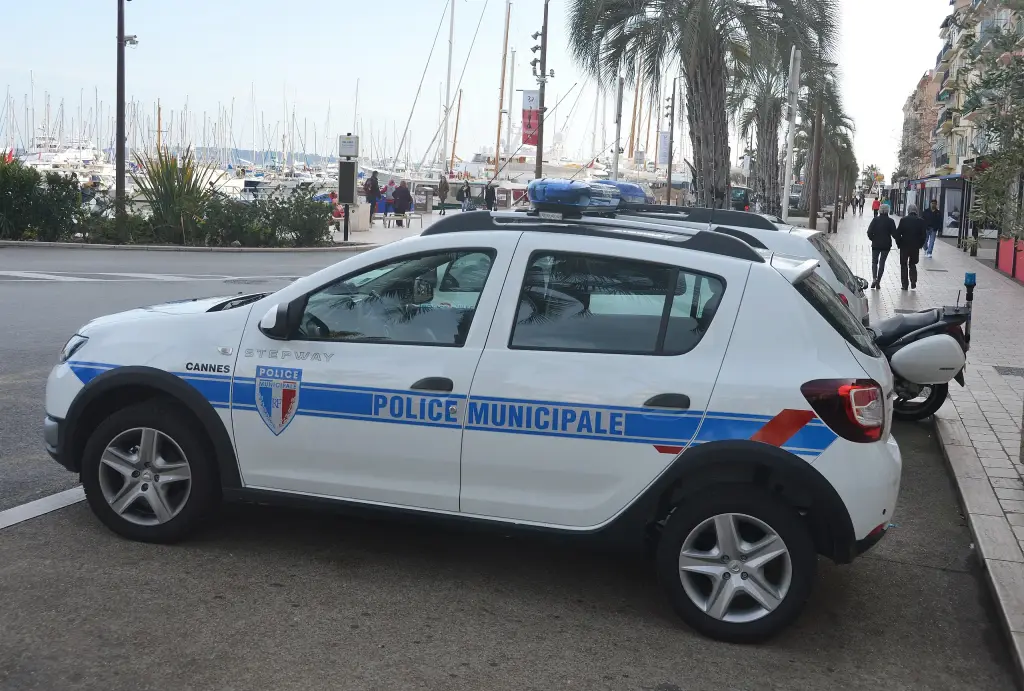
Renault Brasil launched a facelifted Sandero in Brazil in May 2011 with a new face and a revised interior, and in Colombia the facelifted Sandero and Stepway appeared at the beginning of 2012 with local differences such as the position of the door locks and the passenger airbag. The Stepway, a raised crossover version, had been launched in Brazil in October 2008, ten months after the Sandero itself, with a 1.6-litre 112 hp 16-valve engine able to run on bio-ethanol. The European Stepway was unveiled at the Barcelona Motor Show on 7 May 2009 and went on sale in most European markets from September 2009 with a 1.6-litre 90 hp petrol engine or a 1.5 dCi 70 hp diesel.
Safety and success
Depending on equipment the Sandero has up to four airbags and Bosch 8.1 ABS with electronic brake distribution and brake assist. In 2008 Euro NCAP tested the basic car, which scored three stars for adults, four for children and one for pedestrians, and a car with the optional safety pack, which scored four stars for adults and children. The most basic Latin American car without airbags scored one star for adults at Latin NCAP in 2012. The Sandero has since been Europe’s best-selling car for several years in a row.
Design and features
- Logan roots: the same simple B0 platform and mechanical layout, with a slightly shorter wheelbase.
- Stepway version: a raised crossover variant with a 1.6-litre engine, sold from 2008.
- Cheap running: small petrol and 1.5 dCi diesel engines, and simple equipment levels.
- Global production: built in Romania, Brazil, South Africa, Russia and Colombia.
Dacia Sandero versions
- Sandero (2008): the original five-door hatchback.
- Sandero Stepway (2008): raised crossover with 1.6-litre engines.
- Facelift (2011): new front end and revised interior.
- Renault Sandero: the same car for Russia, Latin America, Iran, Egypt and Africa.
The Sandero shares its platform with the Dacia Logan and the Dacia Duster. More Renaults are in the Renault collection.
Video: Renault Sandero Stepway 2015 test drive
Video by Антон Воротников on YouTube.
Sources
- Dacia Sandero, English Wikipedia: history, Stepway, safety results, production