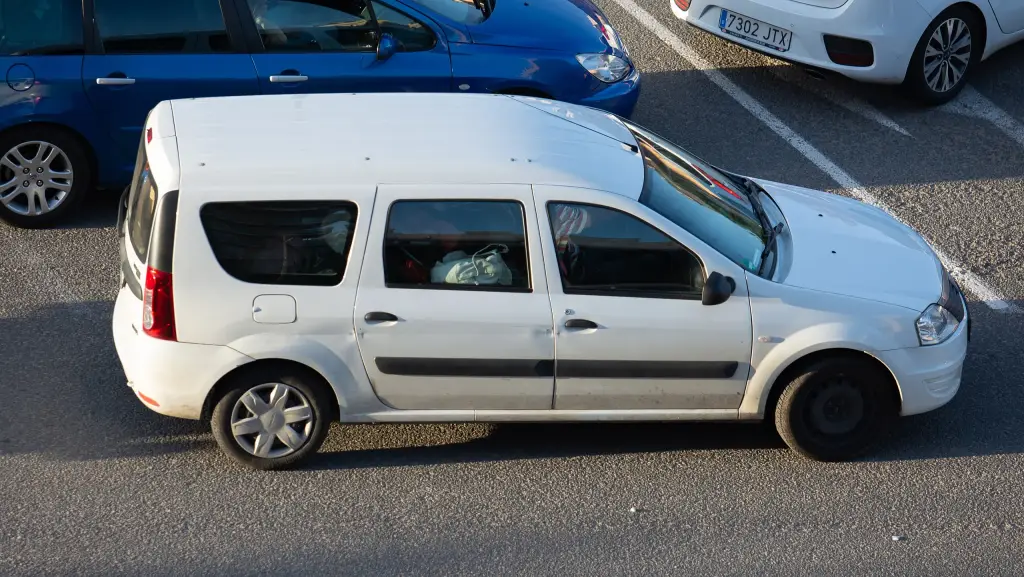
The Dacia Logan is a family of cars produced jointly by Renault and Dacia since mid-2004, as the successor to the Dacia 1310 and Solenza. It has been built as a sedan, a station wagon and a pick-up, and in Russia, Latin America, Africa and Asia it is sold as the Renault Logan.
Dacia Logan at a glance
| Maker | Dacia (Renault Group), Mioveni, Romania |
|---|---|
| Production | 2004–present |
| Class | compact family car, B0 platform |
| Bodies | sedan, estate (MCV), pick-up |
| Project | X90, announced by Renault in 1999 |
| Launch | June 2004, sales from September 2004 |
| Base price | from about €5,900 |
| Parts | 50 per cent fewer than a high-end Renault |
| Other names | Renault Logan, Nissan Aprio, Mahindra Verito, Lada Largus, Nissan NP200 |
| Sales | over four million worldwide by 2018 |
Based on one source, the English Wikipedia article on the Dacia Logan.
History of the Dacia Logan
The X90 project
The first-generation Logan was designed at Renault’s Technocentre near Paris over four years of the X90 project, announced in 1999 after Renault bought Dacia. The idea came from a remark by Louis Schweitzer during a visit to Russia: at Lada and Renault dealerships €6,000 Ladas were selling well while €12,000 Renaults stayed in the showroom. It was launched in June 2004 with sales from September 2004, priced from about €5,900 up to €11,200 depending on equipment and customs duty. Renault had no plans to sell it in Western Europe, but from June 2005 imported a more expensive version starting at around €7,500, where it found buyers who wanted an inexpensive, no-frills car they could repair themselves.
Built to be cheap
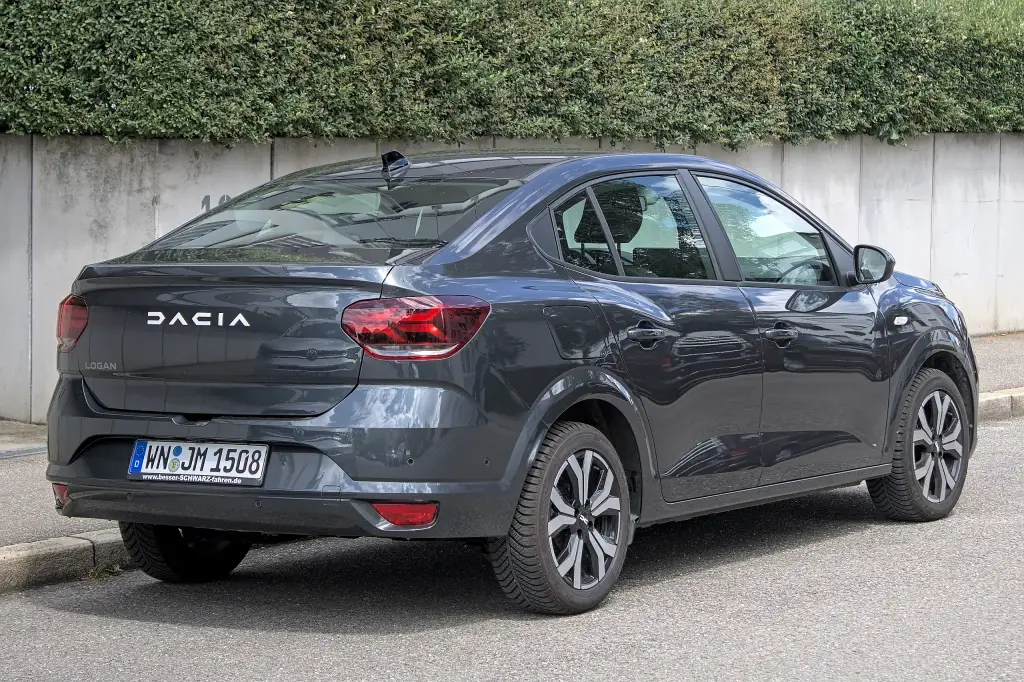
The car is based on the Dacia B0 platform and has 50 per cent fewer parts than a high-end Renault, with few electronic devices. The rear-view mirrors are symmetrical and fit either side, the windscreen is flatter than usual and the dashboard is a single injection-moulded piece. The suspension is soft and strong and the body sits visibly higher than most compact cars, to cope with dirt roads, and the engine was prepared for poorer fuel. In Romania the range began with Ambiance, Preference, Laureate and Ambition trim, with a 1.5-litre diesel added in September 2005 and a 105 hp 16-valve 1.6-litre engine for the Prestige level in 2006.
Facelift and other markets
A facelifted version, the Dacia New Logan, was announced on 1 July 2008 with a more modern exterior and a more comfortable interior, and the estate (MCV) followed in October 2008. The same car has been sold as the Renault Logan, Nissan Aprio, Mahindra Verito, Lada Largus (the MCV), Nissan NP200 (the pick-up), Renault Symbol and Renault Tondar 90, depending on the market. It was manufactured in Mioveni in Romania and at Renault or partner plants in Morocco, Argentina, Turkey, Russia, Colombia, Iran and India, and the pick-up was also built at Nissan’s plant in Rosslyn, South Africa. By 2018 sales had passed four million.
Design and features
- Fewer parts: half the components of a high-end Renault and minimal electronics, so it is cheap to build and to repair.
- Rough-road suspension: soft, strong springs and a body sitting higher than most compact cars.
- Simple interior: a one-piece moulded dashboard and mirrored door mirrors that fit either side.
- Flexible fuel tolerance: the engine was prepared for lower-quality fuel in emerging markets.
Dacia Logan versions
- Logan sedan (2004): the original four-door.
- Logan MCV (2006–2008): estate version, sold in Russia as the Lada Largus.
- Logan pick-up: also built by Nissan in South Africa as the NP200.
- New Logan (2008): facelift with a new front and a revised interior.
- Renault Symbol / Tondar 90: market names for the same car.
The Logan platform was used for the Dacia Duster and the Dacia Sandero. More Renaults are in the Renault collection.
Video: Renault Logan test drive
Video by Антон Воротников on YouTube.
Sources
- Dacia Logan, English Wikipedia: history, prices, trims, production sites