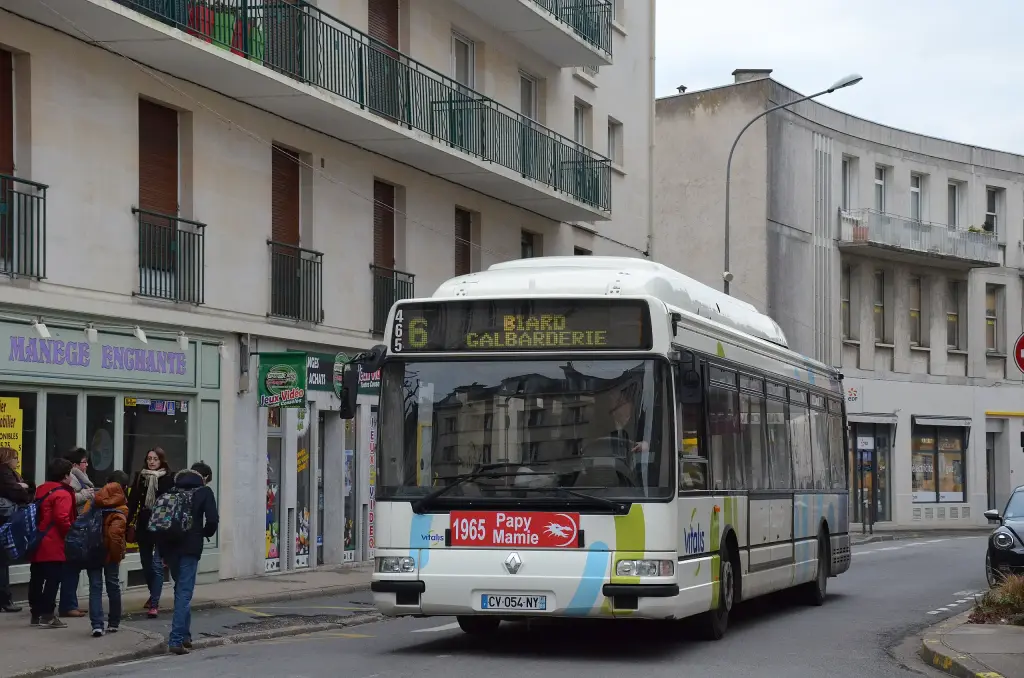
The Renault Agora was a low-floor city bus designed and built by Renault from 1995 to 2002, after which it was produced by Irisbus. It was also sold as the Irisbus Agora, the Karosa Citybus and the Renault Citybus, and over 11,000 were built.
Renault Agora at a glance
| Maker | Renault, later Irisbus |
|---|---|
| Production | 1995–2002 by Renault, then by Irisbus |
| Type | low-floor city bus |
| Versions | 12-metre Agora S, 18-metre articulated Agora L, Agora Line |
| Doors | one, two or three on the S; three or four on the L |
| Also built as | Karosa Citybus (Czech Republic), Astra Bus (Romania), Škoda trolleybus |
| Built | over 11,000 |
| Biggest customer | RATP Group, over 2,500 buses |
Based on one source, the English Wikipedia article on the Irisbus Agora.
History of the Renault Agora
The range
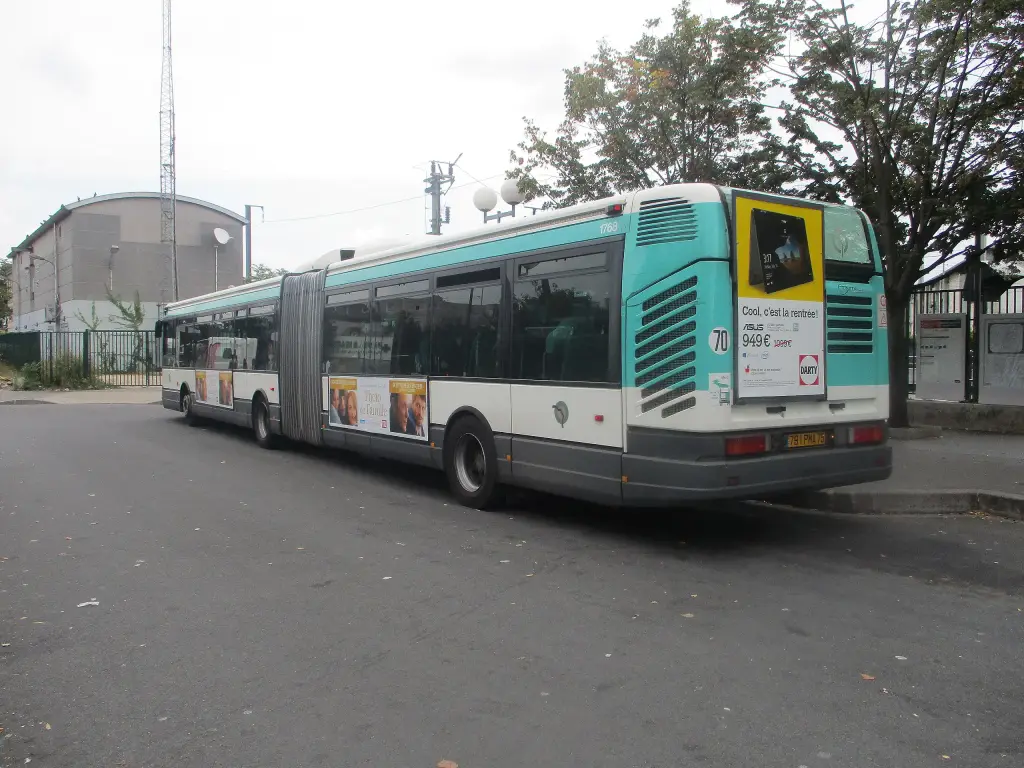
The Agora was designed and built by Renault from 1995, and from 2002 it was built by Irisbus, the joint venture with Fiat’s Iveco that had existed since 1999 and which used Iveco engines. The range had a standard 12-metre ‘S’ bus in one-, two- or three-door form, an articulated 18-metre ‘L’ in three- or four-door form, and from 1999 a 12-metre ‘Line’ version. The Line was distinguished by a longitudinally mounted engine under the rear passenger seats instead of the transverse layout of the S and L, which gave slightly more seating and better fuel economy; it was briefly sold in Britain in right-hand drive. An intercity version called Moovy, based on the Agora Line, was shown in 2003.
Where it was built
Besides Renault’s own plants the bus was built in the Czech Republic by Karosa as the Citybus, under the name Citybus 12M for the standard bus and Citybus 18M for the articulated one, with diesel power. Škoda built it as a trolleybus for eastern European markets, as the Škoda 24Tr and 25Tr Irisbus, and the Romanian company Astra Bus also assembled it.
Operators
Over 11,000 Agoras were built, mainly for European operators. The RATP Group was the largest purchaser with more than 2,500. In Greece the Athens operator OASA used both diesel and compressed-natural-gas versions, and in Spain the Agora, sold as the Renault or Irisbus Citybus, was one of the most common buses of the 2000s in Málaga, Sevilla, Madrid, Valencia and Zaragoza. Prague took 321 Agora S and 53 Agora L and more than 350 went to other Czech cities. In England 23 were bodied by Optare, mostly for Norfolk Green, and in Australia a batch went to King Brothers and ACTION, though a larger order was cancelled.
Design and features
- Low floor: step-free access along the length of the bus for city work.
- Two lengths: the 12-metre Agora S and the 18-metre articulated Agora L.
- Agora Line: longitudinal engine layout giving more seats and better economy.
- Wide production: built in France, the Czech Republic and Romania, and as a Škoda trolleybus.
Renault Agora versions
- Agora S (1995): standard 12-metre bus with one, two or three doors.
- Agora L: articulated 18-metre version with three or four doors.
- Agora Line (1999): 12-metre version with a longitudinal engine.
- Moovy (2003): intercity derivative of the Line.
- Karosa Citybus 12M and 18M: Czech-built versions with diesel engines.
Renault’s other city bus of the period is the Renault R312, and its coaches include the Renault Tracer. More Renaults are in the Renault collection.
Sources
- Irisbus Agora, English Wikipedia: range, production, operators