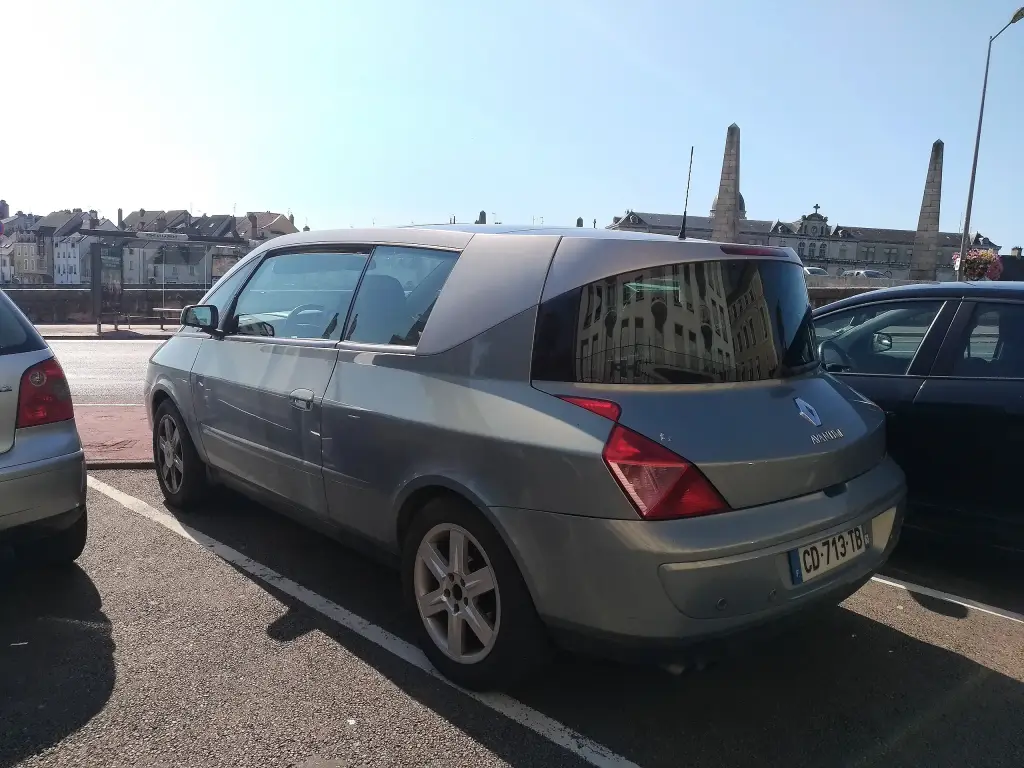
The Renault Avantime is a car designed and manufactured by Matra and marketed by Renault between 2001 and 2003. A one-box design without B-pillars, styled by Patrick Le Quément, it mixed the ideas of an MPV, an estate and a 2+2 coupé.
Renault Avantime at a glance
| Marketed by | Renault; designed and built by Matra |
|---|---|
| Production | 2001–2003 |
| Styling | Patrick Le Quément |
| Concept | one-box, pillarless 2+2 grand tourer |
| Structure | aluminium structure with aluminium greenhouse panels |
| Roof | full sunroof of strengthened heat-reflecting glass |
| Seats | four, each with built-in seatbelts, Bridge of Weir leather |
| Doors | two long doors with a double parallel opening hinge |
Based on one source, the English Wikipedia article on the Renault Avantime.
History of the Renault Avantime
An idea from Matra
The Avantime was designed and developed in-house by Renault affiliate Matra and conceived by Philippe Guédon, head of Matra’s automotive division, who believed that the children of Espace owners stayed loyal to the car even after growing up and leaving home. Styled by Patrick Le Quément, the car was intended to combine the space of an estate with the four-place pillarless qualities of a coupé. Renault described it as a grand tourer, and the name is a portmanteau of the French ‘avant’ (ahead) and the English ‘time’.
Design
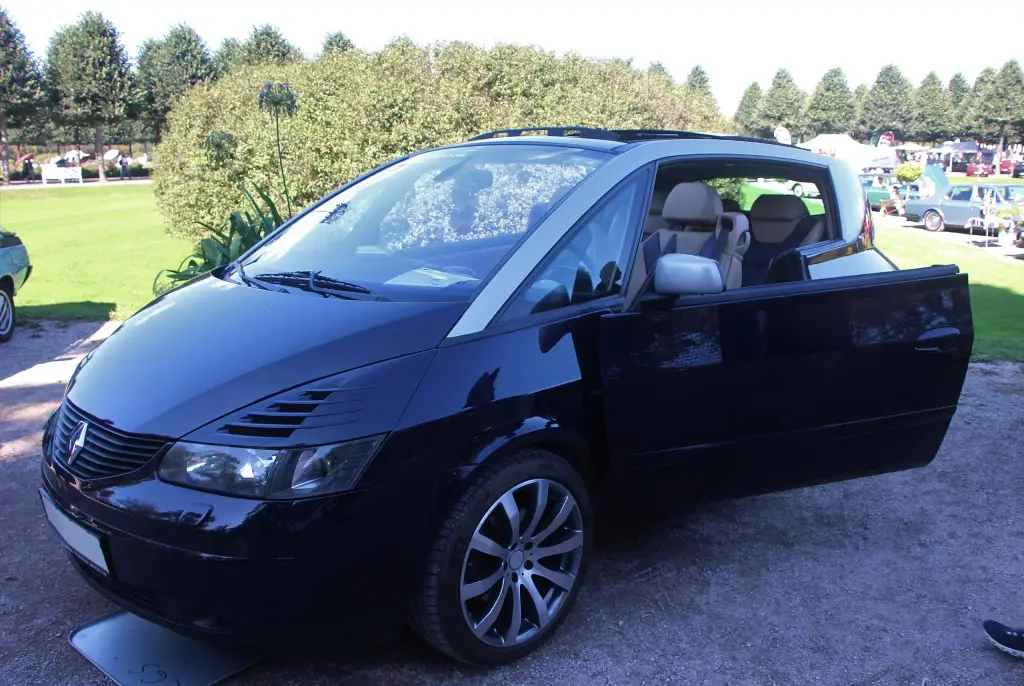
Thierry Métroz, the design project manager, said the aim was for someone walking around the car to be continually astonished, while Renault’s vice-president of design Anthony Grade stressed that exterior and interior had to be coherent; using the Espace as a base gave the central instrument display. The one-box shape eliminated the B-pillars and used an aluminium structure with aluminium panels for the greenhouse and a full sunroof of strengthened heat-reflecting glass. Inside there were four seats, each with built-in seatbelts, trimmed in leather from Bridge of Weir, and Car magazine called the interior architectural and luxurious.
Getting in
To reach the rear seats the Avantime had two long doors with a double parallel opening hinge, marketed as ‘double kinematic’, which maximised access and minimised how far the doors swung out. The front side windows lowered automatically when either front seat was moved.
Design and features
- No B-pillars: a one-box body with an uninterrupted glass area.
- Full glass roof: strengthened, heat-reflecting glass across the cabin.
- Double-kinematic doors: long doors that open in parallel to ease access to the rear.
- Aluminium structure: with aluminium greenhouse panels and four belted seats.
Renault Avantime versions
- Avantime (2001–2003): the single generation, offered with petrol and diesel engines including the 2.2 dCi.
The Avantime was built on the Renault Espace platform, and its designer’s other work includes the Renault Laguna generation of the period. More Renaults are in the Renault collection.
Video: Richard Hammond reviews the Renault Avantime
Video by Men and Motors on YouTube.
Sources
- Renault Avantime, English Wikipedia: concept, styling, structure, doors