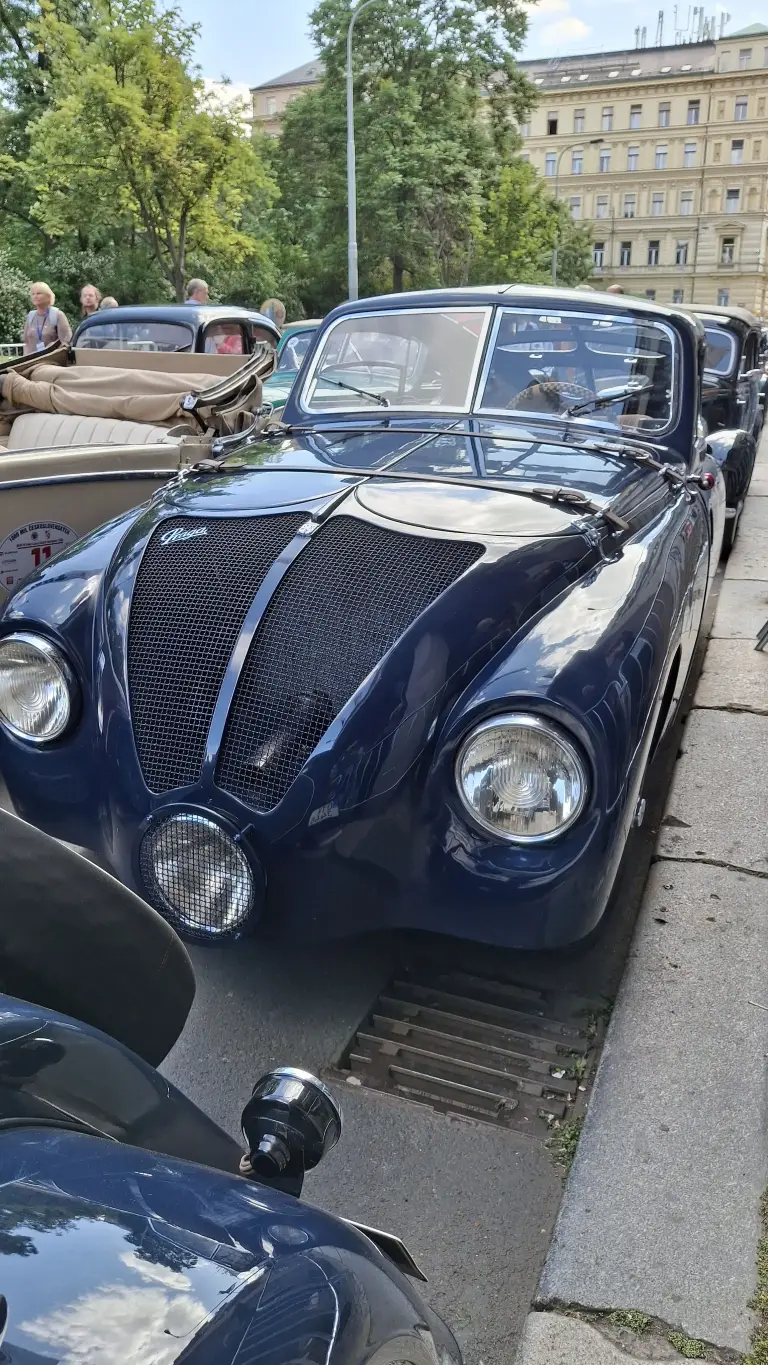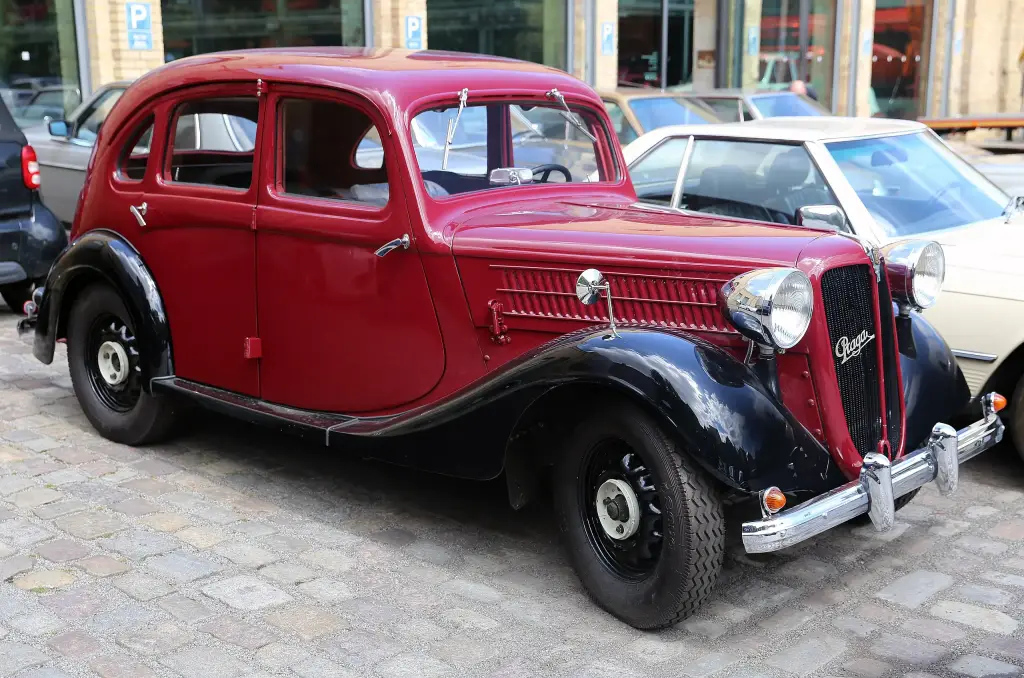
The Praga Lady was a mid-sized car built in eight series from 1935 to 1947 and intended to replace the Piccolo 307. Most were four-door saloons, but two-door cars, convertibles, pick-ups and a variety of ambulances were also made, and the type stayed in production with a break for the Second World War.
Praga Lady at a glance
| Maker | Praga, Prague-Libeň |
|---|---|
| Production | 1935–1947, in eight series |
| Based on | Praga Piccolo 307 |
| First engine | 1,447 cc four, 28 PS |
| Later engine | 1,660–1,700 cc four, 35 PS |
| Cylinder head | Ricardo turbulent head, aluminium |
| Top speed | 100–110 km/h |
| Fuel consumption | 11–12 l/100 km |
| Body | steel on a wooden frame |
| Chassis | X-frame with independent front suspension |
| Built before 1941 | about 4,600 |
| Built in total | about 5,000 |
History of the Praga Lady
The Lady was introduced in 1935 as a modernised Piccolo 307, and the first 150 cars kept that car’s 1,447 cc engine — which is why early examples are often called the Lady 307 in retrospect. After that the larger Super Piccolo engine was fitted, taking displacement from 1.45 to 1.7 litres and power from 28 to 35 PS. With the aluminium Ricardo “turbulent head” and Bohnalite pistons, top speed rose to 110 km/h and consumption to 12 litres per 100 km.
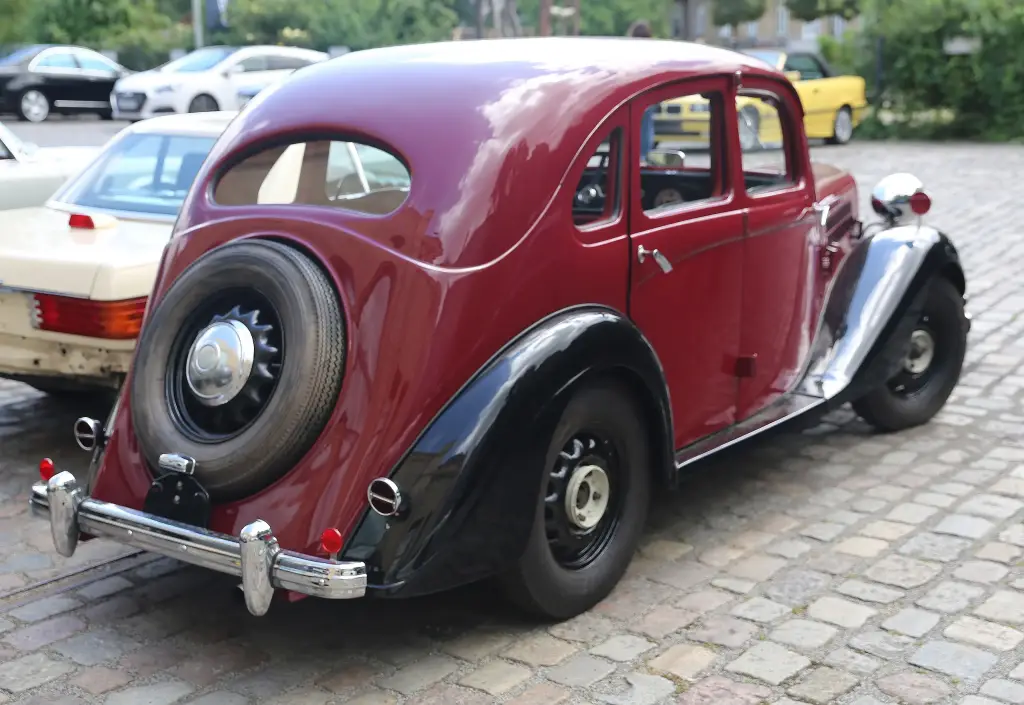
The bodywork was steel over a wooden frame and was updated frequently through the eight series. The car was most common as a four-door saloon, but two-door versions, a convertible and a pick-up truck were also listed, and a number of ambulance versions were built. The first series of 1935–1937 could even be had as a two-seat roadster bodied by Oldřich Uhlík in Prague.
Technically the Lady retained a traditional X-frame but was unusual in having independent front suspension and a central lubrication system; both proved troublesome in service and were usually disconnected after a few years. About 4,600 had been built when production was halted in 1941. After the war the car returned for a short run of roughly 400 examples, built by the now nationalised concern for official use, after which Praga concentrated entirely on trucks and buses.
Design and features
- Piccolo development: the Lady carried over the chassis and running gear of the Piccolo 307 with a larger engine.
- Independent front suspension: unusual for a car of this class, though the central lubrication that went with it was often disabled.
- Ricardo cylinder head: an aluminium turbulent head and Bohnalite pistons gave 35 PS from 1.7 litres.
- Many body styles: saloon, two-door, convertible, roadster by Uhlík, pick-up and ambulance.
Praga Lady versions
- Lady 307 (1935): the first 150 cars with the 1,447 cc Piccolo engine.
- Lady with Super Piccolo engine: 1,660–1,700 cc and 35 PS, 110 km/h.
- Two-seat roadster: first-series body by Oldřich Uhlík of Prague.
- Convertible and pick-up: listed alongside the saloon.
- Ambulance: several ambulance versions were built on the Lady chassis.
- Post-war Lady (1946–1947): about 400 cars for official use.
The Lady replaced the Praga Piccolo and sat below the luxury Praga Golden. More cars are in the Praga collection.
Video: Praga Lady on test
Video on YouTube.
Sources
- Praga Lady, English Wikipedia: series, engines, bodies, production
- Praga Lady, Czech Wikipedia: Piccolo 307 origin, engine sizes, total production