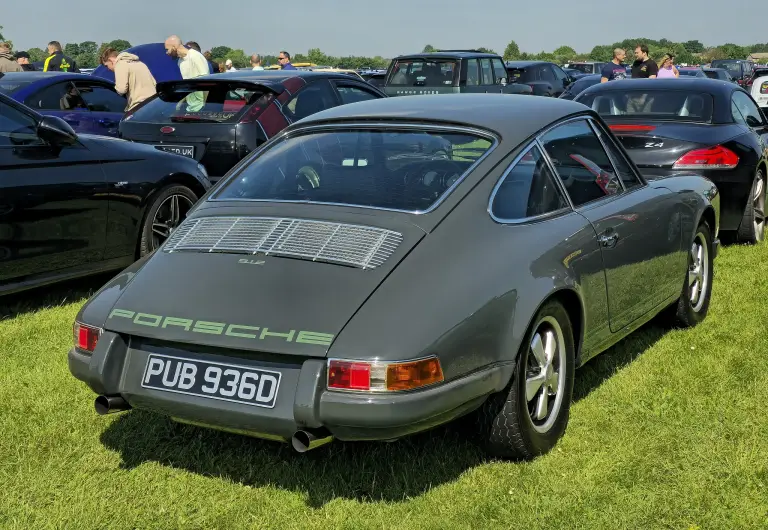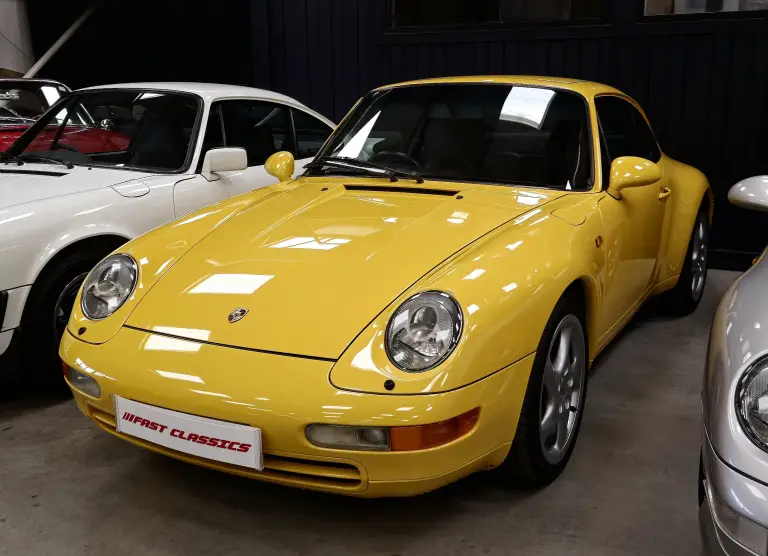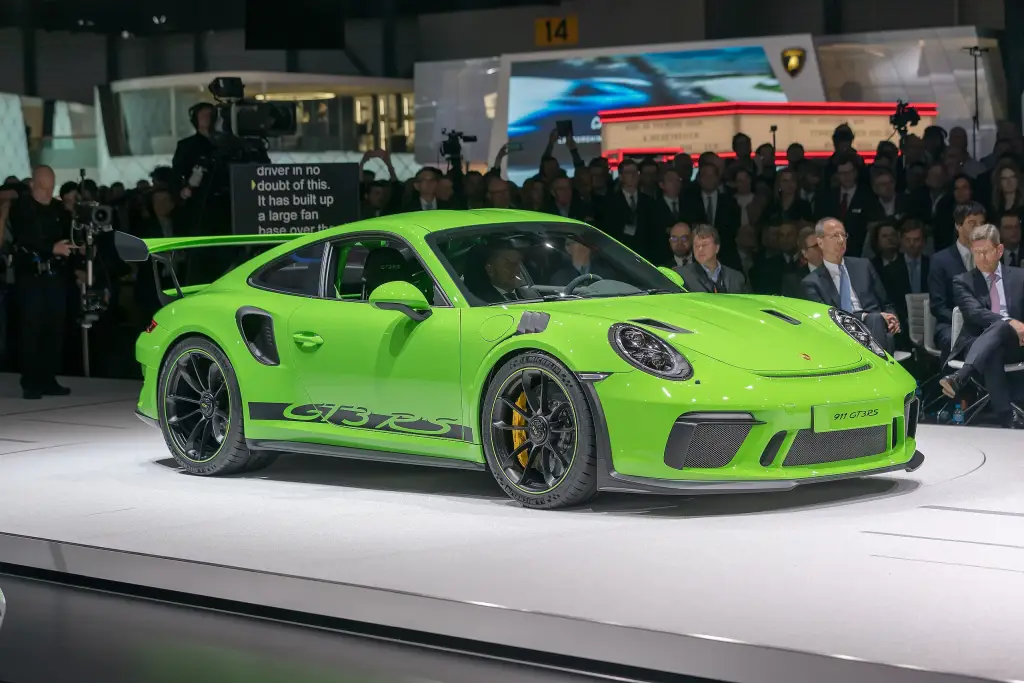
The Porsche 911 GT3 is a high-performance homologation model of the 911, a line that began with the 1973 911 Carrera RS. The GT3 nameplate itself arrived in 1999 with the first 996 generation, and the car has raced ever since in the Carrera Cup, GT3 Cup Challenge and Porsche Supercup series.
Porsche 911 GT3 at a glance
| Maker | Porsche, Stuttgart |
|---|---|
| Nameplate introduced | 1999, with the 996 |
| Purpose | homologation for GT class racing |
| Engine | naturally aspirated Mezger flat-six, dry sump |
| 996 GT3 power | 360 PS, against 300 PS for the standard 996 |
| 996.2 GT3 power | 381 PS and 385 N·m (2004) |
| Gearbox | six-speed manual G96/50 |
| Brakes, 996.2 | six-piston front calipers; ceramic brakes optional |
| 996.2 acceleration | 0–97 km/h in 4.5 s, 1.03 g on the skidpad |
| Nürburgring, 996 GT3 | 7 minutes 56 seconds, Walter Röhrl |
| Option | no-cost Clubsport package (not in the United States) |
History of the Porsche 911 GT3
The GT3 name was introduced in 1999 with the first 996 generation, known as the 996.1, as a homologation model for cars entered in the GT class, five years before the Group GT3 category appeared in 2005. Like Porsche’s earlier 911 RS models it was built for racing, so anything that added unnecessary weight was left out: sound deadening was almost completely removed, along with the rear seats, rear speakers, sunroof and air conditioning, though automatic air conditioning and a radio were no-cost options.
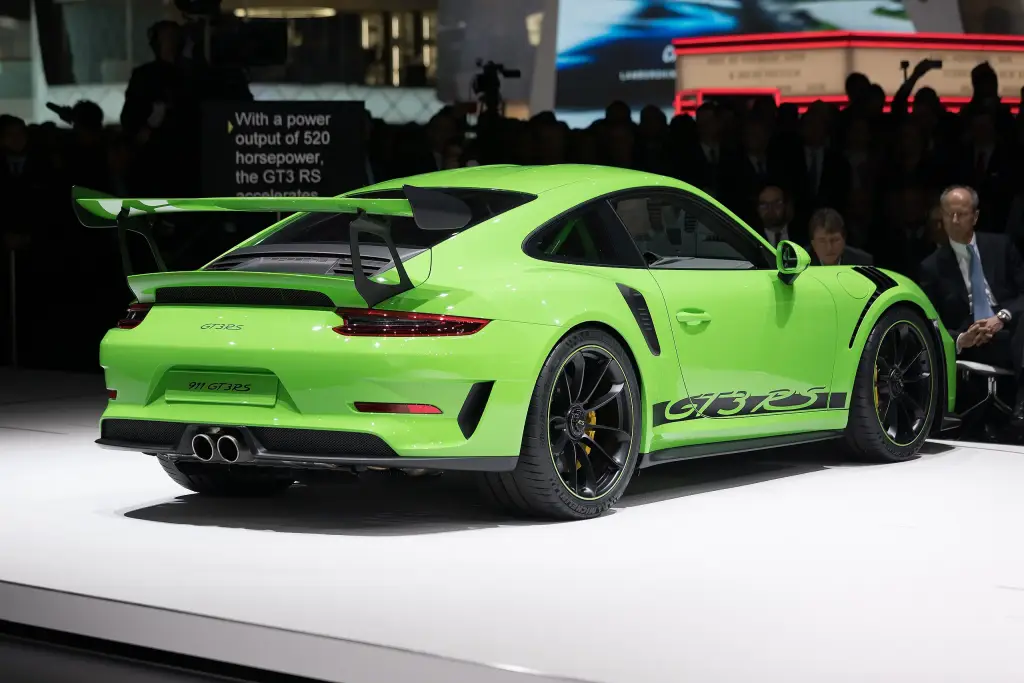
What set the GT3 apart from the 996 Carrera was its engine. It shared nothing with the integrated dry-sump flat-six of the water-cooled Carrera, being naturally aspirated and based on the Mezger racing engine used in the 962 and the 911 GT1, named after its designer Hans Mezger. It used the air-cooled 911’s dry-sump crankcase with an external oil reservoir, and in GT3 form the split crankcase, whose parting line runs along the crankshaft centreline, carried separate water jackets on each side of the block to cool banks of three cylinders through a radiator instead of a fan and finned cylinders. The arrangement was close to the fully water-cooled 962 engine, which is based on the same crankcase but uses six individual cylinder heads rather than the Mezger’s two. Output was 360 PS against the standard 996’s 300 PS. Because the GT1 block kept the legacy 356-era bellhousing pattern, the GT3 used a six-speed manual of air-cooled 911 heritage, the G96/50, with interchangeable ratios and greater durability.
Porsche also gave the GT3 enlarged brakes, a lowered and retuned suspension, lighter wheels and a new front bumper matched to a rear spoiler for more downforce. A no-cost Clubsport package replaced the electrically adjustable leather seats with manually adjustable racing buckets in fire-retardant fabric and added a single-mass flywheel, a bolt-in half roll cage, a six-point harness in place of the side airbags, a fire extinguisher in the passenger footwell and preparation for a battery master switch; it was never offered in the United States, apparently because of the extra crash testing that would have been needed.
For the 2004 model year the GT3 received significant updates, using the 2002 996 facelift with headlights distinct from the Boxster’s; this is the 996.2 GT3. Power rose to 381 PS and torque to 385 N·m, 80% of it available from 2,000 rpm. The brakes gained six-piston front calipers, with four-piston units at the rear, and ceramic composite brakes became an option, while the body shell came from the Carrera 4. Magazine testing recorded 4.5 seconds to 97 km/h, a quarter mile in 12.0 seconds and 1.03 g on the skidpad, and Walter Röhrl lapped the Nürburgring Nordschleife in 7 minutes 56 seconds, a figure Porsche used in its advertising.
In 2003 came the 911 GT3 RS, an even more track-focused version. RS stands for RennSport, and the badge, with the characteristic lightweight blue or red wheels and GT3 RS side stickers, linked the car to historic Porsches such as the Carrera 2.7 RS of the early 1970s. The 996 GT3 RS was lighter than the GT3 thanks to a polycarbonate rear window and a carbon-fibre bonnet and rear wing, and ceramic composite brakes were optional. Its cylinder heads had reshaped intake and exhaust ports for race homologation.
Design and features
- Mezger engine: the racing flat-six of the 962 and 911 GT1, with a dry-sump crankcase.
- Weight removed: no rear seats, sound deadening, sunroof or air conditioning.
- Six-speed G96/50: a durable gearbox with interchangeable ratios, from the air-cooled 911 line.
- Clubsport package: roll cage, racing seats, harness and fire extinguisher at no extra cost.
Porsche 911 GT3 versions
- 996 GT3 (1999): 360 PS, the first GT3.
- 996.2 GT3 (2004): 381 PS, six-piston front brakes, Carrera 4 body shell.
- 996 GT3 RS (2003): polycarbonate window, carbon bonnet and wing.
- Later GT3 generations: the line continued through the 997, 991 and 992.
The GT3 is the naturally aspirated counterpart of the Porsche 911 GT2, built on the Porsche 996. More cars are in the Porsche collection.
Sources
- Porsche 911 GT3, English Wikipedia: origins, Mezger engine, 996 versions, RS