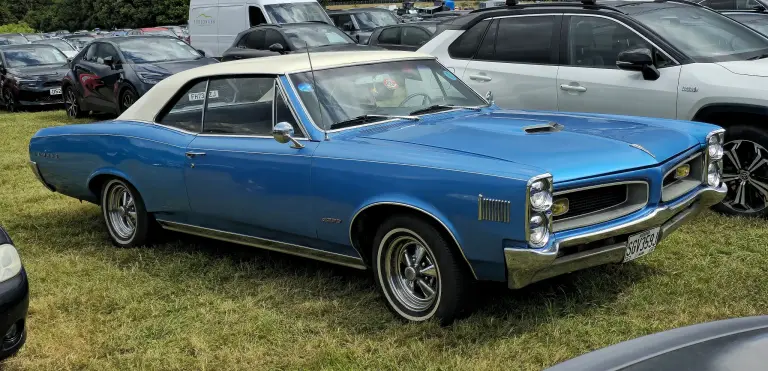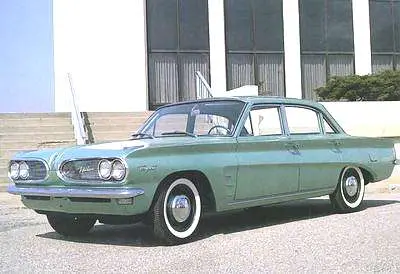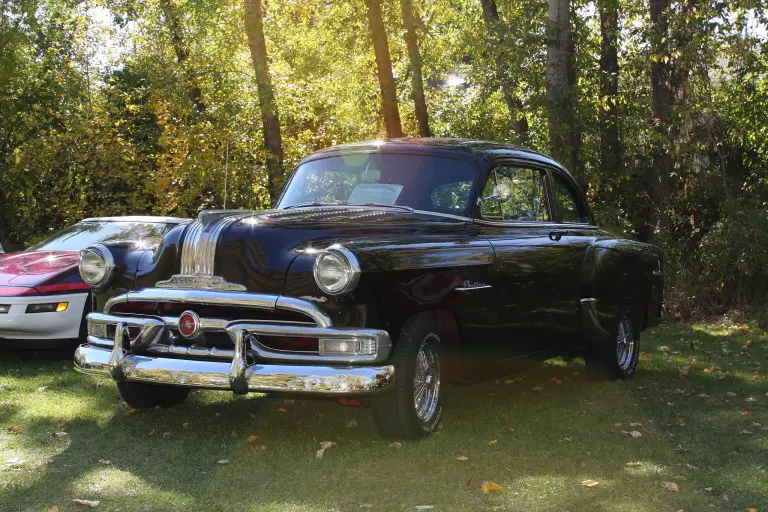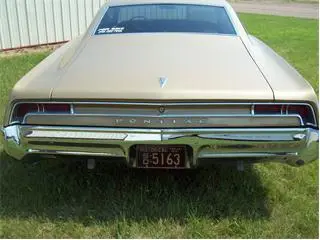
The Pontiac Executive was a full-size model sold from 1967 to 1970. It replaced the long-running Star Chief and sat between the Catalina and the Bonneville, with more trim and a longer wheelbase than the Catalina but without the Bonneville’s luxury.
Pontiac Executive at a glance
| Maker | Pontiac, General Motors |
|---|---|
| Production | 1967–1970 |
| Preceded by | Star Chief, called Star Chief Executive in 1966 |
| Replaced by | Bonneville for 1971 |
| Class | full-size car |
| Base engine | 400 cu in V8, two-barrel, 265 hp |
| Top engine, 1969 | 428 cu in HO V8, 390 hp |
| Top engine, 1970 | 455 cu in V8, 370 hp |
| Transmission | three-speed manual standard; four-speed optional 1967–68 |
| Body styles | two- and four-door hardtops, four-door sedan, Safari wagon |
| Wheelbase | shared with the Bonneville |
| Total built | about 115,900 |
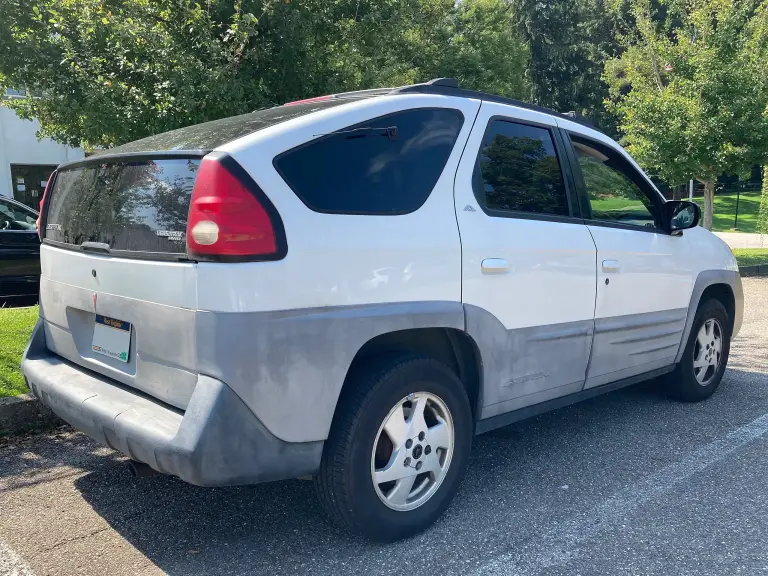
Based on one source: the English Wikipedia article on the Executive. No free photograph of an Executive was found, so the article keeps the record’s original picture.
History of the Pontiac Executive
A new name for the Star Chief
The Executive name replaced Pontiac’s long-running mid-range Star Chief. For 1966 every Pontiac in that price range was called Star Chief Executive for one year only, and from 1967 the series became simply the Executive. It offered more deluxe trim, more standard equipment and a longer wheelbase and overall length than the Catalina, sharing its dimensions with the top-line Bonneville.
Mechanically a Catalina
Underneath, the Executive was virtually identical to the Catalina. The standard engine was a 400 cu in V8 with a two-barrel carburettor rated at 265 hp; the range ran up to a 390 hp 428 cu in HO V8 through 1969 and a 455 cu in V8 of 370 hp in 1970. A three-speed column-shift manual was the standard transmission, with a floor-mounted four-speed and Hurst shifter optional in 1967 and 1968, but 98 percent of Executives were ordered with the three-speed Turbo Hydra-Matic automatic. Body styles were a four-door pillared sedan, two- and four-door hardtops and Safari station wagons in two- and three-seat form. The Executive Safari was set apart from the Catalina and Bonneville wagons by simulated wood panelling, and no convertible was offered.
Sales and the end
Output fell every year: 35,491 in 1967, 32,597 in 1968, 25,845 in 1969 and 21,936 in 1970. Through its four years the Executive was the lowest-volume full-size Pontiac, and for 1971 it was replaced by the Bonneville.
Design and features
- Middle position: Catalina mechanicals with Bonneville dimensions and trim.
- Big V8s: from the 265 hp 400 to the 390 hp 428 HO and the 370 hp 455.
- Automatic by default: 98 percent of cars left the factory with Turbo Hydra-Matic.
- Wood-panelled Safari: the Executive wagon was the only one with simulated wood sides.
- No convertible: the body range stopped at hardtops, sedans and wagons.
Pontiac Executive versions
- Two-door hardtop: the pillarless coupe.
- Four-door hardtop and sedan: the pillared and pillarless four-doors.
- Executive Safari: two- and three-seat station wagons with wood panelling.
- 1966 Star Chief Executive: the one-year transitional name.
The Executive sat between the Catalina and the Bonneville, and replaced the Star Chief. More Pontiacs are in the Pontiac collection.
Sources
- Pontiac Executive, English Wikipedia: engines, body styles, production