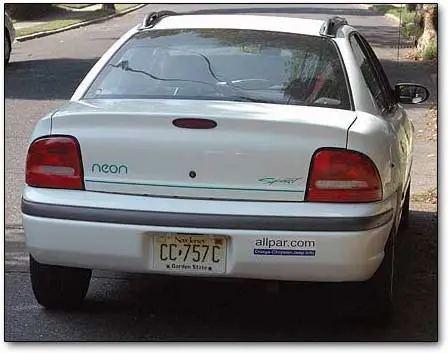
The Plymouth Neon was the Plymouth version of Chrysler’s compact car, built from the 1995 model year and sold as a two-door coupe and a four-door sedan. The Neon was the first compact car to become profitable for an American automaker, and it was one of the last models left in the Plymouth range.
Plymouth Neon at a glance
| Maker | Plymouth (Chrysler Corporation) |
|---|---|
| Model years | 1995–2005 for the line; Plymouth versions to 2001 |
| Bodies | two-door notchback coupe and four-door notchback sedan |
| Platform | front-wheel-drive Chrysler PL |
| Engines | 2.0 L SOHC, 132 hp; 2.0 L DOHC, 150 hp |
| Gearboxes | five-speed manual, three-speed Torqueflite automatic |
| Replaced | Horizon, Sundance and Colt |
| Built at | Belvidere, Illinois, and Toluca, Mexico |
| Replaced by | no direct successor; the Neon continued as a Dodge |
Based on one source, the English Wikipedia article on the Chrysler Neon, which covers the Plymouth version as the same model.
History of the Plymouth Neon
The Neon’s story began in the mid-1980s at American Motors, whose designers started work on a replacement for the Renault Alliance. Chrysler bought AMC in 1987 and combined its design team with the engineers who had worked on the L platform, the Omni and Horizon. The PL project was codenamed “Counterattack”, after Lee Iacocca’s public argument that the Big Three could no longer build cars with the innovation, quality and efficiency of the Japanese. The target was a car that was lightweight, economical and powerful, comfortable in an American way, to cost just under $4,000 to build and no more than $8,000 to sell. Led by Tom Gale, the design kept the three-box layout but in a much more modern, cab-forward style.
The 1991 concept
Chrysler showed a Dodge-badged Neon concept at the 1991 Frankfurt Motor Show, built from recycled components and designed to be almost fully recyclable, with an onboard litter compactor. The four-door concept had sliding doors that opened from the centre, no B-pillar, a full-length retractable fabric roof and a 100 hp 1.1-litre three-cylinder two-stroke engine from Mercury Marine; it won a gold IDEA91 award. Most of that was dropped for production, but its rounded roofline, round headlights and minimalist grille shaped the road car.
Production
The first-generation Neon was introduced at the 1993 Frankfurt show and went on sale in January 1994 for the 1995 model year, as a four-door sedan and a two-door coupe. The 2.0-litre four came in SOHC form with 132 hp and DOHC form with 150 hp, with a three-speed Torqueflite automatic or a five-speed manual. The car was sold as both a Dodge and a Plymouth in the United States and Canada, and as a Chrysler in Europe, Australia and other export markets. Chrysler president Bob Lutz said at the launch that Detroit’s old rule was “good, fast or cheap, pick any two” and that the company refused to accept it, and the Japanese press called the Neon a “Japanese car killer”. In Japan only 994 were sold between June and December 1996, partly because the car’s width put it in a higher tax bracket. Neons had unusual option packages, including no power windows in the rear doors, and some base colours came with bumper covers moulded in colour rather than painted.
Design and features
- Profitable compact: the first American compact car to make money for its maker.
- Two engine tunes: a 132 hp SOHC and a 150 hp DOHC version of the same 2.0-litre four.
- Cab-forward shape: a rounded roofline and round headlights taken from the 1991 concept.
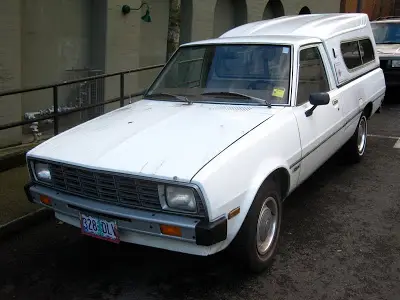
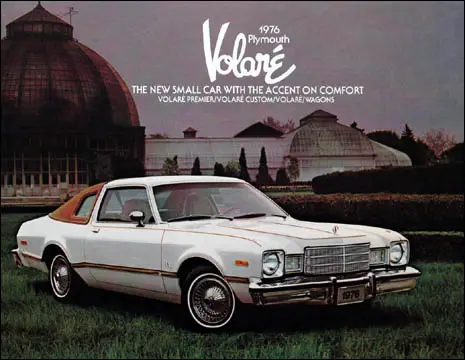
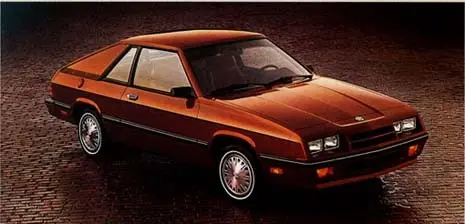
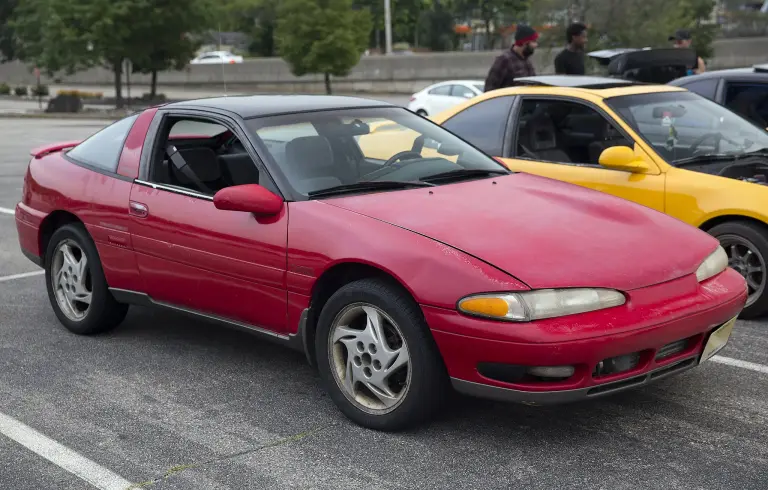
- Replacement for three lines: the PL platform ended the Horizon, the Sundance and the Mitsubishi-based Colt.
Plymouth Neon versions
- Neon sedan (1995–): the four-door notchback body.
- Neon coupe (1995–): the two-door notchback body.
- Dodge Neon: the same car with Dodge badges, which outlived the Plymouth version.
- Chrysler Neon: the export-market name used in Europe, Australia and elsewhere.
The Neon replaced the Sundance and the Mitsubishi-based Colt, and it was the last new Plymouth before the Breeze generation ended. More cars are in the Plymouth collection.
Video: 1995-1999 Dodge/Plymouth Neon crash test (IIHS)
Video by Nicholas Bennett on YouTube.
Sources
- Chrysler Neon, English Wikipedia: development, concept, engines, markets