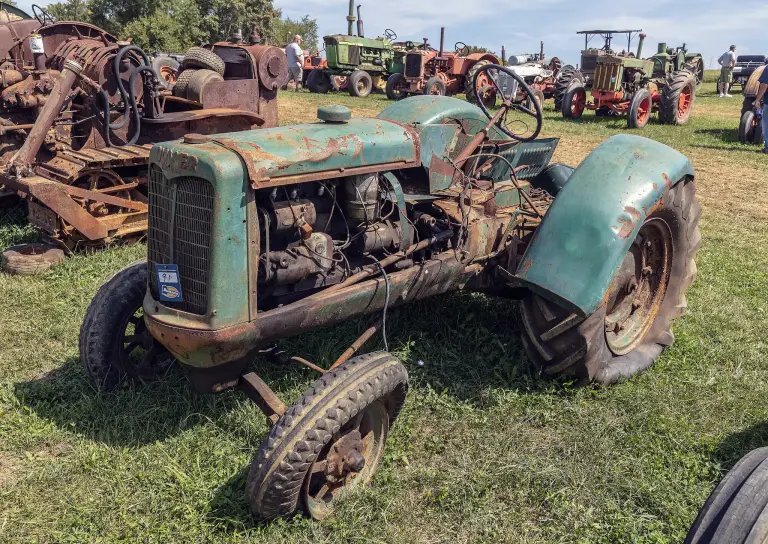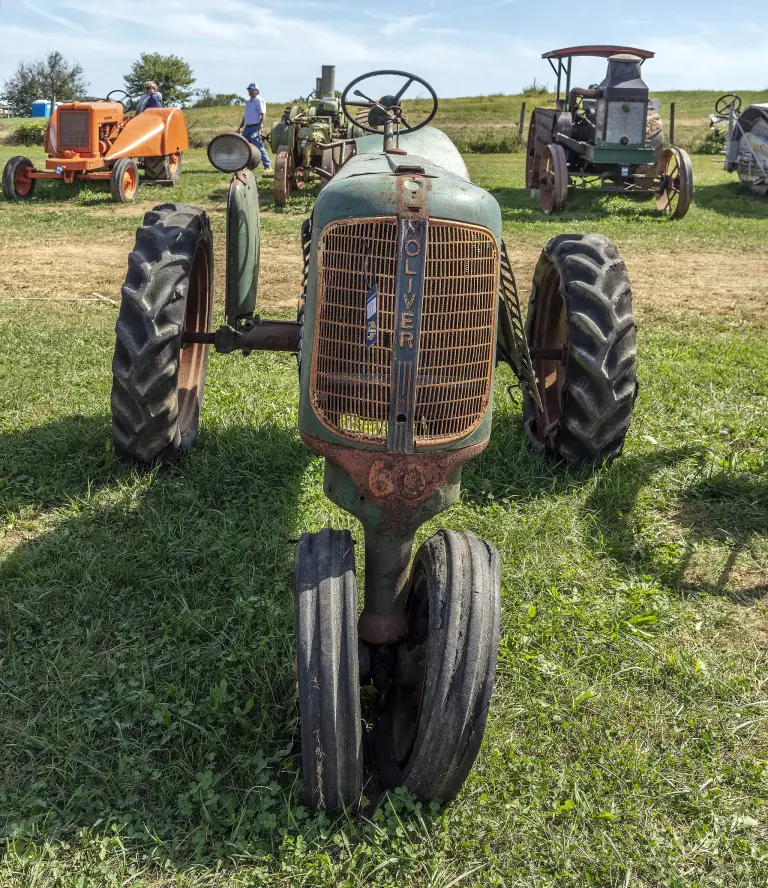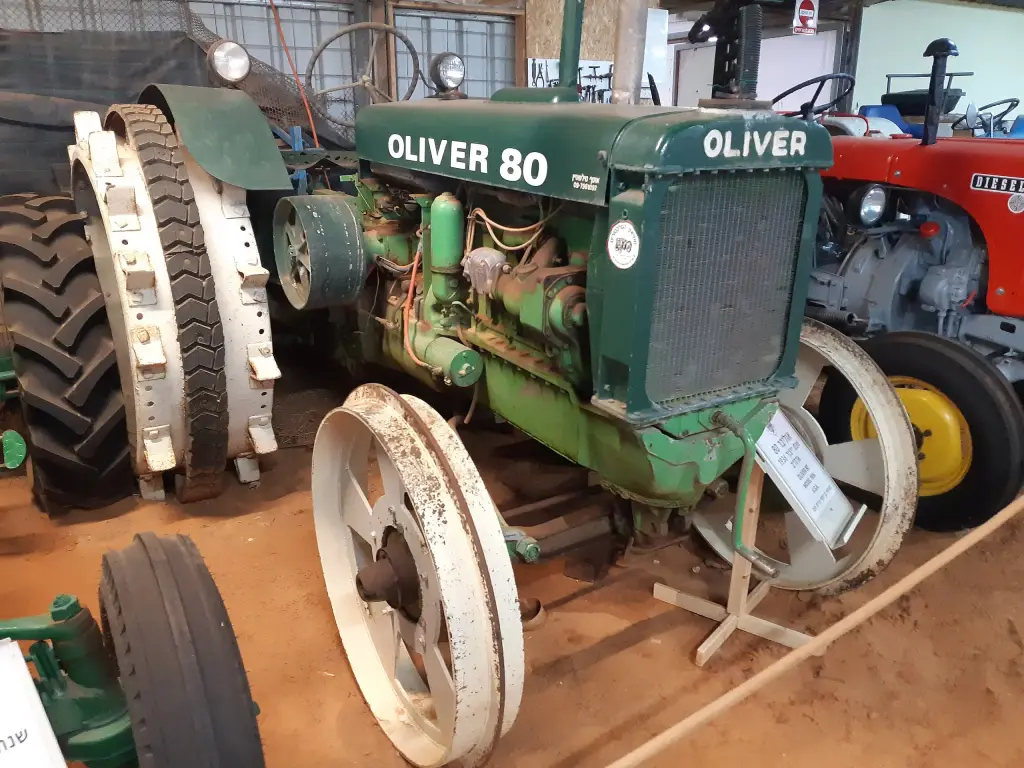
The Oliver 80 was a row-crop tractor introduced in 1938 and developed from the Oliver Hart-Parr 80 industrial tractor. It grew into a long line of heavy Oliver tractors, from the 88 and Super 88 to the 880, 1800, 1850 and 1855, and remained in production in various forms until 1969.
Oliver 80 at a glance
| Maker | Oliver Farm Equipment Company, Charles City, Iowa |
|---|---|
| Model 80 production | 1938–1963 |
| Based on | Oliver Hart-Parr 80 industrial tractor |
| Engine | Waukesha-Oliver four-cylinder, 334 cu in (5,470 cc) |
| Power | 43 hp (32 kW) |
| Transmission | three or four gears |
| Plow rating | three 14-inch plows |
| Body versions | row-crop and standard |
| Fuel | gasoline or kerosene/distillate; diesel from 1940 |
| Canadian name | Cockshutt 80 |
| Series models | 80, 88, Super 88, 880, 1800, 1850 and 1855 |
| Super 88 power | 62 hp (46 kW) |
Based on one source: the English Wikipedia article on the Oliver 80, which also covers the 88, Super 88, 880, 1800, 1850 and 1855 in sections.
History of the Oliver 80
1938: the Oliver 80
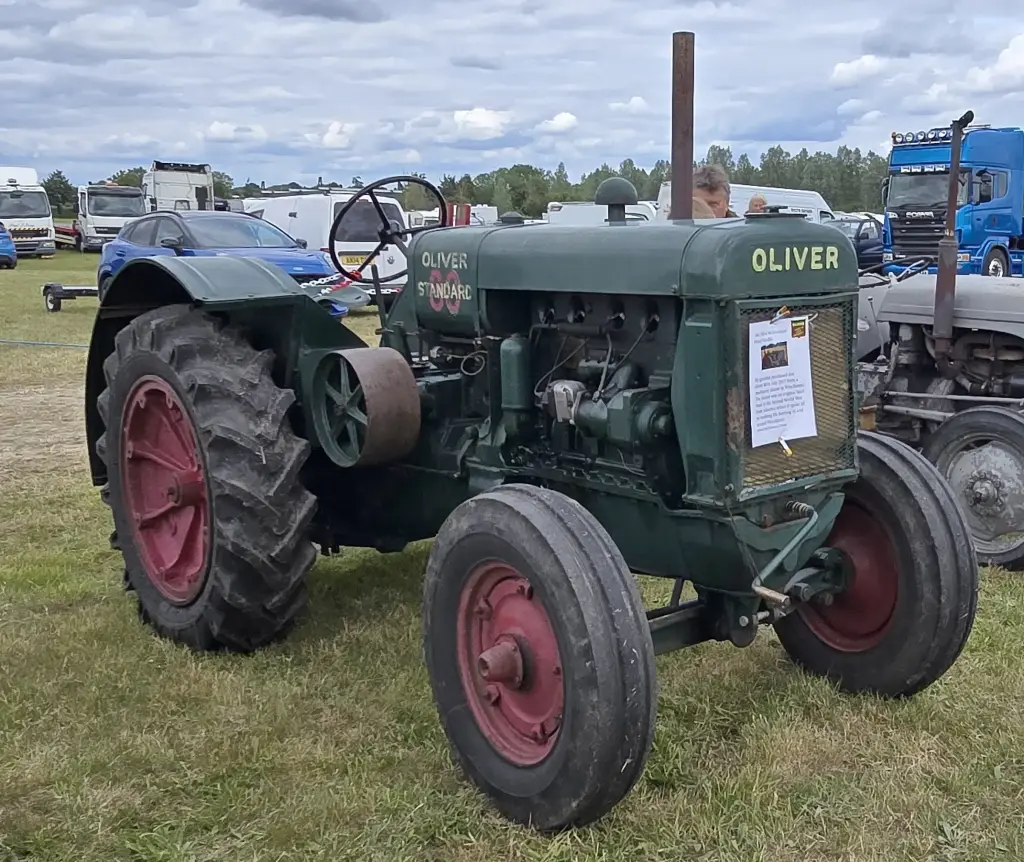
The Oliver 80 was introduced in 1938 by developing the existing Oliver Hart-Parr 80 industrial tractor for row-crop use. It was equipped with a Waukesha-Oliver four-cylinder engine of 334 cubic inches (5,470 cc) developing 43 horsepower (32 kW), with three or four-gear transmissions. The original 80 was unstyled, with an exposed radiator and steering gear as on the industrial tractor. Row-crop versions had narrow front wheels and standard models a wide front axle, and engines could be had for gasoline or kerosene/distillate. Production took place at Oliver’s Charles City plant. A diesel-engined version with a Buda-Lanova 4.9-litre engine was introduced in 1940, and the Oliver 35 was an industrial version of the 80 built from 1937 to 1945. From 1937 the 80 was sold in Canada by Cockshutt as the Cockshutt 80, replacing the Oliver-built 18-28. The 80 never received any styling treatment.
1947–1954: the Oliver 88
The Oliver 88 was introduced in 1947 and restyled in 1948 with Fleetline styling that enclosed the mechanical systems. Early tractors in the restyled run used the swept-back Fleetline style, which was updated with a more upright posture in later years. Engines came with gasoline, kerosene/distillate, diesel and LP gas options; the diesel had six cylinders, and most models had six-speed transmissions. Gross power for the gasoline engine rose to 46 horsepower (34 kW). The 88 was offered with single, dual-front-wheel and wide-front row-crop versions, a standard version, and orchard, high-crop and industrial versions. Hydraulic hitch operation was introduced in 1949, and the 1954 price was about $3,000.
1954: the Oliver Super 88
The Super 88 was introduced in 1954. Power rose to 62 horsepower (46 kW) for the gasoline engine, and the kerosene/distillate version was dropped from the line. The Super 88 was rated for a six-bottom plow and sold for about $4,000 in 1958. Visually it was the same as the 88, but the wheels were now painted green and the side panels removed.
1958–1963: the Oliver 880
A three-number sequence arrived in 1958 with the Oliver 880. The new line was more squared-off in appearance, retaining the green body and replacing previous models’ yellow and red highlights with a green-tinged white for grilles and wheels. The 880 had transmission improvements and refinements to the hitch and accessories. It was produced until 1963 in row-crop, standard-axle Wheatland and high-crop models, with an industrial version from 1958 to 1963. The 1963 selling price was about $5,000, and towards the end of production the grille changed from a horizontal slatted design to a cast-iron checkerboard.
1960–1969: the 1800, 1850 and 1855
The Oliver 1800 was manufactured from 1960 to 1964. The 1800 A was essentially a restyled 880 with adjustments in engine and accessories and increased power; the 1800 B of 1963 had more power again, and the 1964 1800 C was the final model, with improved steering and hydraulics, selling for about $5,900. An industrial 1800 was built from 1960 to 1964. The 1850 was an upgraded 1800 C produced from 1964 to 1969, distinguished by Oliver’s Over-Under Hydraul Shift partial powershift transmission. The final iteration of the model 80 was the 1855 of 1969, built during White’s ownership: the grille incorporated headlights, the emblem had a horizontal green stripe and a small WHITE tag sat above the Oliver badge.
Design and features
- Big four-cylinder engine: the Waukesha-Oliver unit displaced 334 cu in and produced 43 hp, rating the 80 for three 14-inch plows.
- Unstyled bodywork: exposed radiator and steering gear, and the 80 never received a styling treatment.
- Early diesel: a Buda-Lanova 4.9-litre diesel version was added in 1940.
- Fleetline 88: the 1948 restyle enclosed the mechanical systems, and hydraulic hitch operation arrived in 1949.
- Growing power: the Super 88 raised output to 62 hp and a six-bottom plow rating.
- Long development: the line continued through the 880, 1800 and 1850 to the 1855 of 1969.
Oliver 80 versions
- Oliver 80 (1938–1963): the original unstyled four-cylinder model, with a diesel option from 1940.
- Oliver 35 (1937–1945): the industrial version of the 80.
- Oliver 88 (1947–1954): restyled in 1948 with Fleetline bodywork and a hydraulic hitch from 1949.
- Oliver Super 88 (1954–1958): 62 hp, six-bottom plow rating, green wheels and no side panels.
- Oliver 880 (1958–1963): squared-off styling, transmission and hitch refinements, and a checkerboard grille late in production.
- Oliver 1800, 1850 and 1855 (1960–1969): the final developments, ending with White’s involvement in 1969.
The smaller Oliver tractors are covered by the Oliver 60 and Oliver 70. More Oliver tractors are in the Oliver collection.
Video: BILL COWLEY || Ploughing With Oliver 80
Video on YouTube.
Sources
- Oliver 80, English Wikipedia: specifications, models, prices