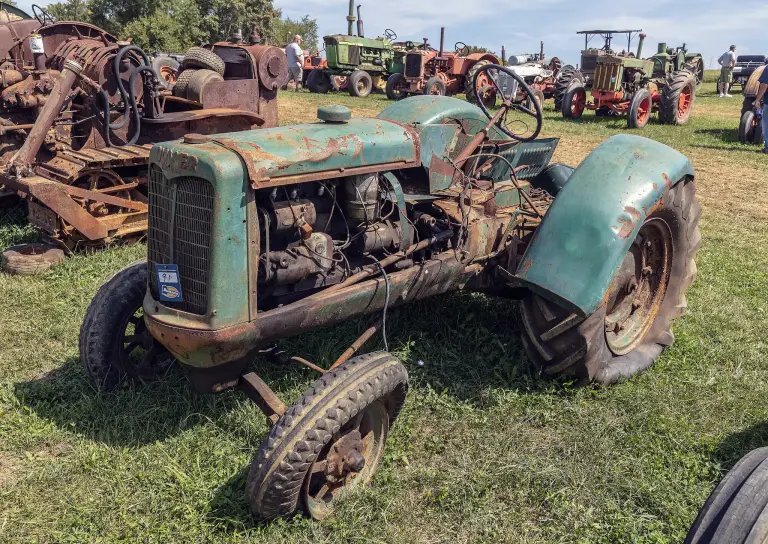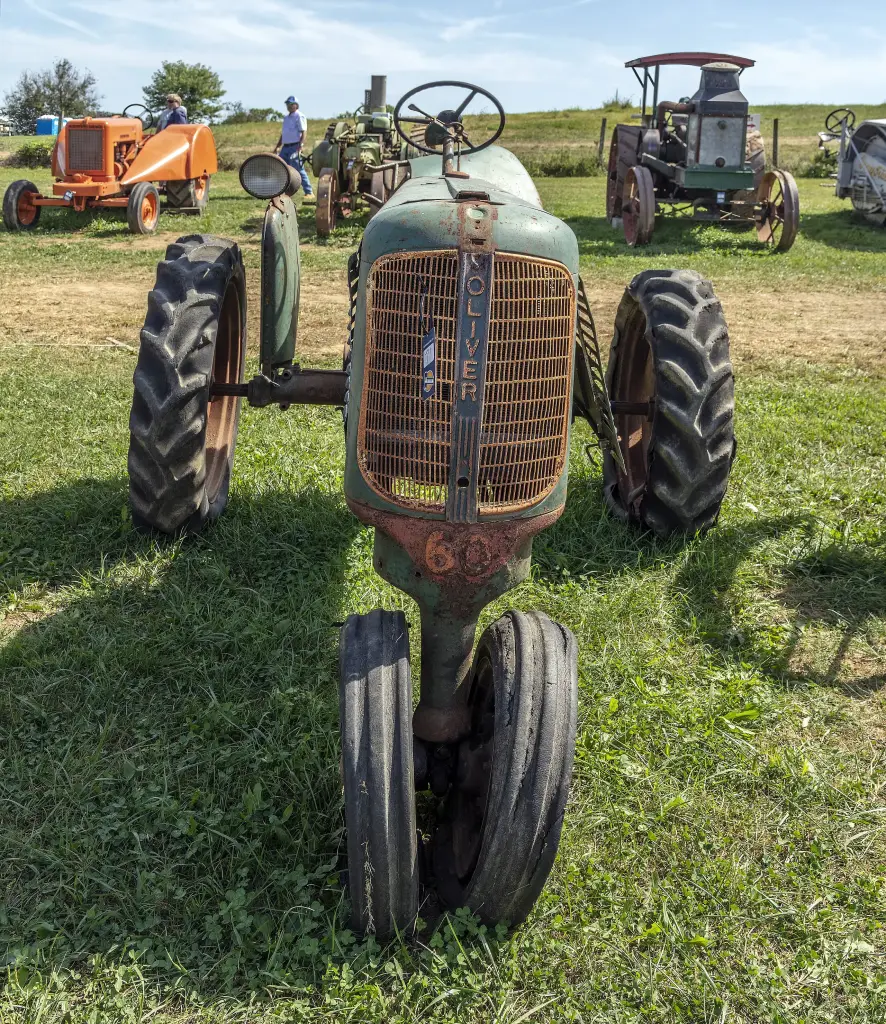
The Oliver 60 was a small row-crop tractor introduced in 1940 by the Oliver Farm Equipment Company as a less expensive alternative to its six-cylinder Oliver 70. It remained in production, under the names 66, Super 66 and 660, until 1964, and was sold in Canada as the Cockshutt 60.
Oliver 60 at a glance
| Maker | Oliver Farm Equipment Company, Charles City, Iowa |
|---|---|
| Series production | 1940–1964 |
| Introduced | 1940, as a cheaper alternative to the Oliver 70 |
| Engine | four-cylinder, 120.6 cu in (1,976 cc) |
| Power | 20 hp (15 kW) |
| Transmission | four gears |
| Body versions | row-crop, standard and industrial |
| Fuel | gasoline or kerosene/distillate |
| Price | about $1,700 in 1948 |
| Canadian name | Cockshutt 60 |
| Series models | 60, 66, Super 66 and 660 |
| 660 power | 45 kW (60 hp) gross |
Based on one source: the English Wikipedia article on the Oliver 60, which also covers the 66, Super 66 and 660 in sections.
History of the Oliver 60
1940–1954: the Oliver 60
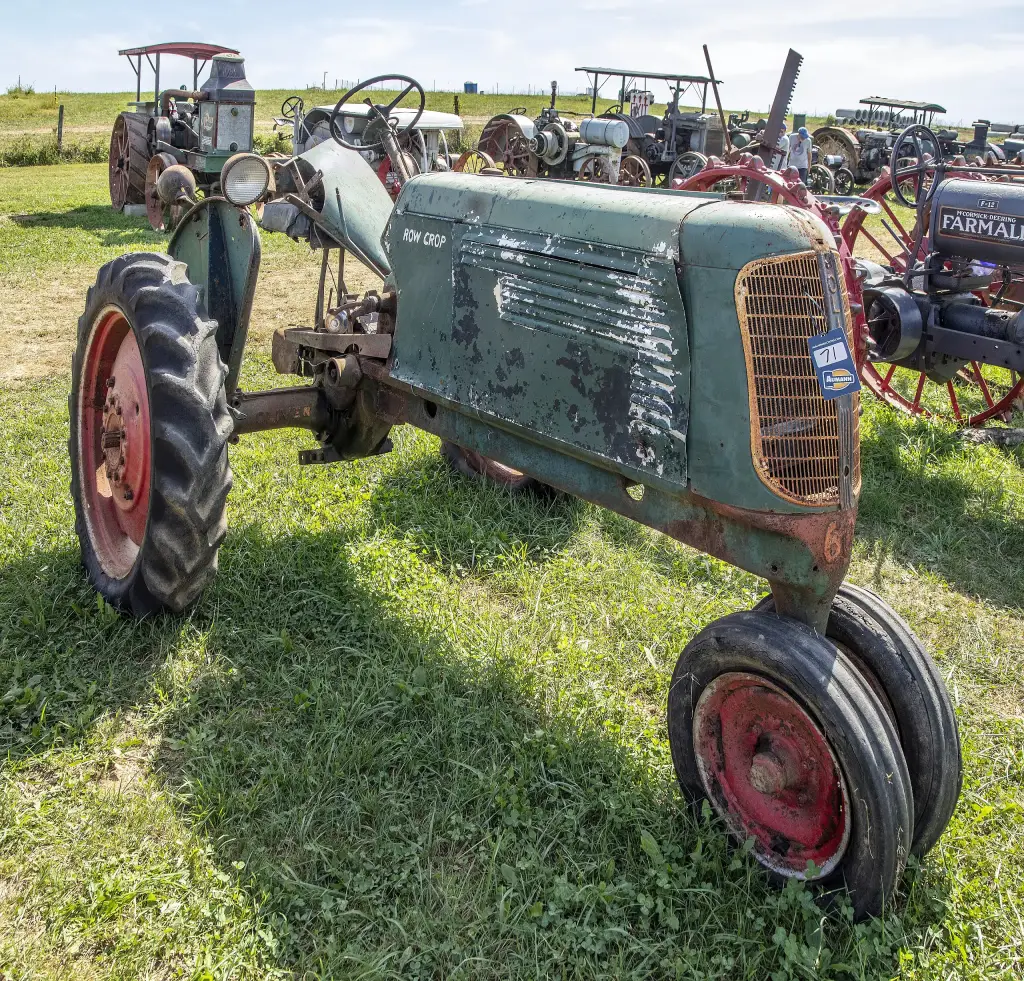
The Oliver 60 arrived in 1940 as a less expensive companion to the Oliver 70. The six-cylinder 70 was being outsold by the cheaper Farmall A, Allis-Chalmers Model B and John Deere Model B, and Oliver answered with a four-cylinder machine of its own. The engine displaced 120.6 cubic inches (1,976 cc) and developed 20 horsepower (15 kW), driving through a four-gear transmission. The 60 inherited the Fleetline styling of the 70, with fully enclosed bodywork and a swept-back radiator grille. Row-crop tractors had narrow front wheels, standard models a wide front axle, and an industrial version was also built. Buyers could choose gasoline or kerosene/distillate engines. Production took place at the Oliver plant in Charles City, Iowa, and the tractor sold for about $1,700 in 1948. In Canada it was marketed as the Cockshutt 60.
1954: the Oliver 66
The 60 was restyled in 1954 as the Oliver 66. The new model offered gasoline, kerosene/distillate and diesel engines, and it introduced an option for hydraulic accessories. Gross power rose to 27 horsepower (20 kW), and the price in 1954 was about $2,000.
1954: the Super 66
The Super 66 followed in the same year. It used a three-point hitch with hydraulic lift, introduced a diesel version and a 12-volt electrical system, and raised power to 36 horsepower (27 kW). The engine compartment was no longer fully shrouded with bodywork. In 1958 the Super 66 sold for about $3,000.
1959–1964: the Oliver 660
A three-number sequence arrived in 1959 with the Oliver 660. It was more squared-off in appearance, kept the green body and replaced the earlier yellow and red highlights with a green-tinged white for the grilles and wheels. Gross power rose again, to 45 kW (60 hp). The 660 stayed in production until 1964 and sold that year for about $3,450.
Design and features
- Four-cylinder economy: the 60 was cheaper than the six-cylinder 70, with 20 hp from 120.6 cu in.
- Fleetline styling: fully enclosed bodywork and a swept-back radiator grille were inherited from the larger Oliver 70.
- Three body types: row-crop with narrow front wheels, standard with a wide front axle, and an industrial version.
- Fuel choice: gasoline or kerosene/distillate engines were available at launch.
- Steady upgrading: the 66 added hydraulic accessories, the Super 66 a three-point hitch and 12-volt electrics, and the 660 more power and squared-off styling.
Oliver 60 versions
- Oliver 60 (1940–1954): the original four-cylinder model with Fleetline bodywork.
- Oliver 66 (1954): restyled version with gasoline, kerosene/distillate and diesel engines and optional hydraulic accessories.
- Oliver Super 66 (1954): three-point hitch, diesel option, 12-volt electrics and 36 hp.
- Oliver 660 (1959–1964): squared-off body, green-tinged white trim and 60 hp gross.
- Cockshutt 60: the Canadian version of the Oliver 60.
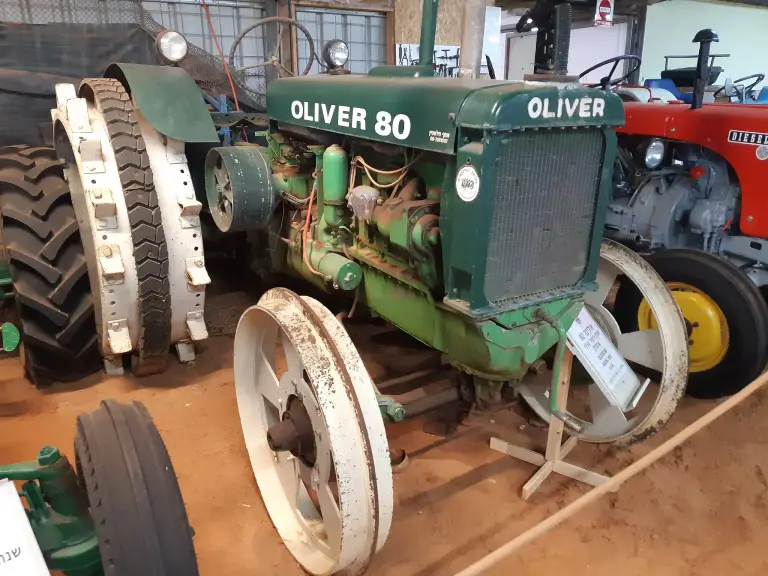
The 60 was the smaller stablemate of the Oliver 70 and sat below the heavier Oliver 80. More Oliver tractors are in the Oliver collection.
Video: Driving The Oliver 60
Video on YouTube.
Sources
- Oliver 60, English Wikipedia: specifications, models, prices