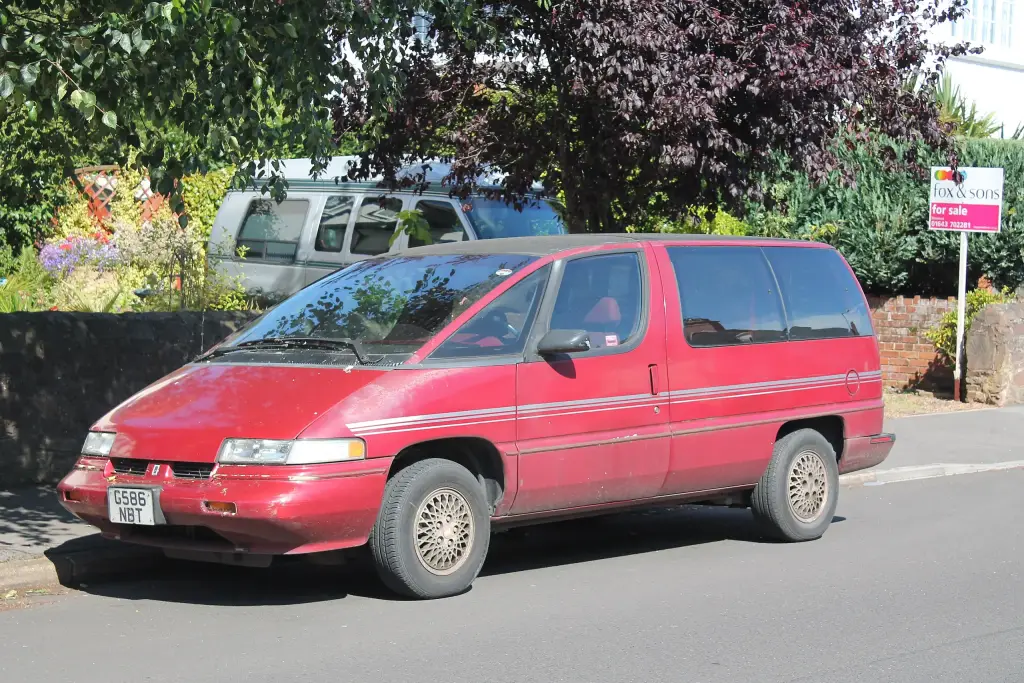
The Oldsmobile Silhouette was a minivan built by General Motors from 1990 to 2004 over two generations. It was the premium version of the GM U-body vans, with composite plastic body panels on a steel space frame, and it ended production when the Oldsmobile brand was discontinued.
Oldsmobile Silhouette at a glance
| Maker | Oldsmobile Division, General Motors |
|---|---|
| Production | 1990–2004, two generations |
| Class | minivan |
| Platform | GM U-body |
| Body | galvanised steel space frame with composite panels |
| First car built | 1 August 1989, North Tarrytown |
| Seats | seven |
| First engine | 3.1 L V6, 120 hp |
| From 1992 | 3.8 L 3800 V6, 170 hp |
| Later engine | 3.4 L V6 for 1996 |
| European name | Pontiac Trans Sport |
| Successor | Buick Terraza and Saturn Relay after 2004 |
Based on one source: the English Wikipedia article on the Oldsmobile Silhouette.
History of the Oldsmobile Silhouette
A different kind of minivan
GM’s first attempt at a minivan, the rear-wheel-drive Chevrolet Astro and GMC Safari, had failed to challenge Chrysler in the 1980s. The 1990 Silhouette and its sister vans did better. Their shape came from the 1986 Pontiac Trans Sport concept, which had futuristic styling, individually removable bucket seats with built-in speakers, a gull-wing rear door and a glass-panelled roof; the gull-wing door and glass roof were dropped for production, but the wedge shape stayed. The Silhouette was the premium version, competing with the Chrysler Town & Country, and was the only one of the three with optional leather.
First generation (1990–1996)
The first Silhouette was built on 1 August 1989 at North Tarrytown and used a galvanised steel space frame wrapped in composite plastic body panels that resisted rust and minor damage, a technique developed on the Pontiac Fiero. It seated seven, with five light 34 lb rear seats that could be removed and rearranged individually. The level ride package used a compressor and air-pressurised rear shock absorbers to keep the car level whatever the load, and its control panel and air hose could be used to inflate tyres and air mattresses. Built-in child seats and a remote-controlled power sliding door arrived in 1994. The 3.1 L V6 of 120 hp was joined in 1992 by the 170 hp 3.8 L 3800, making these the most powerful minivans then in production. Magazines nicknamed the vans “dustbusters” after a similarly shaped vacuum cleaner, and the long sloping windscreen took some getting used to. In Europe the Silhouette was sold as the Pontiac Trans Sport. First-generation production ended on 26 June 1996, when the Tarrytown plant, in operation since 1900, closed.
Second generation and the end
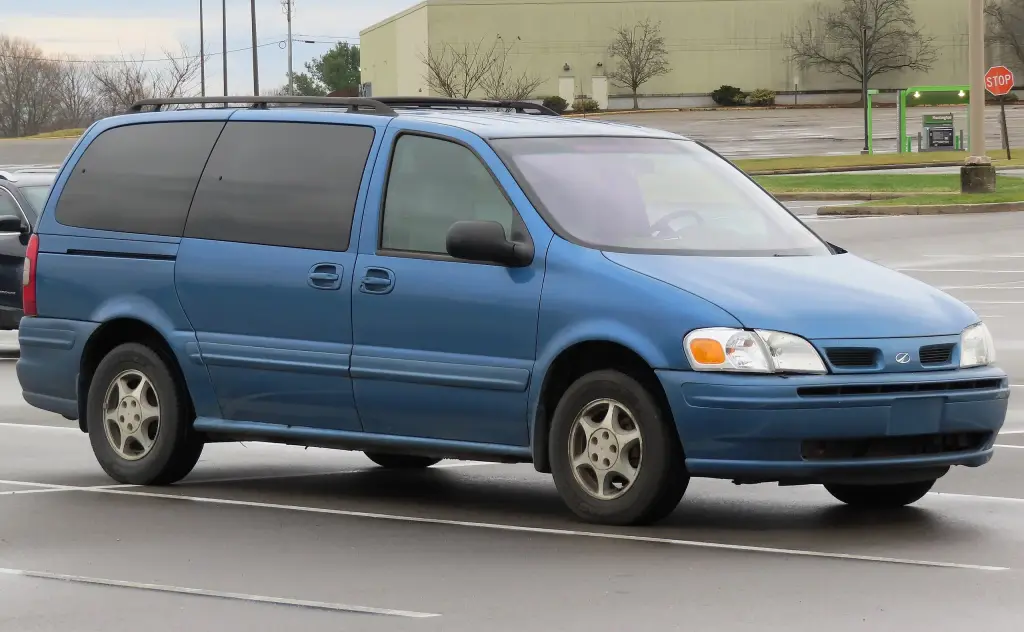
A second generation followed for 1997 and stayed in production until 2004, when GM discontinued the Oldsmobile brand. GM continued to sell badge-engineered versions of the U-body minivans as the Saturn Relay and Buick Terraza from 2005 to 2007.
Design and features
- Composite panels: plastic bodywork on a steel space frame, resistant to rust and dents.
- Seven removable seats: individually light rear seats that could be taken out or rearranged.
- Level ride: air-pressurised rear shocks with a built-in inflator for tyres and mattresses.
- Power sliding door: a remote-controlled door added in 1994.
Oldsmobile Silhouette versions
- First generation (1990–1996): the composite-bodied wedge with the 3.1 or 3.8 V6.
- Second generation (1997–2004): the later, more conventional minivan.
- Pontiac Trans Sport (Europe): the same van with Pontiac badges.
- Successors: the Buick Terraza and Saturn Relay built after the brand ended.
The Silhouette was one of the replacements for the Custom Cruiser wagon, alongside the Bravada. More models are in the Oldsmobile collection.
Video: 2002 Oldsmobile Silhouette for sale
Video by hiautoex on YouTube.
Sources
- Oldsmobile Silhouette, English Wikipedia: origins, construction, equipment, engines