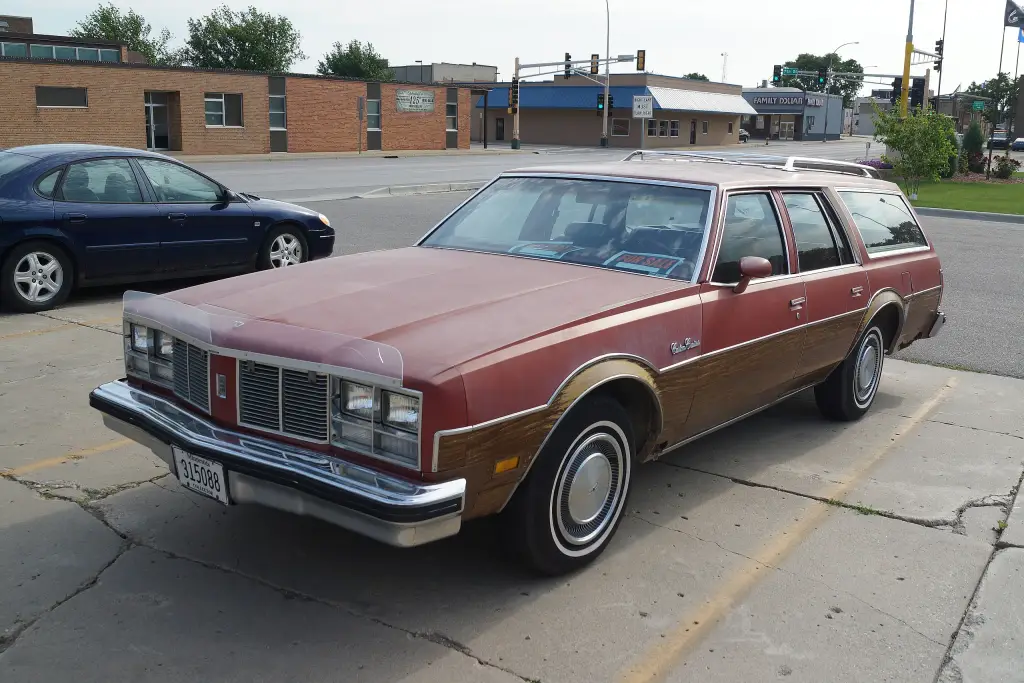
The Oldsmobile Custom Cruiser was a full-size station wagon built from 1971 until 1992. It marked Oldsmobile’s return to the full-size wagon market, sat above the intermediate Vista Cruiser, and was for a time the division’s only rear-wheel-drive model.
Oldsmobile Custom Cruiser at a glance
| Maker | Oldsmobile Division, General Motors |
|---|---|
| Production | 1971–1992 |
| Class | full-size station wagon |
| Platform | GM B-body |
| Sister cars | Buick Estate, Pontiac Safari, Chevrolet Caprice wagon |
| First-generation wheelbase | 127 in |
| First-generation engine | 455 cu in Rocket V8 |
| Gearbox | Turbo-Hydramatic 400 three-speed automatic |
| Tailgate | two-piece “clamshell” design |
| Seats | up to eight with the third row |
| Total built | 451,819 over 21 years |
| Last year | 1992 |
Based on one source: the English Wikipedia article on the Oldsmobile Custom Cruiser.
History of the Oldsmobile Custom Cruiser
A name from 1940
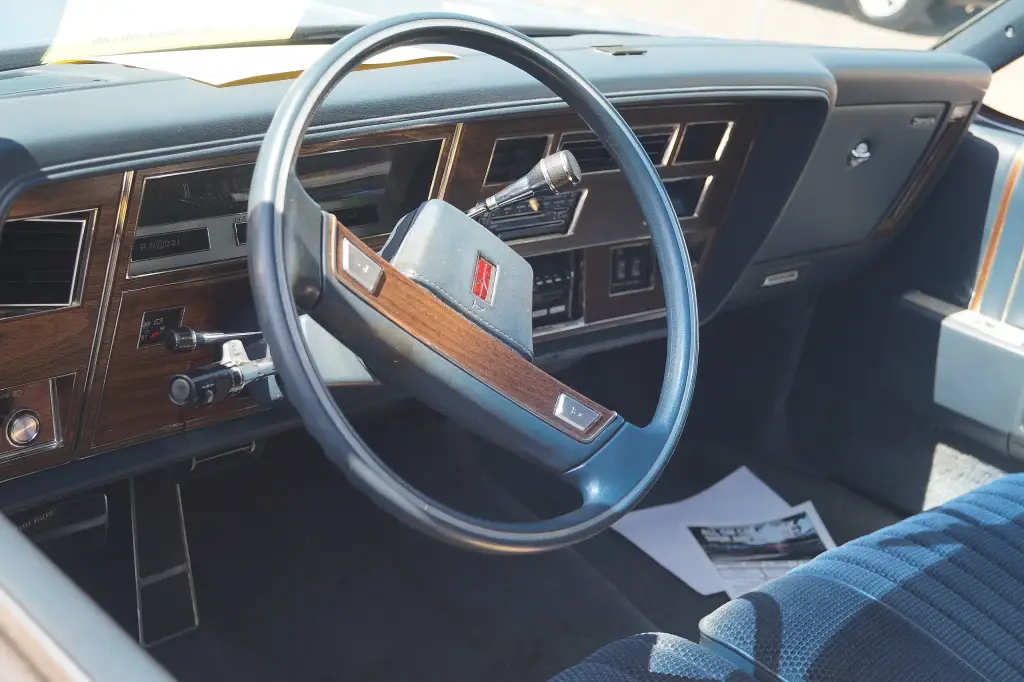
Oldsmobile first used the Custom Cruiser name in 1940, when it gave its cars formal names and called the flagship the Custom Cruiser 90. For 1941 the model was sold with six- and eight-cylinder engines as the Custom Cruiser 96 and 98, and for 1942 the 96 was dropped, leaving the 98 as the flagship. The name disappeared after 1947, and the 98 remained on the C-body until 1996.
1971–1976: the first wagon generation
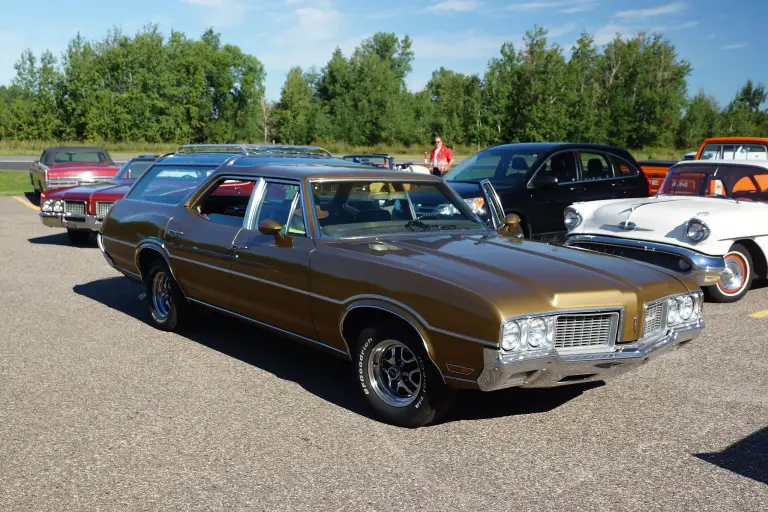
Full-size station wagons returned to the Oldsmobile range for 1971, replacing the Fiesta name, and the Custom Cruiser was slotted above the A-body Vista Cruiser. It shared its body with the Buick Estate and Pontiac Safari and was slightly longer than the Chevrolet Impala and Caprice wagons. The B-body chassis was stretched to the 127-inch wheelbase of the GM C-body, with multi-leaf rear springs, and power came from the 455 cu in Rocket V8 through a Turbo-Hydramatic 400 three-speed automatic. The body mixed Delta 88 and Ninety-Eight parts, taking its front fascia, rear quarters and fender skirts from the Ninety-Eight; simulated woodgrain trim was chosen by nearly 80% of buyers. A two-piece clamshell tailgate slid under the cargo floor, and the optional third row, reached by folding the split second bench, made the car an eight-seater. After the 5 mph bumpers arrived the wagon grew to over 19 feet, and the three-seat 1974 cars, at about 5,400 lb curb weight, were the heaviest Oldsmobiles ever built.
Later generations and the end
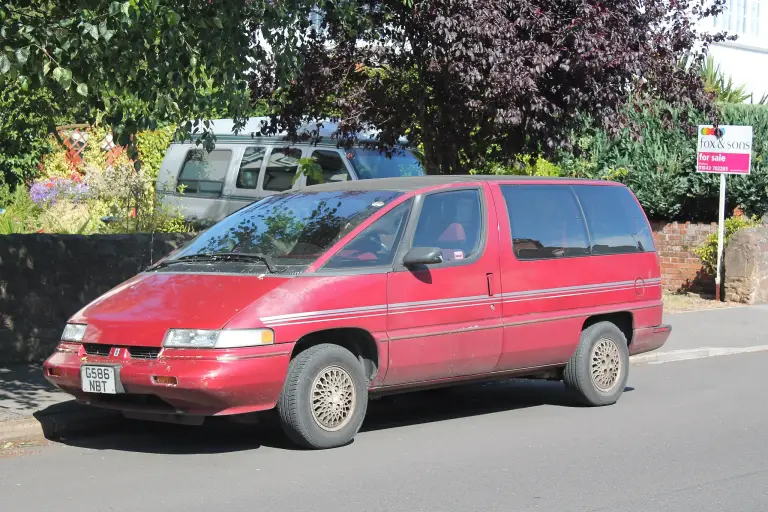
The Custom Cruiser continued over three generations on the B platform, sharing its trim with the Delta 88 and Ninety-Eight. When GM downsized its full-size sedans in 1985 and 1986 the wagon was left without a sedan counterpart, and after the Cutlass Supreme Classic went it became the only rear-wheel-drive Oldsmobile on sale. Production ended after 1992, by which time Oldsmobile had already added the Silhouette minivan and the Bravada SUV as alternatives, and 451,819 Custom Cruisers had been built in 21 years. GM itself stopped building full-size station wagons after 1996.
Design and features
- Clamshell tailgate: the lower half slid under the cargo floor, the glass into the roof.
- Eight seats: a forward-facing third row reached through a folding split bench.
- Rocket V8: the 455 cu in engine, offered in several states of tune until 1976.
- Huge dimensions: over 19 feet long and among the heaviest Oldsmobiles ever made.
Oldsmobile Custom Cruiser versions
- First generation (1971–1976): 127-inch wheelbase and the 455 V8.
- Second generation (1977–1990): the downsized B-body wagon.
- Third generation (1991–1992): the final, extensively redesigned car.
- Woodgrain option: chosen by about 80% of first-generation buyers.
The Custom Cruiser sat above the Vista Cruiser and shared its front end with the 98. More models are in the Oldsmobile collection.
Video: 1989 Oldsmobile Custom Cruiser station wagon
Video by MikeGuy993 on YouTube.
Sources
- Oldsmobile Custom Cruiser, English Wikipedia: history, chassis, engines, production