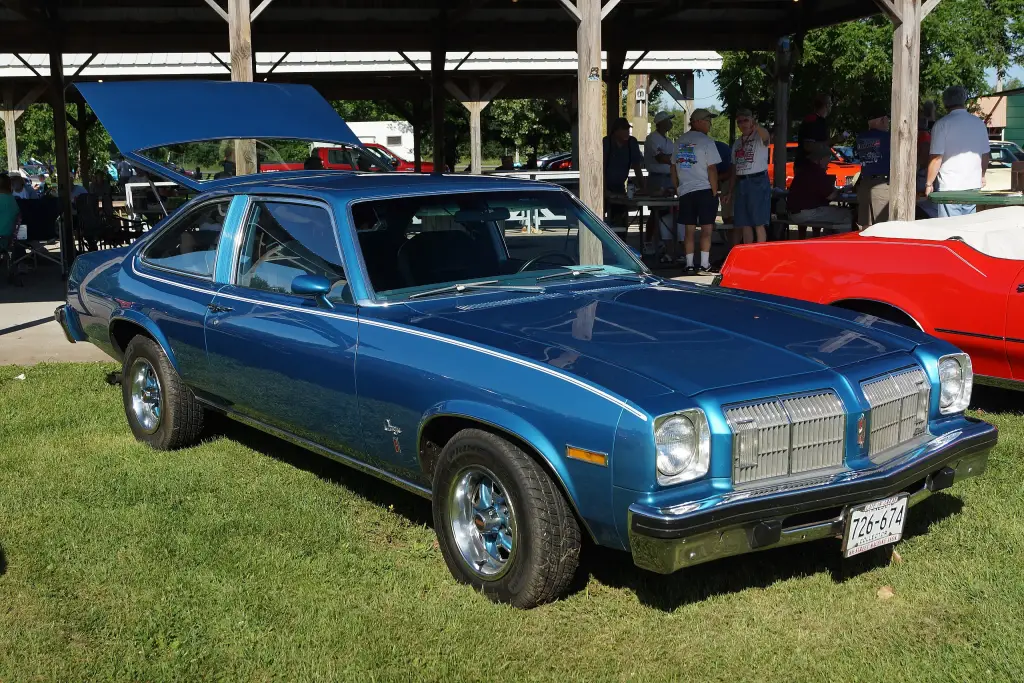
The Oldsmobile Omega was a compact car sold from 1973 to 1984 as the brand’s most affordable model. It went through three generations: two rear-wheel-drive cars based on the Chevrolet Nova and a third, front-wheel-drive generation related to the Chevrolet Citation.
Oldsmobile Omega at a glance
| Maker | Oldsmobile Division, General Motors |
|---|---|
| Production | 1973–1984 |
| Class | compact, entry-level car |
| Name | from the last letter of the Greek alphabet |
| First generation | 1973–1974, Chevrolet Nova-based |
| Second generation | 1975–1979 |
| Third generation | 1980–1984, front-wheel drive |
| First engines | 4.1 L six, 5.7 L Rocket V8 |
| Second-generation engines | 4.1 L six, 3.8 L V6 from 1977, 4.3 L V8 |
| Third-generation engines | 2.5 L Iron Duke four, 2.8 L V6 |
| Best year | 147,918 sold in 1981 |
| Replaced by | the Cutlass Calais in 1985 |
Based on one source: the English Wikipedia article on the Oldsmobile Omega.
History of the Oldsmobile Omega
1973–1974: a Nova in Oldsmobile clothes
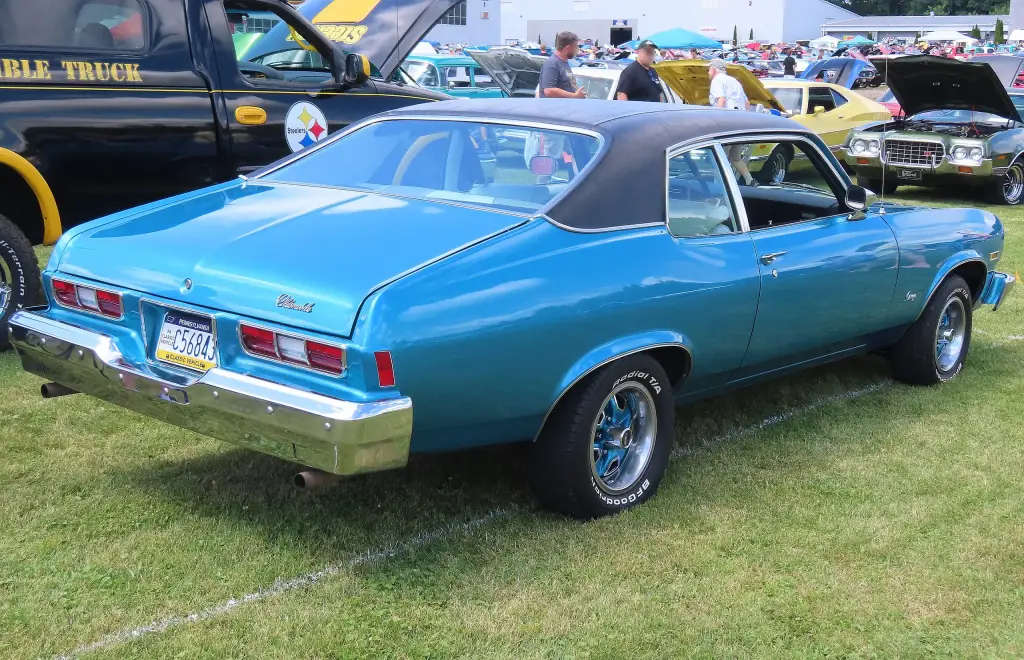
The Omega and the Buick Apollo arrived in 1973 as badge-engineered versions of the GM X-body Chevrolet Nova, with two-door coupe, three-door hatchback and four-door sedan bodies. Oldsmobile gave it the split “waterfall” grille, unique rear trim and a more upmarket interior with woodgrain on the dash. The standard engine was Chevrolet’s 4.1 L six with a three-speed manual; the only V8 was Oldsmobile’s 5.7 L Rocket, with a four-speed manual as standard. For 1974 the trim range gained a Brougham S model, the parking lights moved inboard and a new rear bumper met the 5 mph impact standard.
1975–1979: the second generation
The second Omega was the top of the X-body line along with the Buick Apollo and Skylark, with more luxurious trim, more sound insulation and rear anti-roll bars. It came as the F-85, Omega, Omega SX and Omega Brougham. The 4.1 L six was replaced by the lighter 3.8 L Buick V6 in 1977, a 4.3 L Oldsmobile V8 was optional from 1975 to 1979, and the car received three different grille designs and revised rear lights during its run.
1980–1984: front-wheel drive and the end
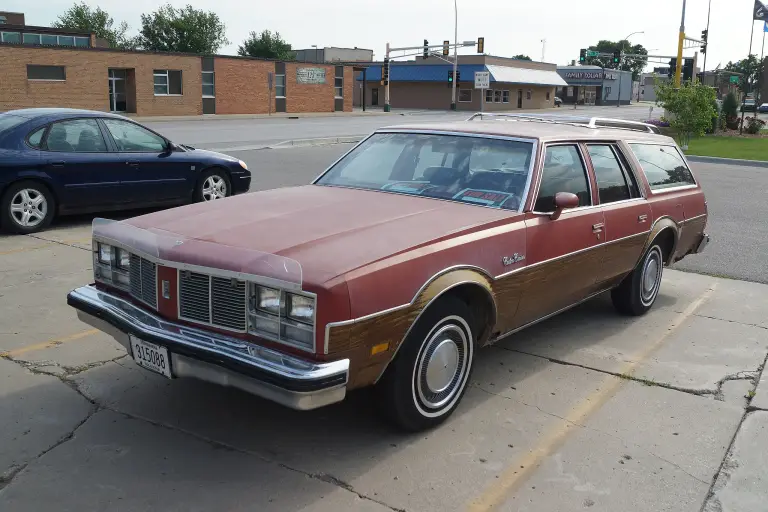
The third generation moved to the heavily revised X-body platform and to front-wheel drive for 1980, with Pontiac’s Iron Duke four and a new 2.8 L V6. Unlike the fastback Citation, the Omega came as a notchback coupe and a four-door sedan, in standard, Brougham, SX and ES trim. The 1981 Sport Omega pioneered urethane plastic fenders and wore red-and-orange stripes over white and grey. The X-body cars proved trouble-prone and were recalled for braking, fluid leak and suspension problems, though the Omega was the only one of the four to sell better in 1981 than 1980, with 147,918 cars. Sales then collapsed: 77,469 in 1982, 53,926 in 1983 and 52,986 in 1984. For 1985 the Omega was replaced by the N-body Calais.
Design and features
- Entry-level role: the cheapest Oldsmobile for twelve years.
- Nova relationship: the first two generations shared the Chevrolet X-body.
- Sport Omega: urethane plastic fenders and bold striping in 1981.
- Front-wheel drive: the 1980 car moved to the revised X-body platform.
Oldsmobile Omega versions
- First generation (1973–1974): Nova-based coupe, hatchback and sedan.
- Second generation (1975–1979): F-85, Omega, SX and Brougham trims.
- Third generation (1980–1984): front-wheel-drive coupe and sedan.
- Sport Omega (1981): the striped model with plastic fenders.
- ES (1982–1984): the later sporty trim, sedan only from 1983.
The Omega was replaced by the Cutlass Calais, and it sat below the Cutlass. More models are in the Oldsmobile collection.
Video: 1973 Oldsmobile Omega
Video by Brad Roach on YouTube.
Sources
- Oldsmobile Omega, English Wikipedia: generations, engines, trims, sales