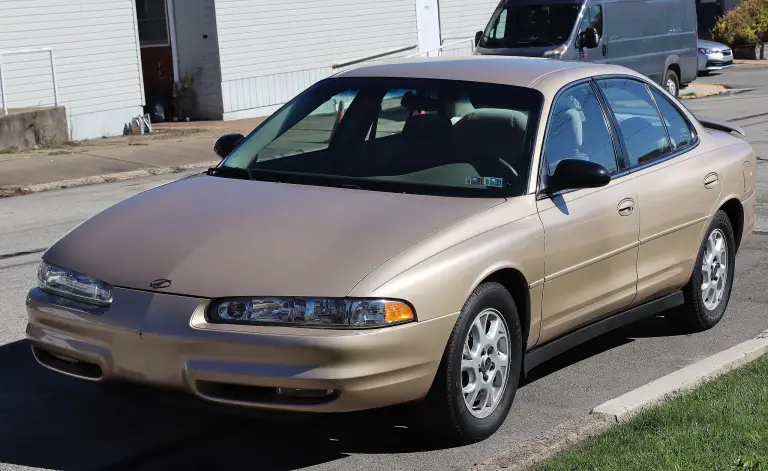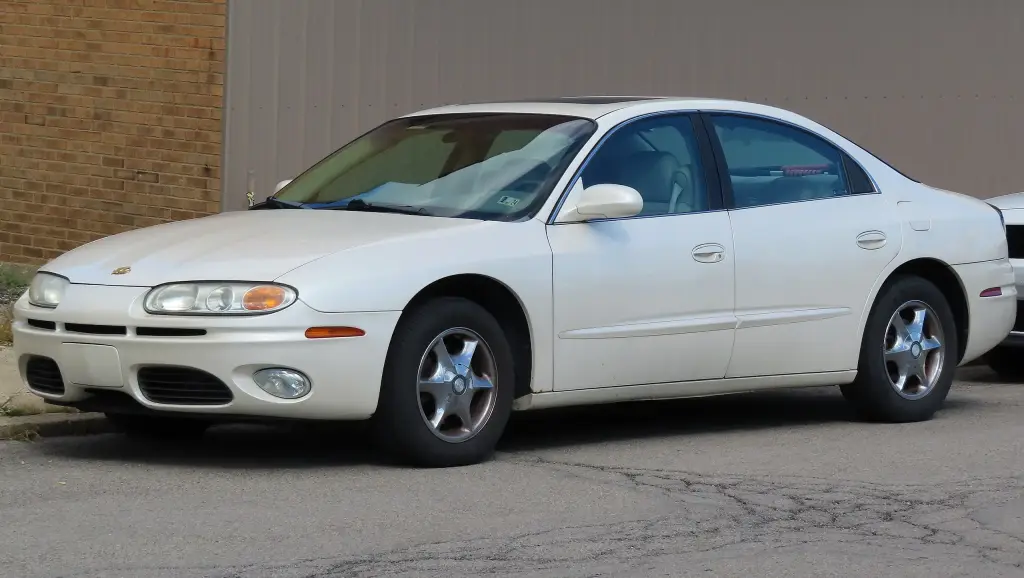
The Oldsmobile Aurora was a luxury sedan built from 1994 until 2003 over two generations. It took over as Oldsmobile’s flagship, replaced the Toronado coupe and eventually the 98, LSS and Regency, and was meant to give a struggling division a new image.
Oldsmobile Aurora at a glance
| Maker | Oldsmobile Division, General Motors |
|---|---|
| Production | 1994–2003, two generations |
| Class | luxury sedan |
| Platform | Cadillac-derived G platform |
| First car built | 24 January 1994, for 1995 |
| Engine | 4.0 L L47 V8, 250 hp, 260 lb·ft |
| Gearbox | four-speed automatic with normal and power modes |
| Drag coefficient | 0.32 |
| Concept origin | 1989 Oldsmobile Tube Car |
| Assembly | Lake Orion, Michigan |
| Badging | stylised A emblem, not the Oldsmobile name |
Based on one source: the English Wikipedia article on the Oldsmobile Aurora.
History of the Oldsmobile Aurora
Origins
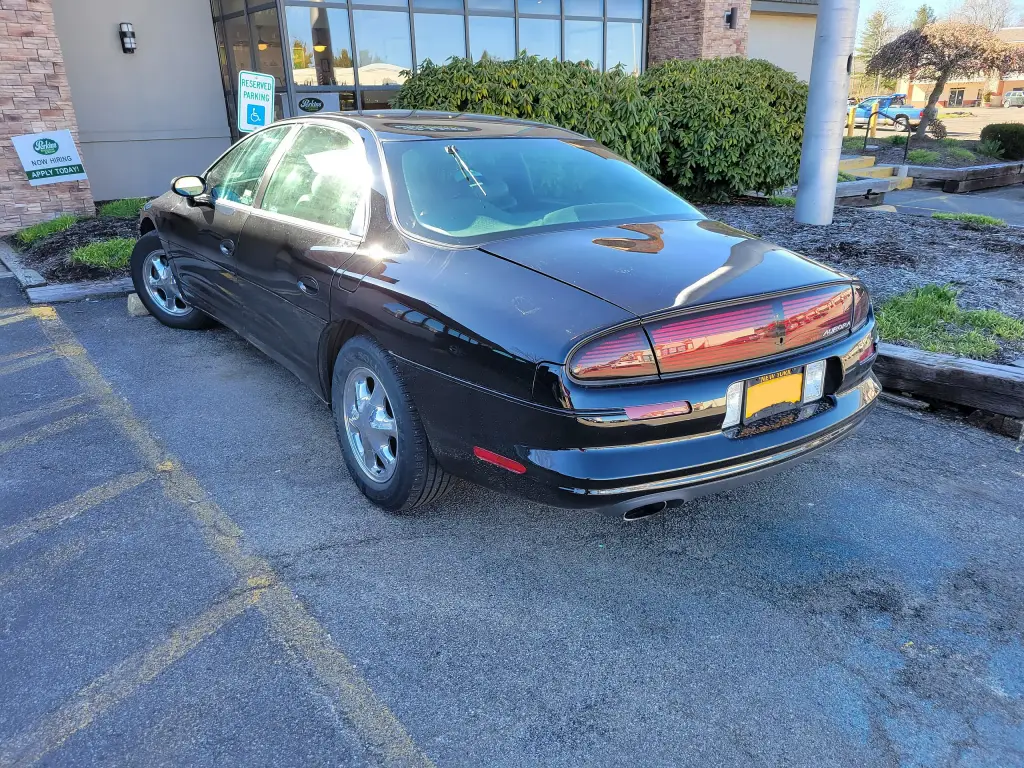
Design work began in the late 1980s with the 1989 Tube Car engineering concept by Bud Chandler, which previewed the full-width taillamp, wraparound rear glass and frameless windows of the production car. The final design was approved in July 1989, originally for 1992. By then Oldsmobile sales had fallen from a record 1,066,122 in 1985 to 402,936 in 1993, and competition from Acura, Infiniti and Lexus was hurting; the Aurora was developed to rejuvenate the division. It carried no Oldsmobile badging apart from the radio and engine cover, because focus groups reacted badly to the Oldsmobile name, and instead used a stylised A emblem.
First generation (1995–1999)
The Aurora went into production on 24 January 1994 for the 1995 model year with a 4.0 L L47 V8, a double-overhead-camshaft engine based on Cadillac’s Northstar and rated at 250 hp and 260 lb·ft, driving through a four-speed automatic with normal and power modes. Standard equipment included dual-zone climate control, front airbags, leather, burl walnut trim, an eight-way power driver’s seat with memory and an onboard computer; a sunroof, Bose sound, heated seats and the Autobahn package were optional. During crush testing its unibody proved so stiff that it broke GM’s testing machine and a truck-frame press had to be used. The cars were built at Lake Orion, Michigan, alongside the Buick LeSabre, Park Avenue and Riviera, the Oldsmobile 88 and 98 and the Pontiac Bonneville.
Later years
Small changes followed: revised rear glass, daytime running lights and OBD II diagnostics for 1996, a CD player and a tilt-down right mirror for 1997. A second generation arrived for 2001 with V6 power alongside the V8, and the Aurora stayed in production until 2003. Styling cues from the Aurora were later borrowed for the Intrigue and the compact Alero.
Design and features
- Northstar-derived V8: a 4.0 L all-aluminium engine shared in concept with Cadillac.
- Quiet image: almost no Oldsmobile badges, only the stylised A emblem.
- Rigid body: so stiff in crush testing that it broke GM’s test machine.
- Aerodynamic shape: a drag coefficient of 0.32 for a large front-wheel-drive sedan.
Oldsmobile Aurora versions
- Tube Car (1989): the engineering concept with pillarless hardtop body and suicide doors.
- First generation (1995–1999): the 4.0 L V8 car with the Autobahn package option.
- Second generation (2001–2003): the later car, offered with V6 as well as V8 power.
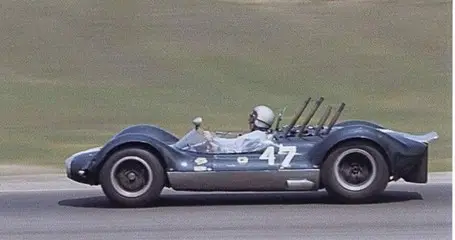
- Racing engine: a 650 hp competition version used in IRL and IMSA racing from 1995.
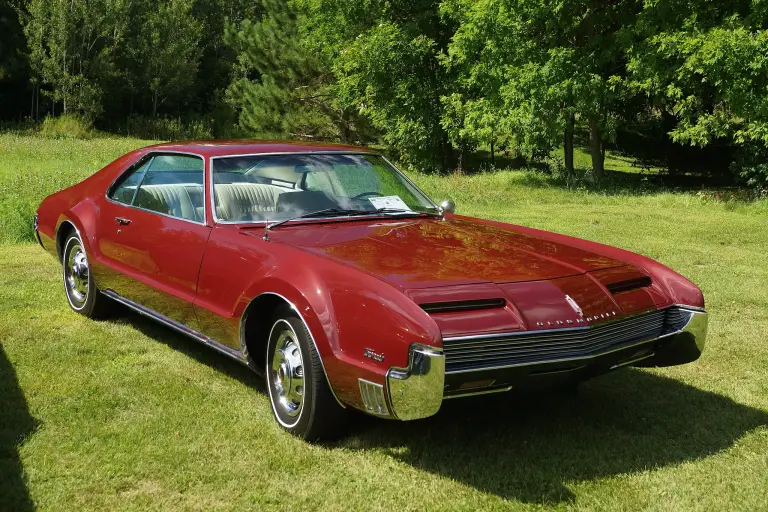
The Aurora replaced the 98 and the Toronado at the top of the range. More models are in the Oldsmobile collection.
Video: 1998 Oldsmobile Aurora start up, engine and tour
Video by Saabkyle04 on YouTube.
Sources
- Oldsmobile Aurora, English Wikipedia: origins, engines, equipment, production