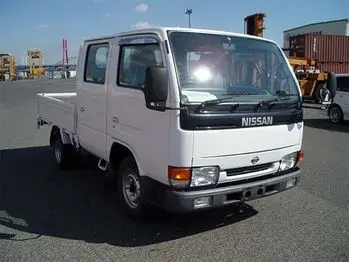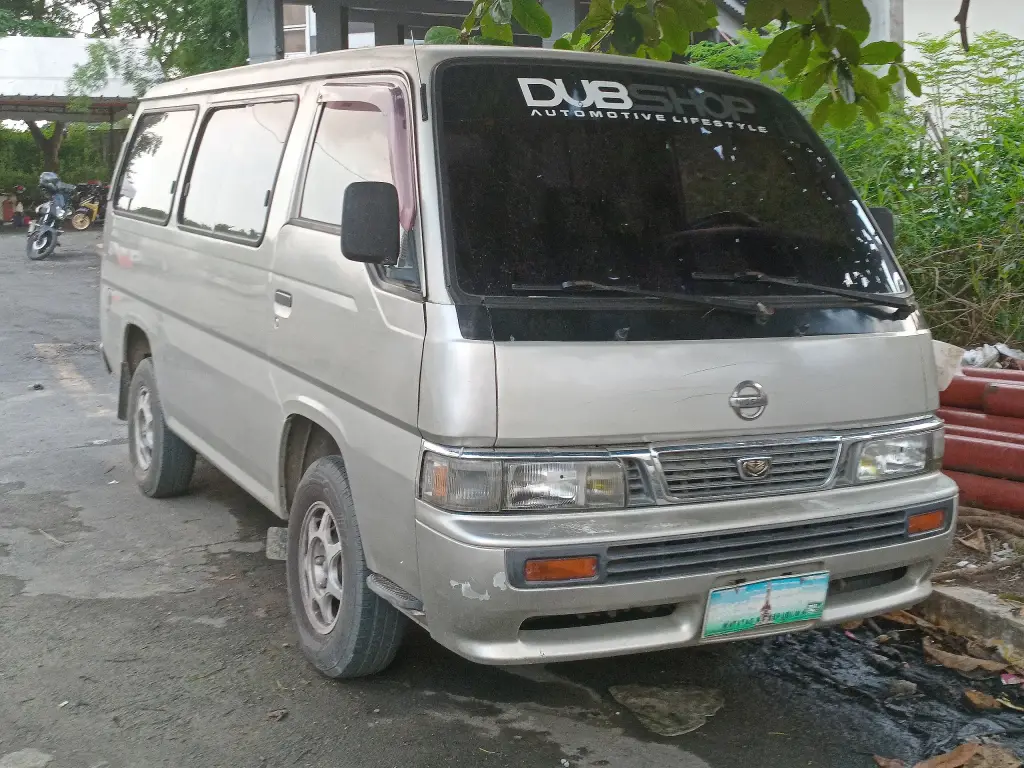
The Nissan Caravan is a light commercial van built since 1973 for fleet and cargo use. Between 1976 and 1999 a rebadged version was sold in Japan as the Nissan Homy, a model that had existed independently since 1965 at Prince. Abroad the Caravan was sold as the Nissan Urvan or King Van, and earlier with Datsun badges.
Nissan Caravan at a glance
| Production | since February 1973 |
|---|---|
| Predecessor | Prince Homy (B640, 1965–1976) |
| Japanese twin | Nissan Homy, 1976–1999 |
| Export names | Nissan Urvan, Nissan King Van, Datsun Urvan |
| First generation | E20, from February 1973 |
| Second generation | E23, from August 1980 |
| Third generation | E24, 1986–1999 |
| Seating | three to ten passengers |
| Rival | Toyota HiAce |
| Replaced by | Nissan Elgrand |
based on one source: the English Wikipedia article on the Nissan Caravan.
History of the Nissan Caravan
From the Prince Homy
The Prince Homy (B640) was the passenger version of the Prince Homer light truck and carried up to 15 people. When the Prince-Nissan merger began in 1966 it was briefly called the Nissan Homy Prince, and after the merger Nissan used the Prince van as the basis of the Caravan because it lacked a large passenger platform of its own. The Homy received the T20 code and was sold as the Nissan Homer in most export markets; its minibus versions were discontinued in 1973, while the related Homer trucks and panel vans lasted until 1976.
E20 (1973–1980)
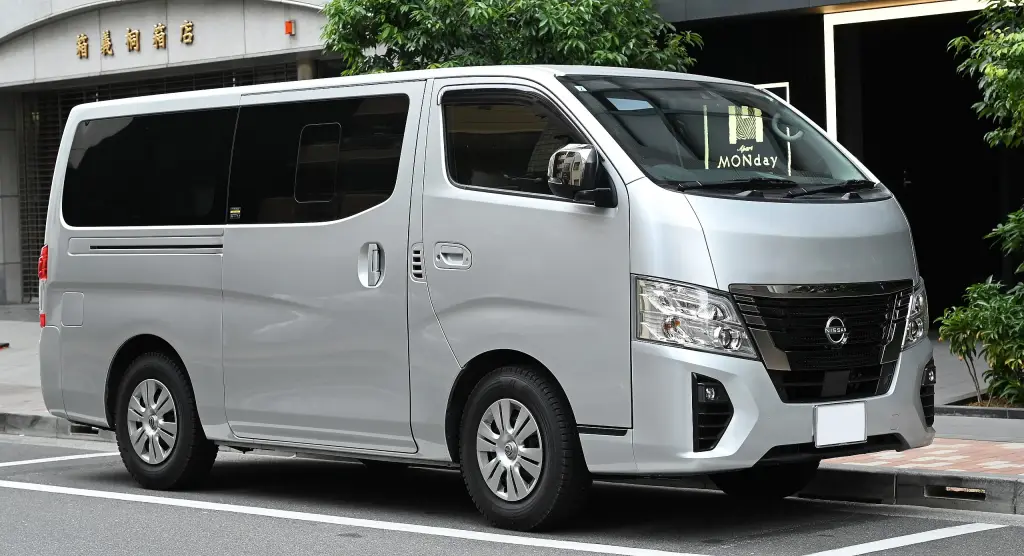
The E20 Caravan and Urvan were built from February 1973 with three, five, seven or up to ten seats, sold at Nissan Store while the Homy went to Nissan Prince Store. The van was popular in Europe, especially with fire services and as an ambulance. It was heavy to steer and had no power steering, and its floor-mounted gear lever was nearly 80 cm long, though it had five gears when most European vans had four. Engines were 1.5, 1.6 and 2.0-litre petrol units and later a 2.2-litre diesel. In export markets the first two generations were called Datsun Urvan until the Nissan brand replaced it in 1983 and 1984. In South Africa the E20 was built until 1996, with 77,000 sold.
E23 and E24
The E23 of August 1980 kept the same four-cylinder engines and added a five-speed manual for the diesel. A luxury GL version offered an optional Nissanmatic automatic, power steering, rotating rear seats and air conditioning, and in July 1981 an SGL “Silk Road” model was added. At the 1981 Tokyo Motor Show Nissan showed two Caravan concepts for businessmen, the Royal and the Elgrand Royal Line, and the Elgrand name later went to a line of luxury minivans from 1997. The final E24 generation ran from 1986 to 1999 and was replaced by the Elgrand.
Design and features
- Cab-over layout: maximum interior space inside fixed Japanese dimensions.
- Homy twin: mechanically identical, sold through Prince dealers.
- Export Urvan: sold as the Datsun and Nissan Urvan abroad.
- Elgrand origins: the luxury line began as a Caravan concept in 1981.
Nissan Caravan versions
- Caravan E20 (1973–1980): first generation, three to ten seats.
- Caravan E23 (1980–1986): five-speed diesel and GL luxury trim.
- Caravan E24 (1986–1999): the last generation before the Elgrand.
- Nissan Homy (1976–1999): the Japanese twin model.
- Datsun / Nissan Urvan: the export version.
The Caravan was the larger brother of the Vanette and gave way to the Elgrand, while sharing its platform with the Cabstar. More cars are in the Nissan collection.
Sources
- Nissan Caravan, English Wikipedia: Homy origin, generations, engines, Urvan, Elgrand