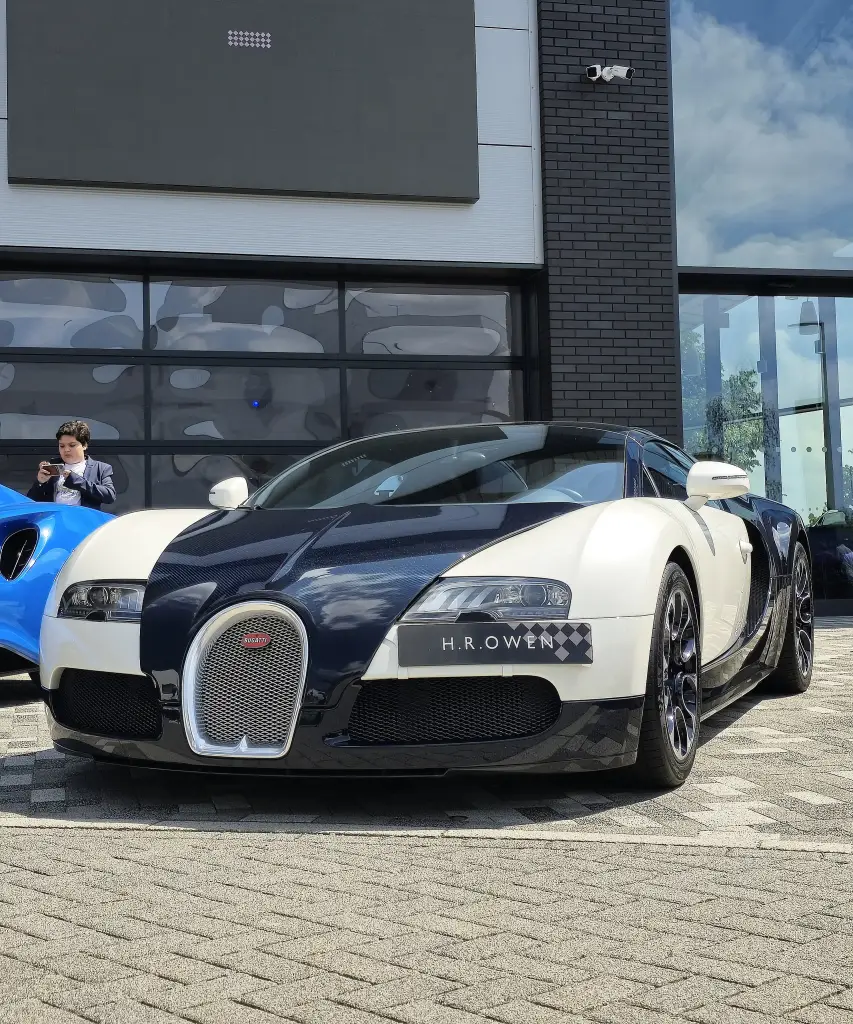
The Bugatti Veyron EB 16.4 was the first production Bugatti of the Volkswagen era. A mid-engine two-seater with a quad-turbocharged W16 engine, it was designed in Germany by the Volkswagen Group and Bugatti and built in Molsheim, and it set a new standard for road-car speed.
Bugatti Veyron at a glance
| Maker | Bugatti Automobiles S.A.S., Molsheim, France |
|---|---|
| Production | 2005–2015 |
| Class | mid-engine two-seat supercar |
| Engine | 7,993 cc quad-turbocharged W16 |
| Bore × stroke | 86 mm × 86 mm |
| Valves | 64, four per cylinder |
| Transmission | seven-speed dual-clutch automatic by Ricardo |
| Drive | permanent all-wheel drive, Haldex system |
| Kerb weight | 1,888 kg |
| Top speed | 407 km/h |
| Super Sport top speed | 431.072 km/h |
| Named after | Pierre Veyron, 1939 Le Mans winner |
Based on one source, the English Wikipedia article.
History of the Bugatti Veyron
From concepts to production
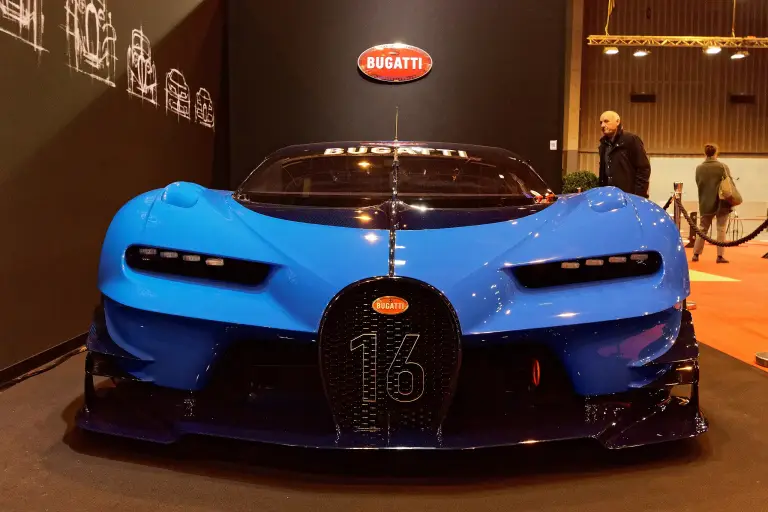
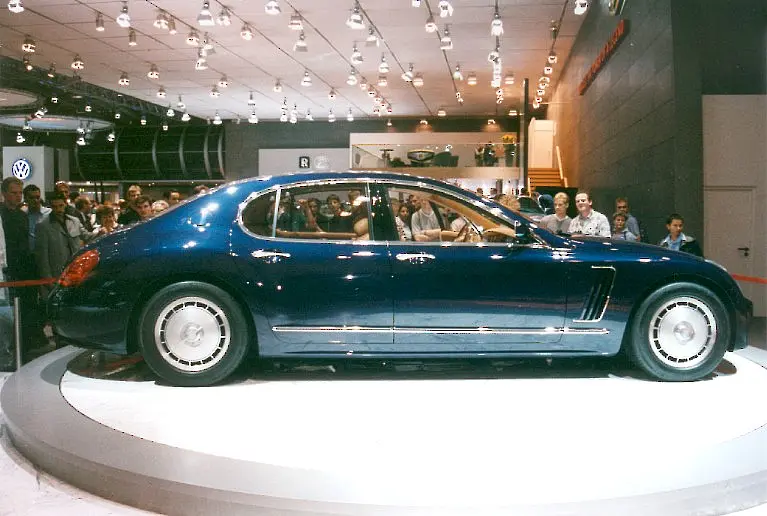
In May 1998 Volkswagen AG acquired the rights to the Bugatti name and the Bugatti Automobiles S.A.S. company, and began work on a successor to the EB 110. Between October 1998 and September 1999 Bugatti showed a series of Giugiaro-designed concepts, each with four-wheel drive and a W18 engine: the EB 118 coupe, the EB 218 saloon and the 18/3 Chiron. In October 1999 a fourth concept, the EB 18/4 Veyron, appeared at the Tokyo Motor Show, styled in-house under Hartmut Warkuß. A year later the EB 16/4 Veyron replaced the three-bank W18 with the four-bank W16 that every production Veyron used; a design proposal by Walter de Silva was rejected in favour of Warkuß’s own. Production was approved in 2001, the first roadworthy prototype was finished in August 2003, and after repeated technical delays the car reached the market in September 2005.
Name and engineering
The car is named after Pierre Veyron, a Bugatti development engineer and test driver who won the 1939 Le Mans with Jean-Pierre Wimille; ‘EB’ stands for Ettore Bugatti and ‘16.4’ for sixteen cylinders and four turbochargers. The 8.0-litre engine is equivalent to two narrow-angle V8s joined together, with 64 valves and four camshafts. The transmission is a seven-speed dual-clutch unit built by Ricardo in England, with shift times under 150 milliseconds, and drive goes to all four wheels through a Haldex system. The car rides on special Michelin PAX run-flat tyres, and its kerb weight is 1,888 kg. Ten radiators, for intercoolers, engine water, air conditioning, transmission, differential and engine oil, keep it cool.
Performance
The original Veyron had a top speed of 407 km/h and was named Car of the Decade by the BBC programme Top Gear, which also gave it its Best Car Driven All Year award in 2005. The Super Sport version reached 431.072 km/h, making it one of the fastest street-legal production cars in the world. The Grand Sport Vitesse became the fastest roadster, averaging 408.84 km/h in a test on 6 April 2013.
Special editions and the end
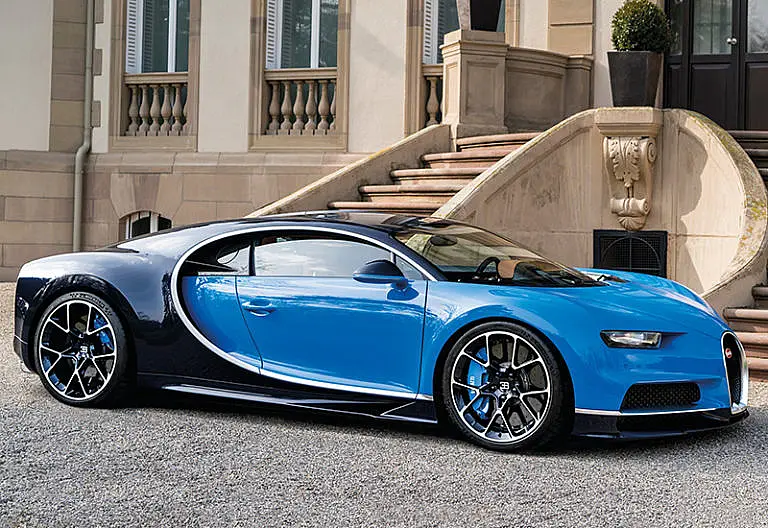
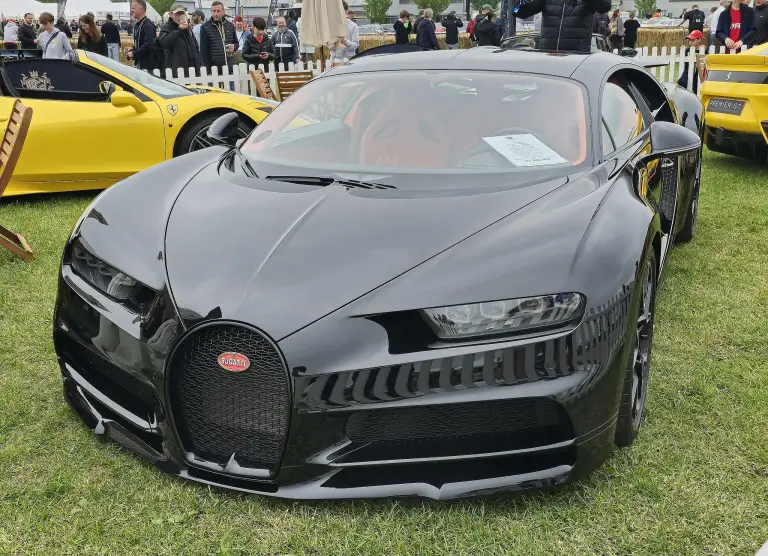
Several special variants were produced, and from December 2010 buyers could customise colours through an online configurator. The Veyron was discontinued in late 2014, but special editions continued until 2015. Its speed record was later taken by another Bugatti, the Chiron.
Design and features
- Quad-turbo W16: an 8.0-litre engine with 64 valves and ten radiators around it.
- 407 km/h: the original top speed, with 431.072 km/h in the Super Sport.
- Seven-speed dual-clutch: a Ricardo gearbox shifting in under 150 milliseconds.
- All-wheel drive: a Haldex system and special Michelin PAX run-flat tyres.
Bugatti Veyron versions
- Veyron EB 16.4 (2005–2011): the original car, 407 km/h.
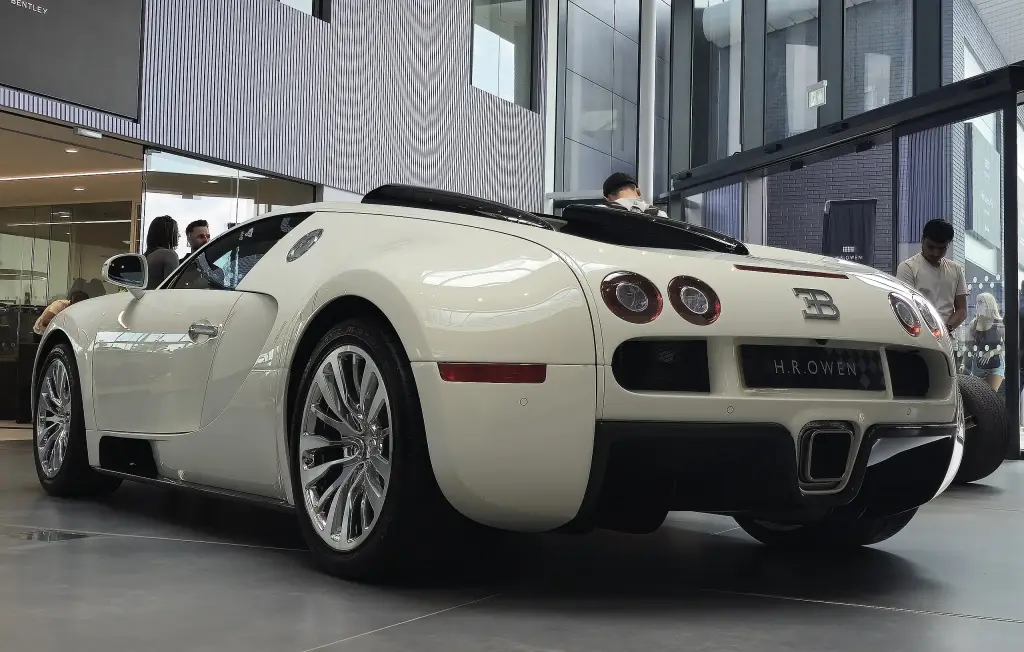
- Grand Sport: the open version.
- Super Sport: 431.072 km/h, among the fastest production cars.
- Grand Sport Vitesse: the fastest roadster, 408.84 km/h in 2013.
- Special editions (to 2015): produced after the standard car ended.
The Veyron was the production result of the EB 118 and EB 218 concept programme, it succeeded the EB 110, and it was replaced by the Chiron. More cars are in the Bugatti collection.
Sources
- Bugatti Veyron, English Wikipedia: origins, engineering, performance, production